Why the transcript matters
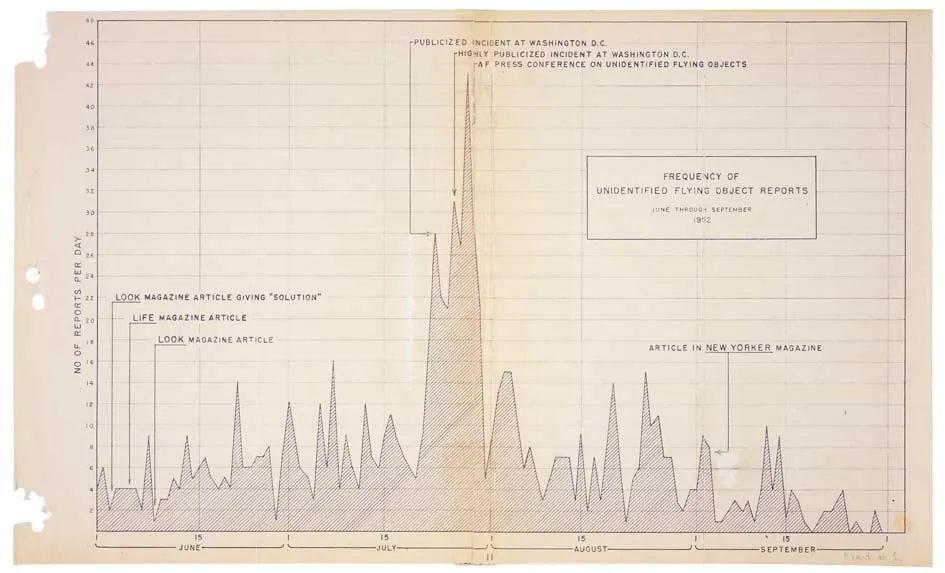
Ruppelt’s March 1952 talk is early Blue Book culture in the first person: how the Air Force wanted to collect better data, what technical methods it previewed - diffraction-grating photography and radar-scope synchronization among them - and how it framed concentrations of reports near sensitive sites such as Los Alamos, Albuquerque, and Oak Ridge. He discusses silent high-speed flight reports and radar detections suggesting very high speeds while emphasizing that nature and origin remained unproven.
Unexplained percentages in a 1952 briefing are not modern validated kinematics. They are how the program explained itself to a contemporary audience.
Place in the Blue Book cluster
Read beside Special Report 14 for later statistical skepticism, Tremonton’s case file for a famous film folder, and Naval PIC’s 1953 memo for photographic-interpretation process. The PURSUE hub groups these under Blue Book and early film themes. Program-level Phenomena context: Project Blue Book.
