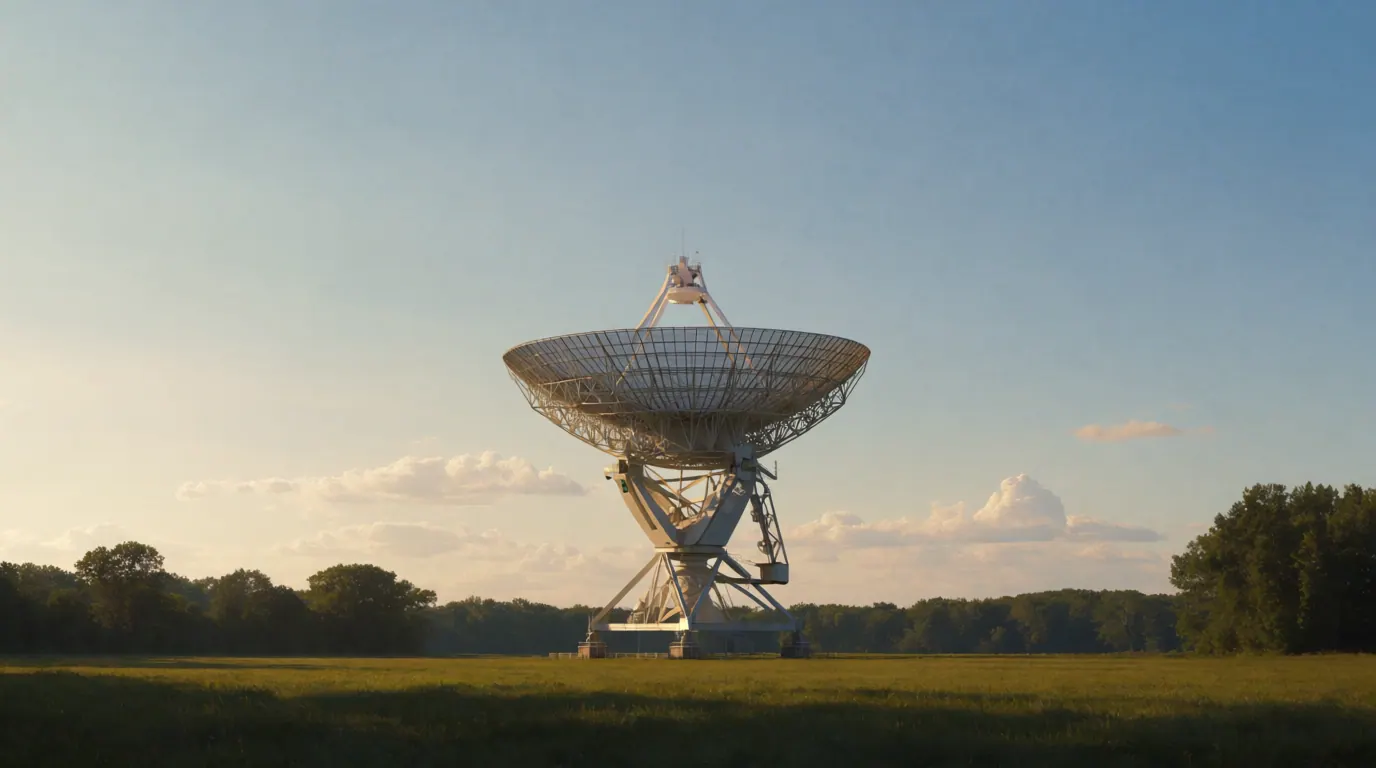
AI illustration cover for Wow! Signal
AI ILLUSTRATION FOR REFERENCE ONLY

Wow! Signal

Wow Signal · Big Ear Wow! Signal
UNRESOLVED

Mainstream consensus: The Wow! printout event is a real recorded radio anomaly from 1977. It is not verified alien communication. Non-detection in follow-ups leaves origin unresolved within scientific caution.

Share this page
Short answer

The Wow! Signal was a strong narrowband radio burst recorded on 15 August 1977 by Ohio State University's Big Ear telescope during a SETI survey. Volunteer Jerry Ehman circled the printout anomaly and wrote Wow! It has not been conclusively re-detected - still one of SETI's most famous one-off mysteries.

What happened

On 15 August 1977, Ohio State University's Big Ear radio telescope at Delaware, Ohio, was running a SETI sky survey when its chart recorder logged a strong narrowband intensity spike. The signal lasted through the telescope's roughly 72-second beam transit pattern and appeared to come from the direction of Sagittarius. Volunteer Jerry Ehman later reviewed the computer printout, circled the anomalous intensity sequence, and wrote "Wow!" in the margin - the note that gave the event its public name.

Big Ear did not record an audio message or a decoded text. The data were intensity codes across frequency channels, and the famous "6EQUJ5" string on popular posters is a compact way of writing those channel intensities, not a language. Follow-up observations at Ohio State and later dedicated SETI campaigns searched the same sky region without a confirmed re-detection that matched the original event.

Why it still matters

The Wow! Signal sits in a narrow category: a real instrumented detection that is strong enough to resist casual dismissal, yet unreproduced enough that no one can claim contact. Mainstream SETI writing treats it as an intriguing historical candidate rather than proof of an extraterrestrial transmitter. Competing mundane explanations - from terrestrial interference to comet-related hypotheses proposed decades later - have been argued in papers and popular science pieces without producing a single universally accepted closure story.

That open status is why the case keeps showing up beside other cosmic curiosities. A 2022 study in the International Journal of Astrobiology by Alberto Caballero narrowed the Wow! region to candidate Sun-like stars and flagged one as the strongest positional match, while still stopping short of claiming a signal origin. The printout remains a SETI museum piece: documented, annotated, and still unexplained in the sense that no follow-up has locked the source.

Related phenomena

Readers chasing other "one-shot anomaly" stories often land next on ʻOumuamua, the interstellar visitor that sparked natural-versus-artificial debates, or the Phoenix Lights, a mass public sighting with a contested mundane explanation. Historical official curiosity belongs with Project Blue Book. For an internet-era mystery brand with incomplete answers, see Cicada 3301. A cross-category media cousin is the Black Knight Satellite, another case where a real orbital or radio scrap becomes a decades-long legend.

What witnesses reported

The detection is instrumental - a computer printout of intensity codes - not a human audible “sound” heard live. Ehman and later astronomers analyzed the 72-second drift-scan signature near the hydrogen line frequency.

Proposed explanations

  • Mainstream

    An unidentified natural or human-made radio source never securely re-observed; remains an open SETI curiosity without confirmed ET origin.

    SETI historical summaries; astronomy explainers

  • Alternative

    A deliberate extraterrestrial transmission.

    Popular SETI speculation

  • Disputed

    Specific mundane candidates (comets, satellites, Earth interference) proposed over decades with ongoing dispute about fit to the data.

    Later papers and critiques of comet/other hypotheses

Case accounts

Attributed incident and cultural accounts from named sources. Links open the originals; AnomalyWiki does not verify these claims.

Claims vs mainstream

The claim

The Wow! Signal proved aliens messaged Earth.

Mainstream view

One unreproduced candidate signal is not confirmation of an ET message.

The claim

Astronomers covered up a decoded alien language.

Mainstream view

Public documentation is an intensity printout near 1420 MHz - not a decoded text.

The claim

It was definitely a comet.

Mainstream view

Comet hypotheses have been proposed and criticized; no universal consensus closure.

The claim

Nothing unusual was recorded - pure myth.

Mainstream view

The Big Ear data record and Ehman annotation are historically documented.

Timeline

  1. 1977-08-15Big Ear records the strong narrowband signal later labeled Wow!Source: OSU Big Ear SETI logs / printout history
  2. 1977Jerry Ehman circles the anomaly on the computer printout and writes “Wow!”Source: Ehman accounts; museum/archive displays of the printout
  3. 1977–1990sMultiple follow-up searches fail to re-detect a matching signal from the same region.Source: SETI follow-up literature
  4. 2010s–2020sPeriodic re-analyses and proposed mundane explanations keep debate alive.Source: Popular science and journal discussions

FAQ

What was the Wow! Signal?

A strong narrowband radio detection recorded by Ohio State’s Big Ear telescope on 15 August 1977 during a SETI survey.

Did it prove aliens exist?

No. It remains an unexplained candidate without confirmed re-detection or decoded message.

Why is it called Wow!?

Jerry Ehman wrote “Wow!” beside the printout anomaly.

Was it a sound people heard?

No. It is a radio intensity record - popular pages sometimes sonify it for illustration.

Could it have been a comet or satellite?

Mundane hypotheses exist and are debated; none has universal consensus closure.

Has a peer-reviewed study tried to pin down the source star?

Yes. A 2022 International Journal of Astrobiology study by Alberto Caballero narrowed the Wow! Signal region to candidate Sun-like stars, identifying one as the strongest match without proving a signal origin.