Overview
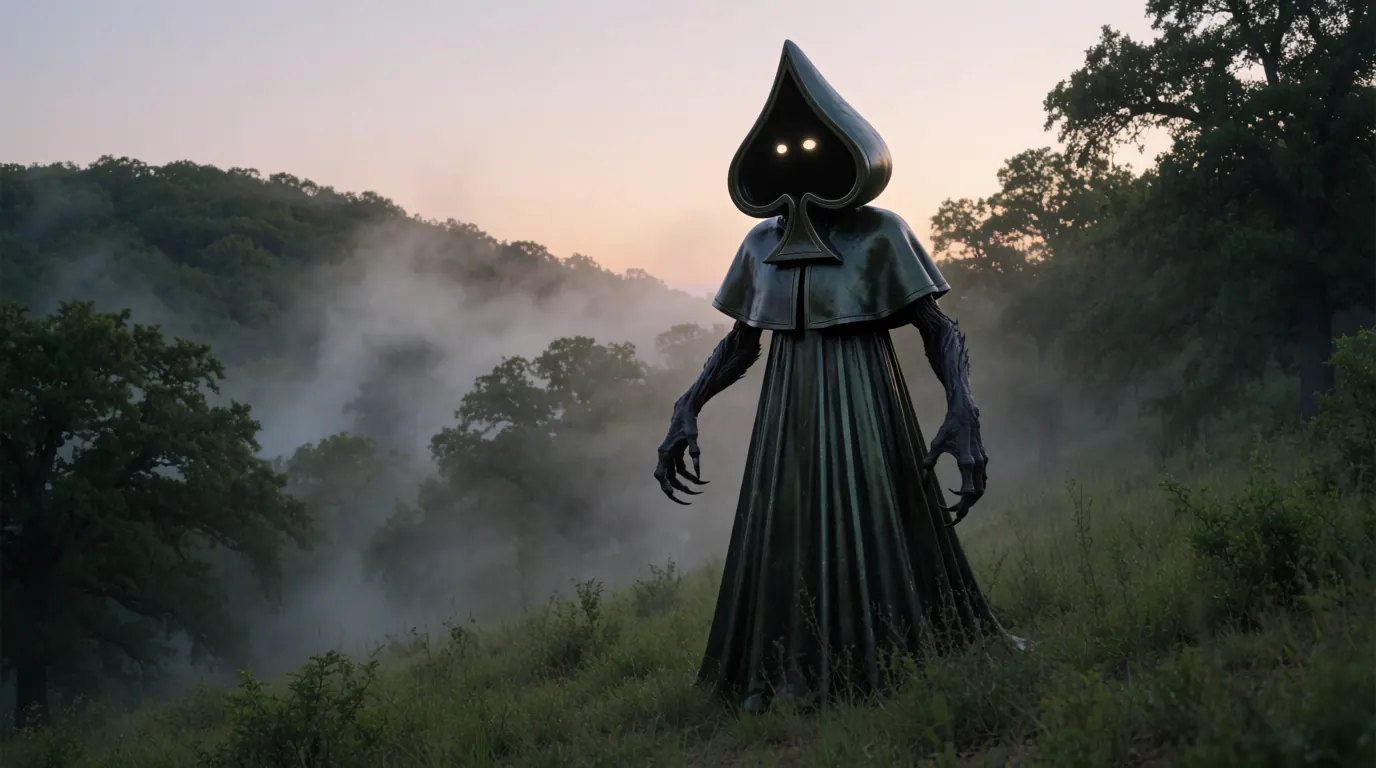
On the evening of 12 September 1952, a fireball crossed the sky over Braxton County, West Virginia. Seven people from Flatwoods went up Fisher Hill to investigate and reported a tall, hooded figure with a spade-shaped head, a hiss, and an acrid mist that burned eyes and noses. Same-week newspapers - including the Washington Daily News coverage preserved in ufology archives - put the "Braxton County Monster" on the national wire. No wreckage, tissue sample, or craft hull ever entered a lab chain of custody.
U.S. Air Force Project Blue Book traffic and later skeptical reviews (Joe Nickell's barn-owl-plus-meteor reading is the best-known) treat the case as misidentification under stress: a bright meteor, a startled large owl with wing shielding that can look like a cloak, and frightened witnesses on a dark hill. Believers keep an armored alien sentinel reading alive through museum displays and anniversary festivals in Flatwoods. The public record is rich in testimony and thin in physical proof.
Origin of the legend
This is a newspaper-born event, not slow oral folklore. Kathleen May and the boys with her described the figure within hours; press sketches fixed the spade head and cloak. The West Virginia Encyclopedia and CUFOS retrospectives summarize how the story moved from local shock to UFO anthology staple. 1952 was already a heavy UFO-reporting year in the United States; Flatwoods arrived as a monster-with-meteor hybrid that TV culture never forgot.
Regional neighbors include Mothman farther west along the Ohio Valley - another West Virginia press legend with red-eye branding - and Jersey Devil as an older East Coast winged scare. Greys and reptilian lore sometimes absorb Flatwoods art online; period witnesses described a hooded, non-Grey silhouette.
Similar beings
Hooded tall humanoids and "armor" readings invite comparisons to later cosplay aliens. Owl eyeshine and wing shapes remain the leading mundane lookalike cluster. Chupacabra and other 1990s bipeds are chronologically distant; the useful peer set is 1950s U.S. creature flaps.
In popular culture
Flatwoods hosts a museum and festival circuit around the green monster. Video games, trading cards, and internet listicles recycle the spade head. Skeptical specials restage the owl hypothesis. The culture keeps both shelves open: hometown legend and case study in perception under a burning sky.