Overview
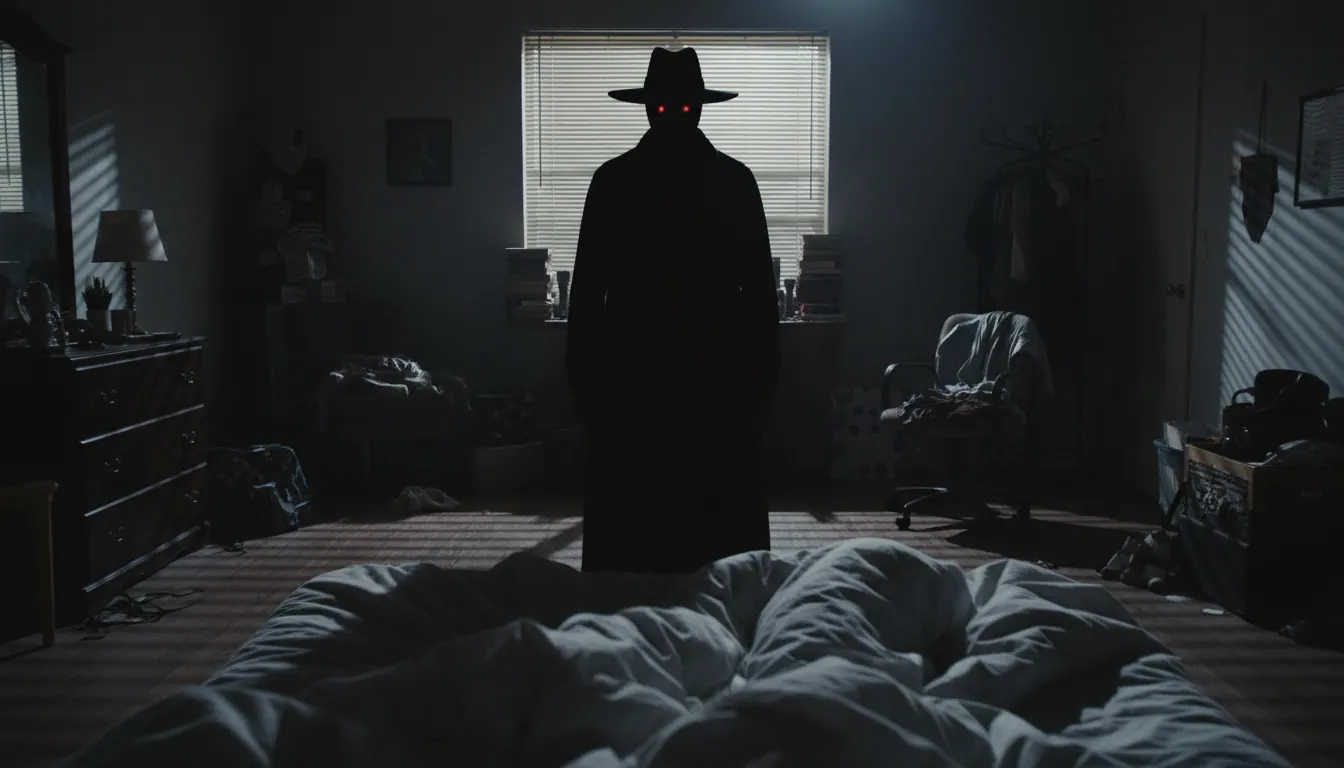
The Hat Man is a modern bedroom-intruder figure: a tall, dark silhouette in a wide-brimmed hat, often a fedora or bowler, reported standing at the foot of the bed or in a doorway. Witnesses describe a featureless black mass more than a detailed face, sometimes with a sense of being watched or crushed by dread. The type sits inside wider shadow people lore but is distinct enough that believers and sleep researchers both treat the brimmed hat as a signature.
Mainstream medicine and sleep science fold most such encounters into sleep paralysis and related hypnagogic or hypnopompic hallucinations - the brain partly awake while the body remains REM-atonic, generating a vivid intruder. Paranormal writers, especially Heidi Hollis from the mid-1990s onward, framed Shadow People and the Hat Man as external demonic or alien threats and collected anthologies of letters. The cultural brand and the sleep-science explanation now travel together: search results mix Coast-to-Coast lore with Sleep Foundation explainers.
Origin of the legend
Bedroom visitants and “night-mare” pressure on the chest are old across cultures. What is newer is the branded Hat Man silhouette. Hollis has said she encountered shadow figures as a college student in 1995, circulated The Secret War material by the late 1990s, and published on Shadow People in 2001, later separating the Hat Man as his own threatening observer. Online forums and social media in the late 2000s amplified matching drawings - tall, coat, brim - until documentaries and roundups treated the figure as a shared nightmare.
Psychologist Chris French and other commentators have noted that modern horror iconography can supply ready templates once sleep paralysis opens a hallucinated stage. Diphenhydramine abuse communities also circulate Hat Man stories, which sleep writers treat as drug-amplified hallucination rather than proof of an external entity. None of that makes the fear trivial; it relocates the evidence from demonology to nervous-system states.
For a medicalized neighbor page, see Sleep Paralysis. For Appalachian cryptid branding that also grew from fear plus media, see Mothman. Skinwalker lore is a different cultural system and should not be casually equated with bedroom shadow memes.
Similar beings
Generic shadow people share the dark humanoid outline without the hat. Old hag / night-mare traditions describe pressure and presence without a fedora. Men-in-Black anecdotes sometimes borrow dark coats and hats but belong to UFO witness-intimidation lore rather than sleep paralysis. None of these prove a single traveling entity; they show how intrusion templates recur.
In popular culture
Podcasts, Reddit threads, YouTube sketch recreations, and Hollis’s own books keep the Hat Man recognizable. Horror games and indie films borrow the brimmed silhouette because it reads instantly in silhouette art - a folklore meme optimized for thumbnails.