Overview
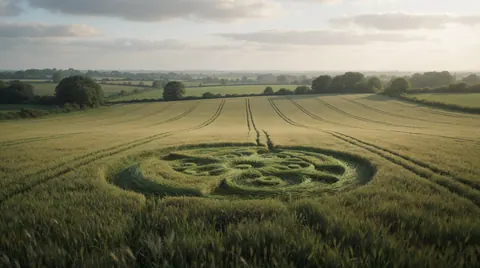
Some mysteries are not one-off events but recurring patterns with names. Crop circles bloomed across southern England from the late 1970s until two Southampton men, Doug Bower and Dave Chorley, confessed in 1991 to making hundreds with planks and rope.
Poltergeist outbreaks follow a script that runs from the knockings of "Old Jeffrey" at Epworth Rectory in 1716 to the Enfield case of 1977. And people in many cultures describe waking unable to move while a presence presses on the chest - the experience medicine calls sleep paralysis.
The patterns
| Pattern | What people report | Mainstream explanation |
|---|---|---|
| Crop circles | Overnight rings and pictograms in grain | Human-made land art and pranks |
| Poltergeist phenomenon | Raps, thrown objects, moving furniture around one person | Trickery, stress, and misperception |
| Sleep paralysis | Unable to move, a presence in the room, chest pressure | A REM-sleep state with vivid hallucinations |
| Hat Man | A tall silhouette in a wide-brimmed hat by the bed | Hypnagogic imagery shaped by shared culture |
Why the same story keeps happening
A poltergeist case tends to center on a living person, often a child or teenager, rather than a place - which is why investigators at Enfield spent months watching eleven-year-old Janet Hodgson. Bedroom visitors appear in the same moment of half-sleep in Newfoundland, Japan, and Brazil, which points researchers toward the brain rather than the house.
Crop circles show the other path: a physical mystery that turned out to have authors, and then became an art form once the confession was out.