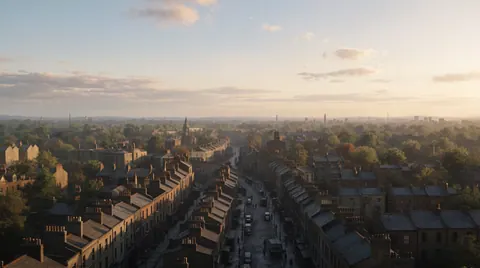
Whitechapel, 1888
The most famous cold case in the English-speaking world began on 31 August 1888, when Mary Ann Nichols was found dead in Buck's Row. Annie Chapman followed in September, then Elizabeth Stride and Catherine Eddowes on a single night, and Mary Jane Kelly on 9 November. Historians call them the "canonical five," though the wider list of Whitechapel murders from 1888 to 1891 is still argued over.
The nickname came from letters mailed to police and newspapers, and most of those letters are now considered hoaxes by journalists or cranks. Police memoranda written years later discussed suspects, including Montague Druitt, Aaron Kosminski, and Michael Ostrog, but no one was ever charged. Jack the Ripper remains a case where the records are rich and the answer is missing.
Codes nobody has cracked
Some mysteries are made of ink. The Beale ciphers appeared in an 1885 Lynchburg pamphlet promising a buried Virginia treasure. Only the second of the three number-texts has been read, using the Declaration of Independence as a key, and most historians suspect the whole story was a clever hoax.
On the Shepherd's Monument at Shugborough Hall in Staffordshire, the letters O U O S V A V V sit beneath a relief based on a Poussin painting. The Shugborough inscription has drawn guesses from love notes to Holy Grail codes without a confirmed reading.
The Voynich Manuscript at Yale is stranger still: a real book on vellum radiocarbon-dated to the early fifteenth century, full of unknown plants and an unknown script. Rongorongo, the carved glyphs of Rapa Nui, is genuine writing that no one can yet read.
Maps, scrolls, and treasure lists
The Piri Reis map of 1513, drawn by an Ottoman admiral on gazelle-skin parchment, compiles Atlantic coastlines from older charts, including Columbus-era sources. Claims that it shows an ice-free Antarctica misread its South American coast. The Copper Scroll, found in Qumran's Cave 3 in 1952, lists dozens of gold and silver caches, none of which has ever been matched to a find.
Why old cases still move
Digitized newspapers, DNA techniques, and multispectral imaging keep reopening these files. Sometimes they narrow the field; just as often they confirm the trail ends where it always did. Victorian newspapers, inquest returns, and museum catalogs are the bedrock - later suspect books and podcasts are commentary built on top.
Related hubs
FAQ
Why revisit old cases? New scans, DNA methods, and digitized newspapers can change probabilities - or confirm that the file stays thin.
Has Jack the Ripper ever been identified? No. Police never charged anyone, and every named suspect remains a theory rather than a verdict.
Is sensational Victorian press reliable? It is vivid primary evidence of what people feared and believed, but it needs cross-checking against police and inquest records where those survive.
Are the Beale ciphers real treasure clues? Only the second cipher has been decoded, using the Declaration of Independence as a key. Most historians suspect the 1885 pamphlet was a hoax, and no vault has ever been found.
Sources
- Casebook: Jack the Ripper - https://www.casebook.org/
- British Newspaper Archive - https://www.britishnewspaperarchive.co.uk/
- The National Archives (UK) - https://www.nationalarchives.gov.uk/