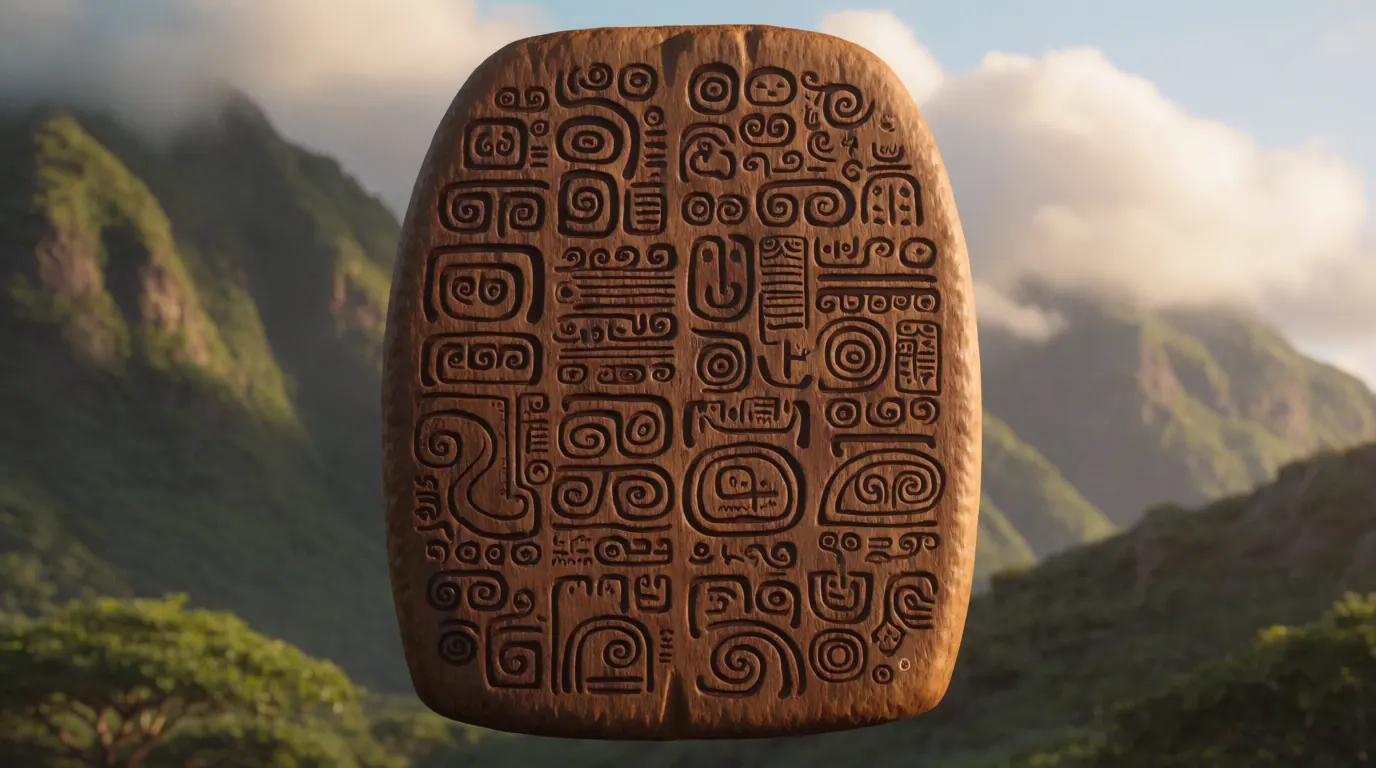
Rongorongo is wood that still refuses to speak. The tablets that left Rapa Nui in the nineteenth century carry dense glyph rows unlike ordinary Polynesian decoration, yet no living reader can recite them. That gap - real objects, silent language - is why the corpus keeps pulling cryptographers and dreamers into the same museum vitrines.
A script stranded by history
Oral tradition says only a small elite was literate. After the 1860s disasters, the teaching chain snapped. Collectors gathered what remained; the island itself kept none. If rongorongo is true writing invented independently, it joins a very short list in world history - which is exactly why specialists refuse to rubber-stamp flashy decipherments.
Mamari’s calendar and the rest of the fog
The Mamari tablet’s lunar-calendar section is the rare place where function, not fantasy, has scholarly traction. Everywhere else, proposals stall on tiny text volume, missing bilingual keys, and a modern Rapa Nui language reshaped by Tahitian contact. A pretty mapping of glyphs to English sentences is usually a Rorschach test.
Forgeries and lookalikes
Twentieth-century souvenirs copied published tracings so well that even museums have had to revisit labels. Identification locks irregular aged wood, shallow indigenous-style incisions, and concordance with Barthel’s lettered corpus - not gift-shop gloss.
Cross-links that help
Pair the tablets with Rapa Nui place and society entries for cultural context, and with other undeciphered scripts when the question is method rather than aliens. The wonder stays - a Pacific society carved a system we can photograph but not yet hear. That is enough without importing starships into the case labels.
Readers who want a sharp silhouette can stay with the physical description above. Readers who want a verdict should notice which claims still lack a primary citation and leave those in the attributed column rather than smuggling certainty through adjectives.
Museums before merchandise
When a cruise-dock carving mimics glyph shapes, ask which Barthel code it matches and which museum accession it lacks. The corpus is small, scattered, and precious precisely because the living reader tradition broke. That scarcity is not a dare to invent a full translation from vibes. It is a reason to photograph grain, count lines, and keep tourist copies out of the evidence tray.
Why undeciphered still matters
An unread script is not an empty script. Rongorongo preserves a visual language stranded by demographic collapse and collection history. The honest thrill is the gap itself - wood that still will not dictate a tourist phrasebook.