




Overview
Around 360 BCE Plato described an island empire beyond the Pillars of Heracles that sank "in a single day and night of misfortune," and readers have been hunting for it ever since. The lost-civilization shelf holds two very different kinds of mystery. One is legend - continents and kingdoms that live in books. The other is history - real cities whose builders were later forgotten, doubted, or credited to strangers. Between them sit the puzzles: scripts no one can read, and objects that seem too clever for their age.
Legendary lands
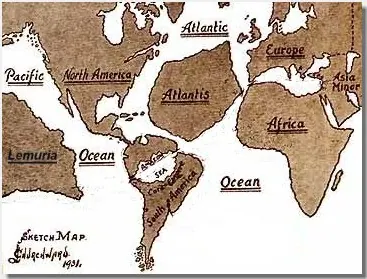
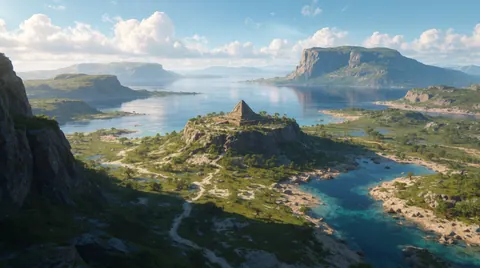
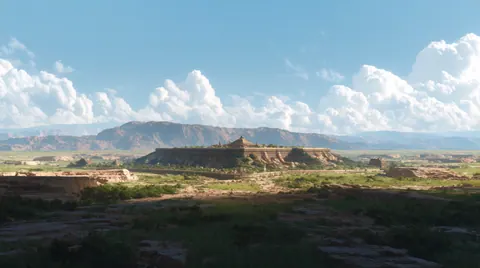
Atlantis is the original, born in Plato's Timaeus and Critias and turned into a "real" mother culture by Ignatius Donnelly's 1882 bestseller. Seekers have placed it everywhere from the Mediterranean to Antarctica, and even in the Richat Structure, an eroded rock dome in the Sahara.
Lemuria began as a sober scientific guess: in 1864 zoologist Philip Sclater proposed a sunken land bridge to explain why lemurs live in Madagascar and India. Theosophists turned it into the home of a vanished root race. In 1926 James Churchward published The Lost Continent of Mu, placing a drowned motherland, Mu, in the Pacific on the strength of tablets no scholar ever examined.
Other lost lands lie north or beneath. Hyperborea was the Greek paradise beyond the North Wind. Agartha is an occult kingdom inside a hollow Earth, and Shambhala a hidden realm in Buddhist Kalachakra teachings that Western seekers later pinned to the Himalayas. The newest, Tartaria, was born online from the old map label "Tartary."
Real civilizations that vanished
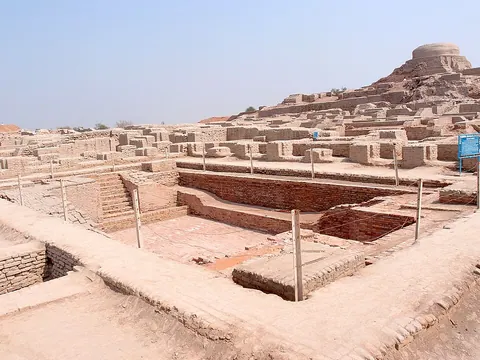
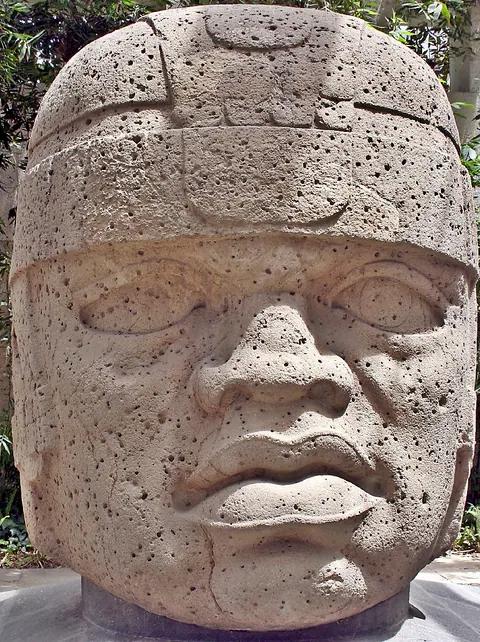
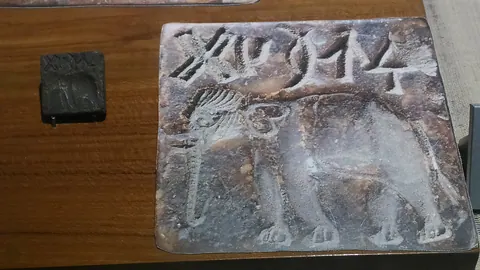
Some of the most astonishing lost civilizations are entirely real. The Indus Valley Civilization built planned Bronze Age cities with grid streets and drains across today's Pakistan and northwest India. Near modern St. Louis, Cahokia peaked around 1050-1200 CE around the vast earthen platform of Monks Mound. On Mexico's Gulf Coast, the Olmec carved colossal basalt heads at San Lorenzo and La Venta.
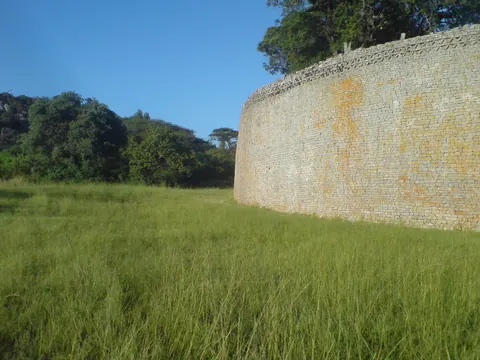
These places share a second, uglier story. For generations, outsiders refused to credit their builders. Colonial-era writers attributed the stone walls of Great Zimbabwe to foreign architects; nineteenth-century Americans imagined a lost race behind the mounds of the Midwest. Archaeology has overturned each claim. Elsewhere, "disappearance" usually meant change rather than extinction: the Classic Maya collapse ended an era of southern lowland kingdoms, but millions of Maya people live today.
Objects out of place
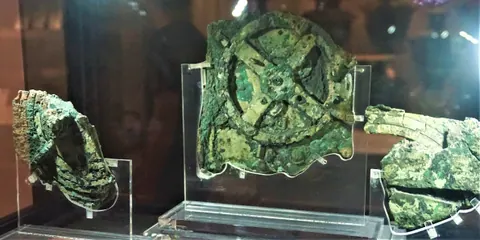
Then there are the artifacts that seem to break the timeline. The Antikythera mechanism, pulled from a Greek shipwreck in 1900-1901, turned out to be a geared bronze calculator for tracking the heavens - extraordinary, and fully Greek. Others dissolve under scrutiny: the "helicopter" at Abydos is two overlapping royal inscriptions (helicopter hieroglyphs), and the Dendera "light bulb" is a lotus, a serpent, and a djed pillar.
Scripts nobody can read
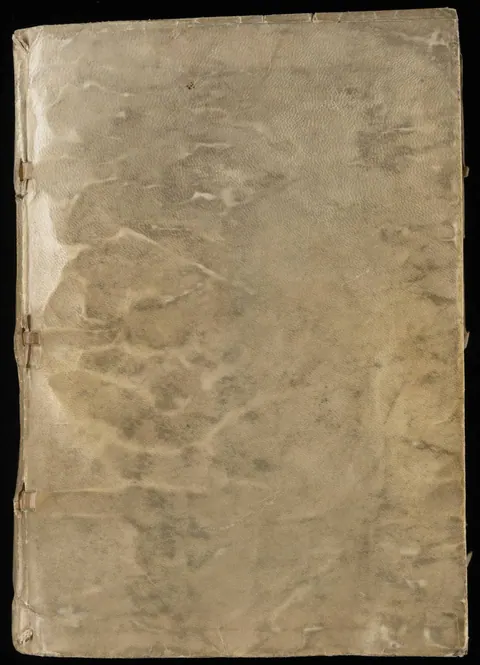
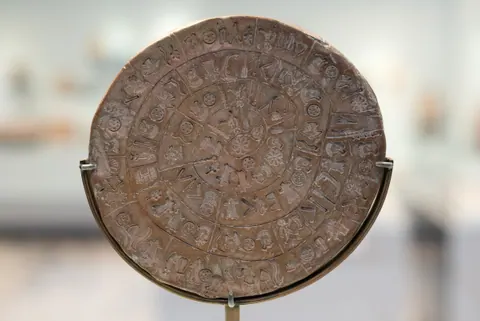
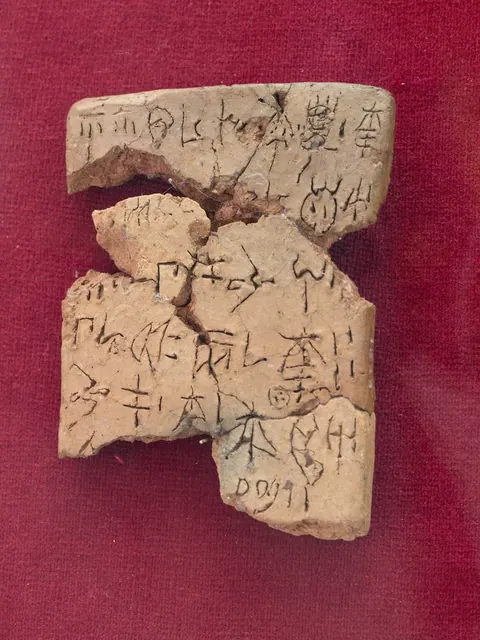
The quietest lost civilizations speak through writing no one understands. The Voynich Manuscript, its vellum radiocarbon-dated to the early fifteenth century, fills its pages with unknown plants and an unknown alphabet. The Phaistos Disc spirals stamped signs across both faces of a Minoan clay disc. Linear A still hides the Minoan language, the Indus script survives mostly on tiny seals, and Rapa Nui's rongorongo tablets remain unread.
The mainstream view
Archaeologists find no trace of sunken continents; plate tectonics explains the ocean floor without them. The real lost civilizations declined for reasons that leave evidence in the ground - drought, shifting rivers, warfare, failing trade, disease, and colonial violence. What makes them feel "lost" is often the gap in our own memory rather than a vanishing act.
How to tell legend from lost history
- Look for a dig. Real civilizations leave excavated houses, burials, trash pits, and radiocarbon dates. Legendary lands leave books.
- Trace the first telling. If a "lost land" first appears in Plato, a Victorian zoology paper, or an occult text, that origin is the story.
- Be wary of "they could not have built it." That argument has been wrong at Cahokia, Great Zimbabwe, and the Olmec heartland.
- Undeciphered is not unexplained. An unread script is a puzzle about language, not proof of a lost super-culture.
Related hubs
FAQ
What is a lost civilization? Either a legendary land said to have vanished, such as Atlantis or Lemuria, or a real ancient culture whose cities were abandoned and later forgotten, such as Cahokia or the Indus Valley.
Was Atlantis real? There is no archaeological evidence for Plato's Atlantis. Most classicists read it as a moral story in his dialogues Timaeus and Critias, written around 360 BCE.
Are lost continents like Lemuria and Mu real? No. Lemuria began as an 1864 land-bridge hypothesis that plate tectonics made unnecessary, and Mu rests on James Churchward's 1926 claims about tablets never produced for study.
Which lost civilizations really existed? Many. Cahokia, Great Zimbabwe, the Olmec, the Indus Valley cities, Angkor, and the Classic Maya are all richly documented by archaeology.
Related entries
- Rongorongo Tablets
- Metal Library (Tayos)
- Quimbaya Artifacts
- Saqqara Bird
- Rapa Nui Society
- Maine Penny
- Vinland
- El Dorado
- Angkor and the Khmer Empire
Sources
- Plato, Timaeus (Jowett translation) - https://www.gutenberg.org/ebooks/1572
- UNESCO World Heritage Centre, Cahokia Mounds State Historic Site - https://whc.unesco.org/en/list/198/
- "Antikythera mechanism," Wikipedia - https://en.wikipedia.org/wiki/Antikythera_mechanism
- "Indus Valley Civilisation," Wikipedia - https://en.wikipedia.org/wiki/Indus_Valley_Civilisation