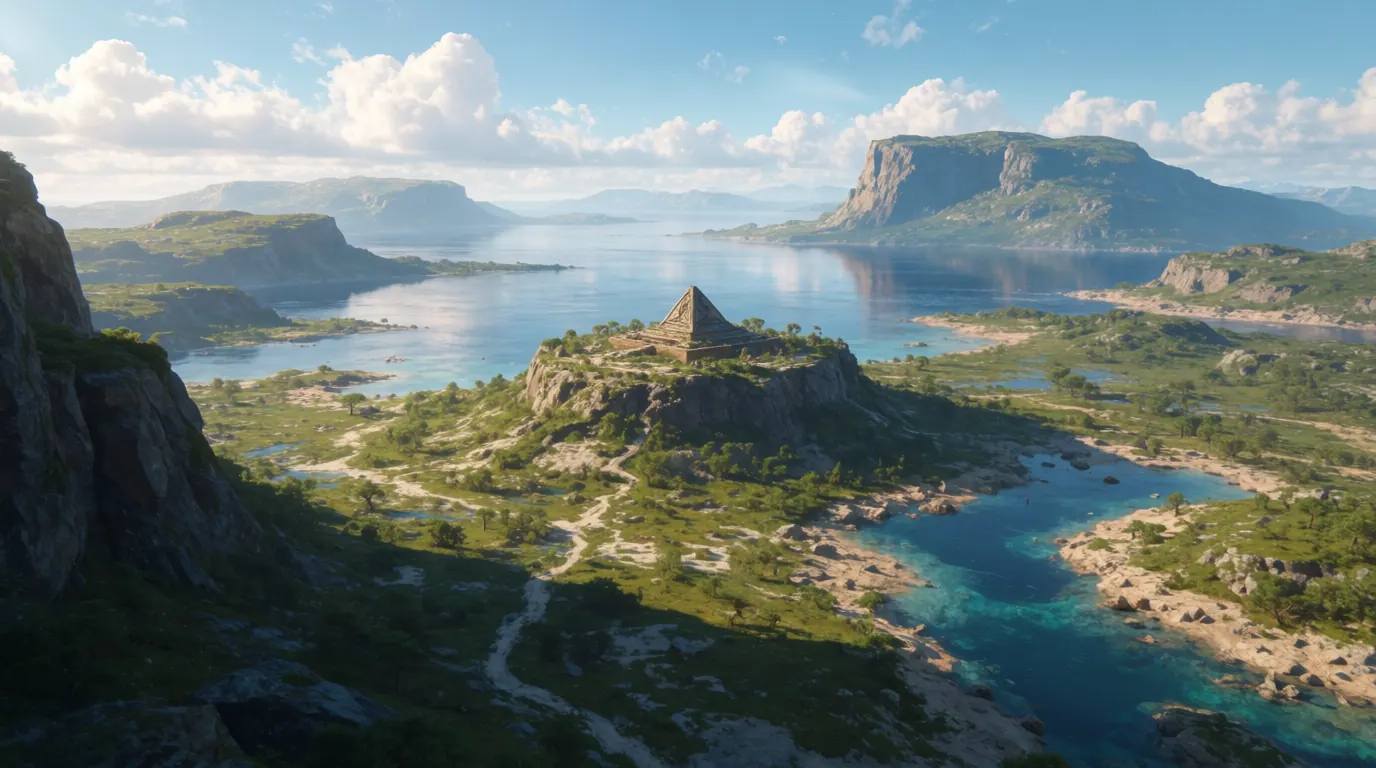
AI illustration of a far-north mythical paradise landscape for Hyperborea lore.
AI ILLUSTRATION FOR REFERENCE ONLY

Hyperborea

Hyperboreans · Land beyond Boreas
LEGENDARY

Mainstream consensus: Classical legendary geography later reused in esoteric literature - not a verified northern empire.

Share this page
Short answer

Hyperborea is the far-north paradise of Greek myth - a land beyond the North Wind where Apollo was said to be especially honored. Later occult writers reused the name for Arctic homelands; mainstream classics treat it as literary geography, not a dug civilization.

Mainstream view

Hyperborea belongs to Greek mythic and ethnographic imagination. No archaeological culture matches the blessed far-north utopia as a historical state.

Alternative claim

Occult and nationalist writers cast Hyperborea as a real Arctic cradle of advanced or spiritual peoples, sometimes fused with Thule or Aryan origin myths.

Hyperborea begins as Greek imagination stretched past the weather. Beyond Boreas - the North Wind - poets and storytellers placed a people living in ease, often linked to Apollo, where winter’s bite seemed to lose its claim. It was a literary north pole of blessing more than a harbor you could book passage to. When historians touched the theme, they treated Hyperborean reports as extreme ethnography mixed with wonder - distant, contested, and never reduced to a single dig.

That openness made the name reusable. Nineteenth- and twentieth-century occult writers folded Hyperborea into Arctic cradle myths, sometimes beside Thule, sometimes inside racialized origin stories that classicists do not recognize as archaeology. The classical Hyperboreans remain figures of mythic geography; the modern Hyperborea of esoteric maps is a different project wearing an old label.

Peers in the legendary-land silo include Thule, Lemuria, and Atlantis theories. Any icy-temple illustration here is atmosphere for a myth, not a survey of a lost polar capital.

Greek writers never agreed on a single harbor for the Hyperboreans. That disagreement is the point: the far north was a flexible wonder zone for Apollo lore, ethnographic hearsay, and utopian contrast with the hard seasons of the Mediterranean. Modern occult maps that pin Hyperborea to a polar capital are doing nineteenth- and twentieth-century mythwork with classical props.

Reading Pindar beside a hollow-Earth YouTube channel shows the gap. One is poetic geography. The other is a homeland brand. Classicists can argue about how Greeks imagined the edges of the world without endorsing Arctic empire archaeology that has never produced Hyperborean pottery.

Pindar's happy Hyperboreans and later Romantic northern utopia talk are different species of longing. Classical citations beat modern fake maps every time.

Hyperborea survives as a classical northern dream and a modern mythic brand. The primary texts reward close reading; the later maps reward skepticism.

Roman and later encyclopedists kept Hyperborea as a northern curiosity drawer. Modern fake maps that pin it to the Arctic Circle are fan edits of classical fog.

Illustrations

AI illustrations for reference only - not documentary photographs.

Legendary Hyperborea atmosphere (AI illustration)AI illustration for reference only

Key debates and stories

Attributed discovery narratives, debates, and claim histories from named sources. Links open the originals; AnomalyWiki does not verify these claims.

Claims vs mainstream

The claim

Hyperborea was a real Arctic civilization archaeologists ignore.

Mainstream view

Classical texts describe a mythic blessed north. No dig matches the utopia as a polity.

The claim

Hyperborea proves a polar origin of civilization.

Mainstream view

Origin-of-civilization archaeology centers on known regions with material cultures; polar-motherland claims are modern myth overlays.

The claim

Hyperborea and Thule are the same excavated site.

Mainstream view

Both are classical place-ideas with shifting locations in texts; neither is a single verified capital ruin.

Timeline

  1. Archaic GreeceEarly poetic references situate Hyperboreans in a blessed far north tied to Apollo cult lore.Source: Classical literature surveys of Hyperborea
  2. 5th–4th century BCEHistorians and geographers discuss Hyperborean reports as distant ethnography mixed with wonder tales.Source: Herodotus and later geographic tradition summaries
  3. Hellenistic to Roman erasWriters continue to relocate or rationalize the far-north paradise in expanding world maps.Source: Ancient geography historiography
  4. 19th–20th centuryOccult and political mythmakers reuse Hyperborea / Thule as primordial homeland brands.Source: Modern reception of Hyperborea and Thule myths

FAQ

Was Hyperborea a real place?

In Greek literature it is a blessed far-north land of myth and wonder reports - not a verified excavated civilization.

Where did the Greeks place Hyperborea?

Beyond Boreas, the North Wind - locations shift by author and era rather than pinning to one modern map coordinate.

How is Hyperborea tied to Apollo?

Classical tradition associates Hyperboreans with Apollo cult lore and offerings from the far north.

Is Hyperborea the same as Thule?

Related northern place-ideas in classical geography, but not identical names or fixed sites. Modern occult reuse often blends them.

Why do esoteric writers still use Hyperborea?

The name supplies a primordial northern homeland brand. That reuse is cultural myth, not archaeological consensus.

Sources

  1. Herodotus, Histories (Perseus)primary
  2. Hyperboreajournalism
  3. Thulejournalism
  4. Apollojournalism
  5. Boreas (mythology)journalism