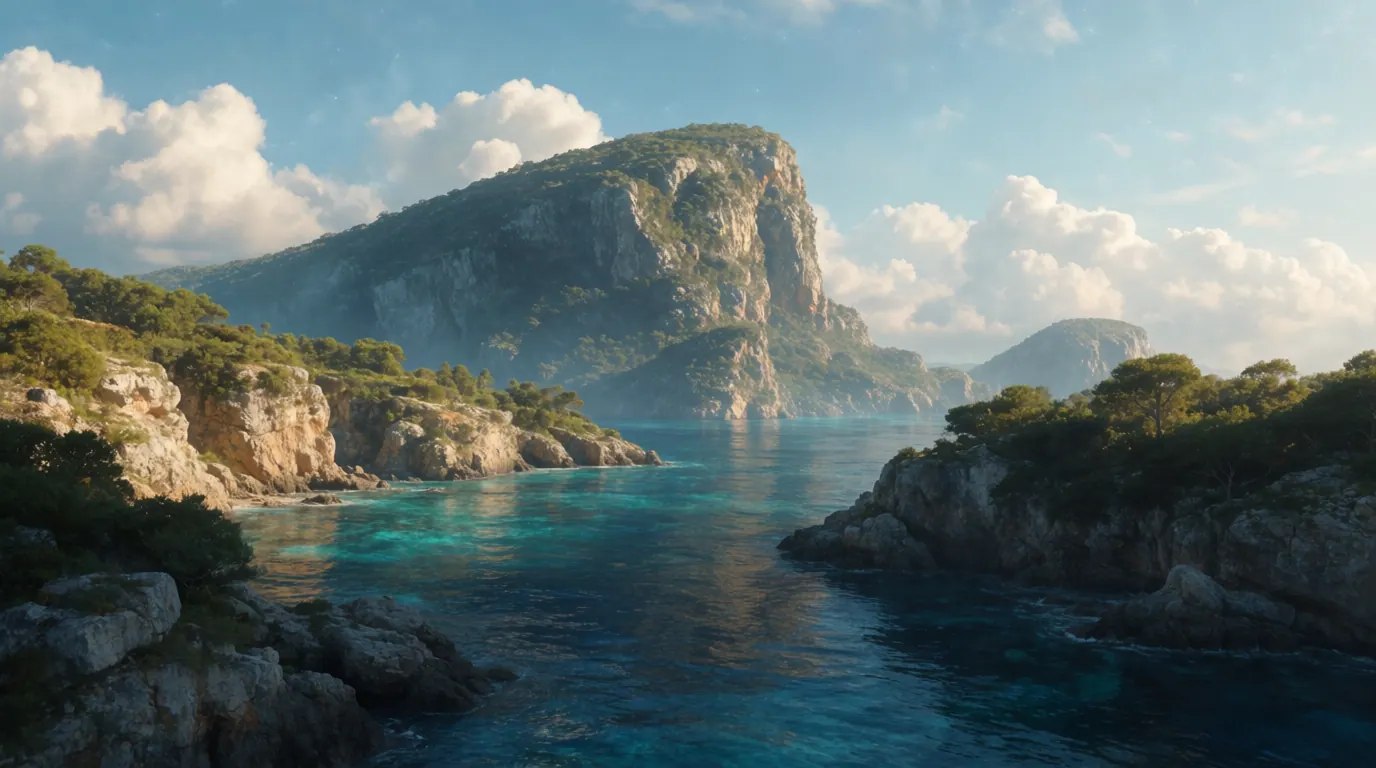
AI illustration of a legendary sunken island city for Atlantis reception lore.
AI ILLUSTRATION FOR REFERENCE ONLY

Atlantis Theories

Atlantis · Island of Atlas · Atlantica (popular)
LEGENDARY

Mainstream consensus: Platonic literary tradition with endless geographic speculation - no consensus archaeological Atlantis matching Plato’s full narrative.

Share this page
Short answer

Atlantis begins in Plato’s Timaeus and Critias as a cautionary island empire that sinks after hubris. Later readers treat it as archaeology, allegory, or lost high technology - while classicists keep the dialogues primary and most candidate “found Atlantis” sites unproven as Plato’s island.

Mainstream view

Most classicists read Atlantis as Platonic political myth and literary invention drawing on older Mediterranean memory motifs. Specific “Atlantis found” claims rarely survive archaeological and textual scrutiny as Plato’s island.

Alternative claim

Atlantis was a real advanced civilization whose ruins match one of many candidate sites - Santorini/Thera, Richat Structure, Azores, Antarctica, or others - often with suppressed technology overlays.

Atlantis is a story that escaped its binding. In Plato’s Timaeus and Critias, an island empire beyond the Pillars of Heracles grows powerful, wars on a virtuous prehistoric Athens, and sinks in a day and night of disaster. The tale serves a philosophical machine about ideal cities, memory, and hubris. Strip that frame and you get a treasure map industry.

Ignatius Donnelly’s 1882 bestseller helped convince modern readers that Plato was a clumsy historian of a real mother culture. Since then candidate sites have multiplied - Santorini’s Minoan eruption, Spanish coastal ruins, the Richat Structure, Antarctic fantasies - each claiming a resemblance Plato somehow encoded. Classicists keep returning to the Greek text; archaeologists keep asking for layers that match the whole package, not a single ring-shaped landform.

Peers include Lemuria, Mu, and underwater claim sites like Bimini Road. Wonder belongs here; so does the discipline of reading Plato before the documentary thumbnail.

Every generation rediscovers a ring-shaped landform or a drowned harbor and declares the case closed. Plato’s numbers get literalized, his Athens idealized, and his philosophical framing discarded. Classicists keep asking what the dialogues are doing as literature. Geologists keep explaining Richat. Aegean archaeologists keep excavating Thera without needing to rename it Atlantis.

The healthiest way to read the modern Atlantis industry is as reception history: Donnelly’s book culture, TV candidate races, and fringe tech overlays stacked on a Greek story that was never a site report. Wonder survives that reading. Certainty should not.

From Ignatius Donnelly's nineteenth-century encyclopedia of catastrophe to twentieth-century Aegean, Caribbean, and Antarctic hunts, each wave borrows Plato's numbers and discards his political frame. The dialogues still repay reading more than any sonar survey.

Atlantis theories multiply because Plato left a perfect unfinished map. Classicists stay with the dialogues; location hunters keep digging the ocean for a city the text may never have meant as archaeology.

Santorini/Thera eruption analogies remain popular classroom bridges - useful for Bronze Age disaster imagination, insufficient to map Plato's concentric canals onto the Aegean seafloor as proven fact.

Illustrations

AI illustrations for reference only - not documentary photographs.

Atlantis legend atmosphere (AI illustration)AI illustration for reference only

Key debates and stories

Attributed discovery narratives, debates, and claim histories from named sources. Links open the originals; AnomalyWiki does not verify these claims.

Claims vs mainstream

The claim

Plato recorded a literal 9600 BCE Atlantic superstate.

Mainstream view

Dialogue numbers and framing serve philosophical drama. Literal deep-time readings are contested and not archaeological consensus.

The claim

Santorini’s Bronze Age eruption is Atlantis proven.

Mainstream view

Thera’s eruption is real archaeology often compared as inspiration, not a one-to-one identification with Plato’s island empire narrative.

The claim

The Richat Structure is Atlantis’s concentric capital.

Mainstream view

Richat is a well-studied geologic dome in Mauritania; concentric resemblance is not proof of Plato’s polity.

The claim

Atlantis proves ancient high technology / aliens.

Mainstream view

Fringe overlays exceed both Plato’s text and Mediterranean archaeology.

Timeline

  1. c. 4th century BCEPlato composes Timaeus and Critias with the Atlantis story nested in a larger philosophical conversation.Source: Plato’s dialogues; classical scholarship
  2. ancient–medieval receptionLater writers cite, allegorize, or relocate Atlantis within expanding geographic imaginations.Source: Reception histories of Atlantis
  3. 19th centuryIgnatius Donnelly and others relaunch Atlantis as a popular lost-civilization research program.Source: Donnelly, Atlantis: The Antediluvian World (1882) reception
  4. 20th–21st centuryCandidate sites multiply - Thera, Spain, Richat, Antarctica - alongside TV and fringe tech claims.Source: Modern Atlantis candidate literature and critiques

FAQ

Did Atlantis really exist?

Plato’s dialogues are the primary source. Most classicists read Atlantis as literary political myth; no archaeological consensus confirms the full Platonic island empire.

Where did Plato place Atlantis?

Beyond the Pillars of Heracles in the Atlantic imagination of the dialogues - later writers relocate it freely.

Is Santorini Atlantis?

Thera’s Bronze Age eruption is real and often discussed as possible inspiration, not a settled identification with Plato’s narrative.

Is the Richat Structure Atlantis?

Richat is a geologic dome. Concentric resemblance alone does not make it Plato’s city.

Who restarted modern Atlantis hunting?

Nineteenth-century popularizers such as Ignatius Donnelly treated Plato as garbled history and seeded the modern candidate-site industry.