Shambhala is older than the YouTube gate hunt. In Buddhist Kalachakra literature it names a kingdom wrapped into teachings and prophetic time - a sacred geography that asks for practice and interpretation more than a passport stamp. When Theosophists and later New Age writers carried the word west, they often flattened that depth into a Himalayan utopia with coordinates, guides, and secret doors.
James Hilton’s 1933 Shangri-La then supplied a secular twin that tourism boards still rent. Conflation is easy; equivalence is not. Scholars keep textual Shambhala, fictional Shangri-La, and hollow-Earth Agartha in separate trays even when documentaries stir them into one smoothie.
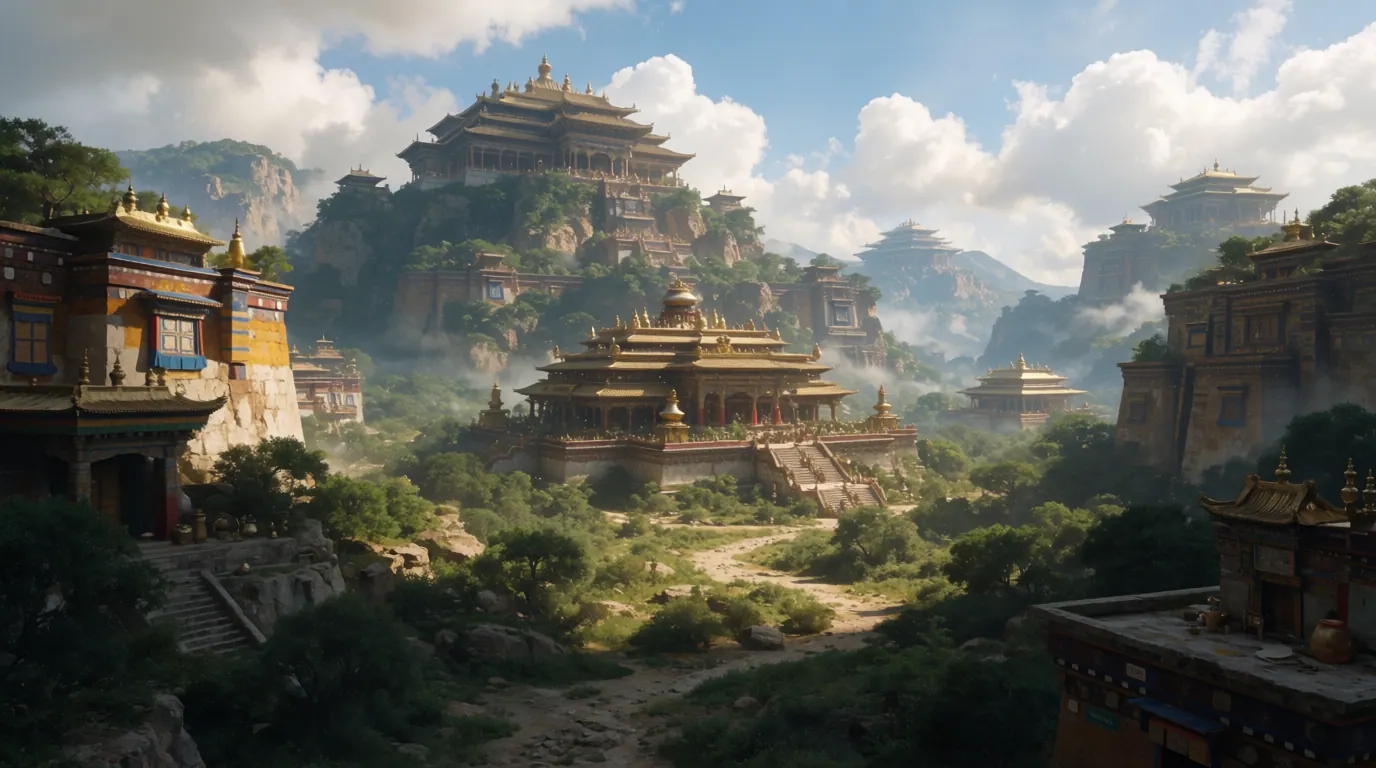
Peers include Agartha, Lemuria, and place lore like Mount Shasta where New Age geography also plants hidden cities. Cinematic valley kingdoms here are illustrations of longing, not survey pins.
Monastic curricula and Kalachakra commentaries treat Shambhala as a teaching geography charged with ethics and time, not a backpacking waypoint. Western esoteric bestsellers often reverse that priority: first the coordinates, then a paragraph of spiritual garnish. Hilton’s Shangri-La accelerated the tourist twin by giving English a word that sounded like destiny.
Keeping those layers distinct protects both wonder and accuracy. You can study Tibetan textual Shambhala seriously, enjoy Shangri-La as fiction, and still reject hollow-Earth gate maps that borrow the name. Sacred geography is allowed to be literary. It does not become a UNESCO ruin by viral insistence.
Kalachakra literature frames Shambhala as a pure realm tied to prophecy and practice. Later Theosophical and adventure writing turned it into a Himalayan Shangri-La with secret kings - a genre shift, not a GPS upgrade.
Shambhala remains a powerful Tibetan Buddhist and later Theosophical idea of a hidden pure land. Pilgrimage lore and political appropriation are documented; a tourist GPS pin is not.
Geopolitical myths later drafted Shambhala into nationalist and adventure scripts. Those overlays say more about modern audiences than about Kalachakra liturgy.