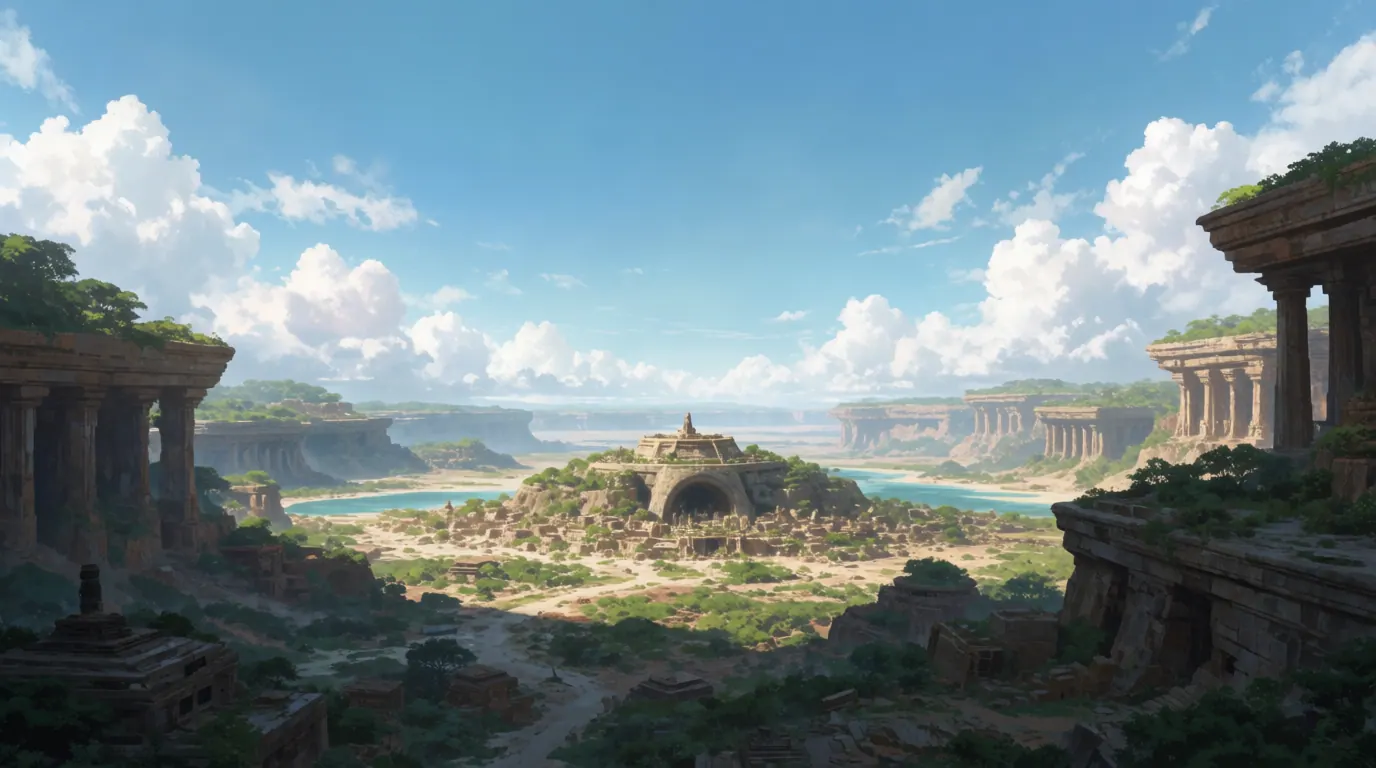
AI illustration of a subterranean kingdom vista for Agartha hollow-Earth lore.
AI ILLUSTRATION FOR REFERENCE ONLY

Agartha

Agharti · Agharta · Inner Earth kingdom (popular label)
FOLKLORE

Mainstream consensus: Hollow-Earth occult lore without geological or archaeological support.

Share this page
Short answer

Agartha is an occult hollow-Earth kingdom said to lie inside the planet, reached by polar openings or subterranean passages in esoteric travel tales. Geology rejects a habitable inner world; Agartha survives as occult fiction and conspiracy cartography, not as excavated architecture.

Mainstream view

Earth’s interior structure is constrained by seismology and geology. No evidence supports a hollow planet with cities. Agartha is esoteric narrative.

Alternative claim

An advanced inner civilization rules from Agartha, sometimes linked to Shambhala, UFOs, or secret entrances at the poles.

Agartha is what happens when hollow-Earth speculation grows a capital city. In occult travel tales and later conspiracy retellings, the planet’s interior hides a kingdom of advanced or spiritual rulers - sometimes spelled Agharti or Agharta - reached through polar gates, Himalayan tunnels, or secret bases. The story thrives because it relocates wonder underground: if surface archaeology disappoints, the map simply goes vertical.

Physics does not cooperate. Seismic waves, density models, and the whole apparatus of modern geophysics describe a layered, hot interior - not a shell with boulevards under our feet. Polar openings big enough for fleets do not appear in exploration records or satellite geography. When Agartha borrows prestige from Shambhala or UFO lore, it is mashup culture, not converging evidence.

Peers include Shambhala, Lemuria, and subterranean-adjacent place myths like Dulce Base. Illustrations of glowing cavern cities are entertainment geography for a folklore entry.

Adventure fiction and occult travelogues trained readers to expect tunnels under Tibet, fleets under the Arctic ice, and councils of hidden masters. Agartha absorbed those tropes and gave them a capital name. Once UFO lore and conspiracy media arrived, the inner kingdom gained hangars and antigravity as freely as earlier writers had given it temples.

None of that inventory shows up in seismic sections. The Earth’s interior is constrained by wave speeds, moments of inertia, and heat flow. A habitable cavern continent large enough for empires would leave signatures geo physicists do not see. Agartha remains useful as a study in how speculation migrates - from hollow-Earth pamphlets to livestream maps - not as a place you can dig.

Saint-Yves d'Alveydre's Agarttha and later hollow-Earth pulp share a tunnel fantasy. Neither replaces seismology.

Agartha is a modern hollow-Earth cathedral built from travelogues and occult lectures. Read it as reception history - not a survey of an inhabited planetary core.

Travel writers and occult lecturers needed a capital under the crust; seismology never RSVP'd. Agartha's archive is pamphlets and pulp, not cores and cavescapes.

Illustrations

AI illustrations for reference only - not documentary photographs.

Legendary Agartha atmosphere (AI illustration)AI illustration for reference only

Key debates and stories

Attributed discovery narratives, debates, and claim histories from named sources. Links open the originals; AnomalyWiki does not verify these claims.

Claims vs mainstream

The claim

Earth is hollow and Agartha is a real inner capital.

Mainstream view

Seismology shows a solid/liquid layered interior, not a hollow shell with cities.

The claim

Polar openings lead to Agartha.

Mainstream view

Polar exploration and satellite observation do not reveal planetary openings to an inner world.

The claim

Agartha and Shambhala are the same verified place.

Mainstream view

Both are legendary/esoteric geographies with overlapping New Age mashups; neither is dug.

Timeline

  1. 17th–19th centuryHollow-Earth hypotheses circulate in speculative science and fiction before modern seismology.Source: History of hollow-Earth ideas
  2. late 19th–early 20th centuryOccult literature popularizes Agartha/Agharti as a subterranean kingdom motif.Source: Occult publishing histories; Agartha overview literature
  3. mid–late 20th centuryConspiracy and UFO subcultures fuse Agartha with Shambhala, Nazis, and inner-Earth bases.Source: Modern hollow-Earth and conspiracy reception studies
  4. 2010s–2020sInternet maps and videos keep Agartha searchable despite geological rejection.Source: Contemporary fringe media reception

FAQ

Is Agartha real?

No geological evidence supports a hollow Earth with cities. Agartha is occult and popular lore.

Where is Agartha supposed to be?

Inside the Earth in hollow-Earth tales - sometimes reached via polar openings or caves in esoteric travel stories.

Is Agartha the same as Shambhala?

Different traditions often mashed together in New Age writing. Shambhala has roots in Buddhist literature; Agartha is primarily occult hollow-Earth branding.

Why do people still talk about Agartha?

Conspiracy media and hollow-Earth fiction keep the name searchable long after seismology closed the scientific case.