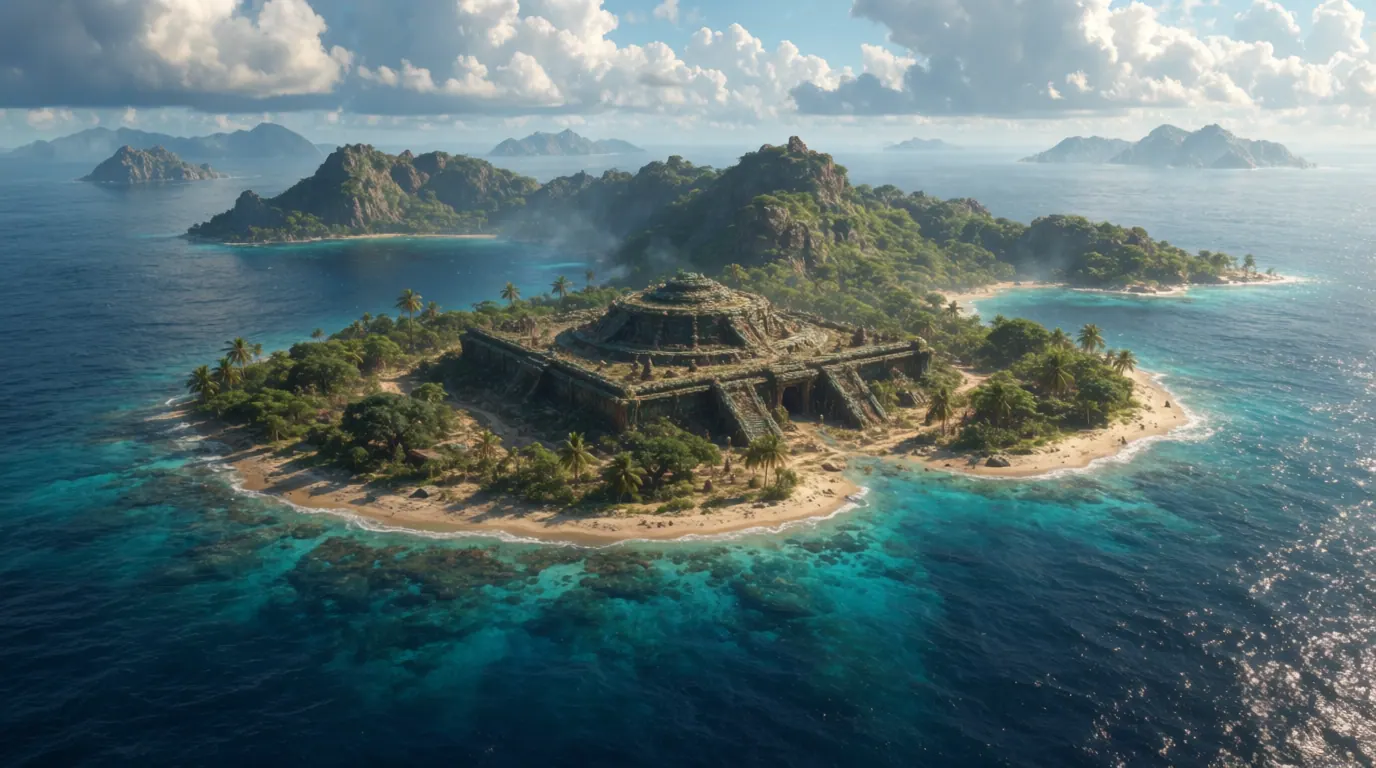
AI illustration of a tropical southern Indian coastline at dawn for Kumari Kandam lore - atmospheric legend only, not a documentary photograph of a real site.
AI ILLUSTRATION FOR REFERENCE ONLY

Kumari Kandam

Kumarinadu · Kumari Nadu
LEGENDARY

Mainstream consensus: A genuine medieval Tamil literary tradition of lost academies, reinterpreted and massively expanded in scale during the 1920s-30s Tamil revivalist movement through direct borrowing from the separate Western Lemuria concept - two traditions that share rhetorical DNA but describe different source material and should not be treated as one legend.

Share this page
Short answer

Kumari Kandam is a Tamil tradition of a vast southern homeland swallowed by the sea, rooted in medieval commentary on lost Sangam-era poetry academies. In the 1920s-30s, Tamil revivalists fused it with the unrelated Western "Lemuria" hypothesis to claim deep antiquity for Tamil civilization - a distinct literary legend, not a copy of Lemuria.

Mainstream view

Tamil literary historians treat the lost-Sangam tradition as medieval commentary on earlier poetic academies, not literal geology, and treat the specific name and continental scale of "Kumari Kandam" as a 1920s-30s revivalist elaboration that borrowed vocabulary from the separate, Western Lemuria hypothesis to argue for Tamil civilizational antiquity.

Alternative claim

Early 20th-century Tamil revivalist writers, led by figures like Devaneya Pavanar, argued Kumari Kandam was a real, vast landmass - the original Tamil homeland - destroyed by catastrophic flooding, predating and underlying later Tamil culture by tens of thousands of years.

Read the oldest source first and the modern legend's scale disappears almost entirely. Nakkirar's medieval commentary on the grammatical treatise Iraiyanar Akapporul - traditionally dated to roughly the 10th-12th century CE - describes a tradition of three successive Tamil Sangams, or literary academies. The first two, in cities now lost, were abandoned when the sea encroached on the land; only the third Sangam, at Madurai, survived into the historical record scholars can actually examine. That's the entire founding claim: lost coastal cities, not a sunken continent, and crucially, no use of the name "Kumari Kandam" at all.

The scale shift happened centuries later, and for a specific reason. In the 1890s and 1900s, Western biogeographers including Philip Sclater and Ernst Haeckel floated "Lemuria" as a hypothetical sunken Indian Ocean landmass explaining lemur distribution across Madagascar and India - a serious scientific proposal at the time, later abandoned once plate tectonics offered a better explanation. Tamil revivalist writers in the 1920s and 30s, prominently the linguist Devaneya Pavanar, recognized an opportunity: borrowing Lemuria's apparent scientific authority and continental scale, they recast the older, modest lost-Sangam tradition as a vast, ancient Tamil homeland - predating and underlying world civilization itself - and gave it the name Kumari Kandam.

That fusion is historically real and well documented by scholars like Sumathi Ramaswamy, who has traced exactly how and when the two traditions merged. But the fusion being real doesn't make the underlying claims equivalent. Kumari Kandam, properly understood, is Tamil literary and political history - a story about how a modern revivalist movement reached for deep antiquity using borrowed scientific vocabulary - while Lemuria is a retracted 19th-century biogeography hypothesis. Treating them as interchangeable erases what's genuinely distinct and interesting about each: one is rooted in centuries of Tamil poetic commentary and 20th-century identity politics, the other in now-outdated zoological speculation that happened to share a convenient, borrowable scale. No marine survey south of Kanyakumari has found anything resembling submerged continent-scale structures either way. For the Western biogeography tradition this legend borrowed from, and for other continent-scale myths recruited into modern identity claims, see Atlantis theories, Mu, and Hyperborea.

Illustrations

AI illustrations for reference only - not documentary photographs.

Legendary Kumari Kandam atmosphere (AI illustration)AI illustration for reference only

Key debates and stories

Attributed discovery narratives, debates, and claim histories from named sources. Links open the originals; AnomalyWiki does not verify these claims.

Claims vs mainstream

The claim

Kumari Kandam and Lemuria are simply the same legend under two names.

Mainstream view

They have genuinely separate origins - Kumari Kandam from medieval Tamil commentary on lost poetic academies, Lemuria from 19th-century Western biogeography speculation - that were deliberately merged only in the 1920s-30s by Tamil revivalist writers seeking scientific-sounding legitimacy for an existing literary tradition.

The claim

Ancient Tamil texts describe a submerged continent spanning tens of thousands of years.

Mainstream view

The earliest sources, including Nakkirar's commentary, describe lost coastal Sangam academy sites on a modest, unspecified scale; the continent-sized, deep-antiquity claims appear only in 20th-century revivalist writing, not in the medieval commentary itself.

The claim

Modern geology or oceanography has confirmed a sunken Tamil continent south of India.

Mainstream view

No published bathymetric survey, core sample, or marine excavation has identified submerged urban or agricultural structures south of Kanyakumari consistent with a lost continent-scale civilization.

Timeline

  1. c. 10th-12th century CENakkirar's commentary on the Iraiyanar Akapporul describes two earlier Tamil Sangam academies, located south of the historical third academy at Madurai, as having been lost to encroaching sea - the earliest known textual root of the later Kumari Kandam tradition, without that name. Source: Nakkirar, commentary on Iraiyanar Akapporul
  2. 1890s-1900s CEWestern biogeographers (Philip Sclater, Ernst Haeckel) popularize the unrelated "Lemuria" hypothesis - a proposed sunken Indian Ocean landmass explaining lemur distribution - later retracted as a serious scientific proposal once plate tectonics explained the biogeography differently. Source: Summarized in standard histories of the 19th-century Lemuria hypothesis
  3. 1920s-1930s CETamil revivalist writers, prominently Devaneya Pavanar, fuse the medieval lost-Sangam tradition with the Western Lemuria hypothesis, coining or popularizing "Kumari Kandam" as a vast, scientifically framed lost Tamil continent. Source: Summarized in Sumathi Ramaswamy, "Catastrophic Cartographies," Journal of Asian Studies (2000)

FAQ

Is Kumari Kandam the same thing as Lemuria?

No. They started as separate traditions - Kumari Kandam from medieval Tamil commentary on lost poetic academies, Lemuria from 19th-century Western biogeography - and were deliberately merged only in the 1920s-30s.

What is the earliest source for Kumari Kandam?

Nakkirar's commentary on the Iraiyanar Akapporul, traditionally dated to roughly the 10th-12th century CE, which describes two lost Tamil Sangam academies, not a sunken continent.

Who popularized the modern Kumari Kandam legend?

Tamil revivalist writers of the 1920s-30s, especially Devaneya Pavanar, who fused the older lost-Sangam tradition with the Western Lemuria hypothesis's scale and vocabulary.

Has science confirmed a sunken Tamil continent?

No published marine survey or excavation south of Kanyakumari has identified structures consistent with a lost continent-scale civilization.

Why does the legend matter in Tamil culture today?

It became part of the broader Dravidian revivalist movement's argument for deep Tamil civilizational antiquity, and still surfaces in literature, cinema, and political rhetoric.