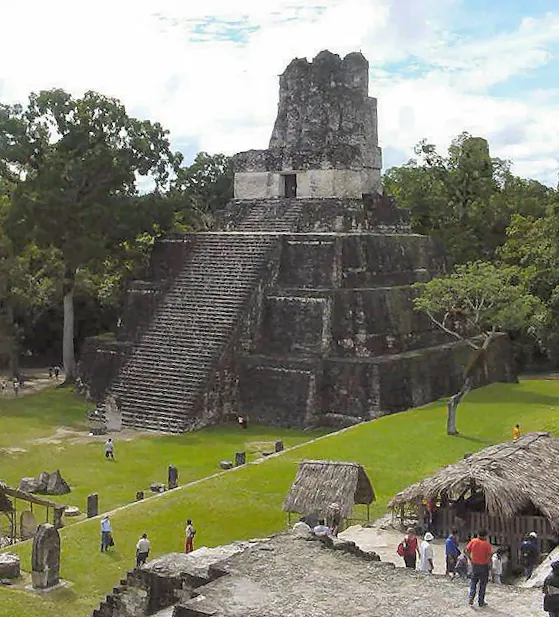
"Collapse" oversells the ending and undersells the cause. Between roughly 750 and 900 CE, the great dynastic capitals of the southern Maya lowlands - Tikal, Calakmul, Copan, Palenque - stopped dedicating royal monuments, shed population, and ceded political relevance in a pattern epigraphers can track almost city by city through the hieroglyphic record.
A stalagmite pulled from Yok Balum Cave in southern Belize gave climate scientists something sagas never could: an annual rainfall ledger. The speleothem record shows a run of multi-year droughts stacking up across exactly the decades when royal monument dedications slow and then stop at one capital after another. Drought alone does not topple cities, but it strains harvests that dense Classic-period populations had little slack to absorb.
Warfare compounds the pressure. Rival dynasties fought increasingly aggressive campaigns in the Terminal Classic, and the ideological core of Maya kingship - rulers as intermediaries with divine forces - gets harder to sustain when droughts keep arriving regardless of royal ritual. Tikal's Stela 11, dated to 869 CE, is the city's last word on its own dynasty; after it, the inscriptions simply stop.
What this was not: a vanishing. Northern Yucatan cities including Chichen Itza entered a new golden age exactly as the south fragmented, and Maya communities never left the region - they live there now, speaking Mayan languages their ancestors spoke through the collapse and after it. Popular culture's appetite for a single dramatic trigger, from plague to Erich von Däniken's 1968 claim that Pakal's sarcophagus lid depicts a rocket pilot, consistently loses to the slower, multi-causal record epigraphy and paleoclimate science actually support.
Peers facing comparable engineered-landscape strain include the Khmer Empire at Angkor and the broader Mesoamerican story at Teotihuacan. The licensed Tikal photo belongs here because those temple roofs breaking the jungle canopy are the clearest visual argument for what Classic Maya political ambition actually built - and what outlived the dynasties that built it.
