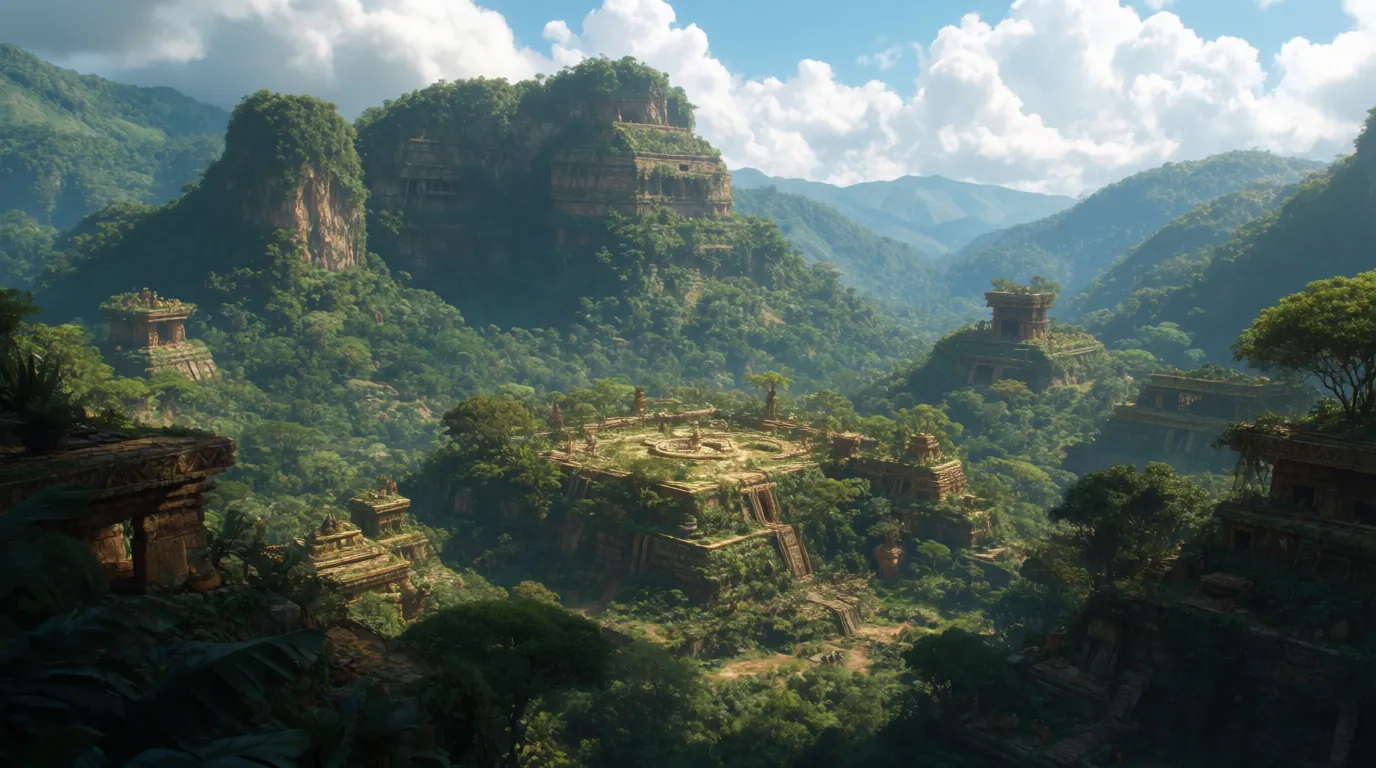
AI illustration of a misty Andean highland lake at dawn for El Dorado lore - atmospheric legend only, not a documentary photograph of Lake Guatavita today.
AI ILLUSTRATION FOR REFERENCE ONLY

El Dorado

El Hombre Dorado · The Gilded One
LEGENDARY

Mainstream consensus: A real indigenous investiture ceremony, inflated by colonial-era rumor into a fictional golden city that drove costly, failed European expeditions for roughly two centuries after the original ritual had already ended.

Share this page
Short answer

El Dorado began as a real Muisca ritual near Bogota, where a new ruler was gilded in gold dust and rowed onto Lake Guatavita to offer treasure to the water. Spanish conquistadors twisted "the gilded one" into a rumored golden city, fueling centuries of doomed expeditions. The real ceremony left behind the 1969 Muisca Raft artifact.

Mainstream view

Historians trace El Dorado to a genuine Muisca investiture ritual at Lake Guatavita, which Spanish conquistadors heard about secondhand, mistranslated, and inflated into a rumored city or kingdom of gold that then drove failed expeditions for over two centuries.

Alternative claim

Various expedition promoters, including Gonzalo Jimenez de Quesada and Sir Walter Raleigh, argued a literal golden city or empire - distinct from the Muisca and often called Manoa - genuinely existed somewhere in the South American interior and could still be found.

Strip away three centuries of rumor and El Dorado turns out to describe a person, not a place. Spanish colonial chronicler Juan Rodriguez Freyle recorded the underlying Muisca ceremony in detail in his 1636-38 El Carnero: a newly chosen zipa, or ruler, was coated in resin and gold dust, rowed to the center of Lake Guatavita on a raft piled with gold and emerald offerings, and cast the treasure into the water while crowds on shore did the same. Conquistadors who heard garbled versions of this rite began calling the ruler "El Dorado" - the gilded one. Over subsequent retellings, the gilded man became a gilded city, and the city became a kingdom waiting somewhere in the interior to be found and plundered.

That drift from ritual to rumor to expedition is the whole story. Gonzalo Jimenez de Quesada's 1537 conquest of Muisca territory put Spanish colonists in direct contact with the legend's source material, but it didn't stop the myth from mutating further south and east as Spanish and later English explorers chased it across the continent. Sir Walter Raleigh's two Orinoco expeditions, in 1595 and again in 1617, searched specifically for a golden city he called Manoa - a search that cost his own son Watt his life in the second, failed attempt. Raleigh's 1596 published account mixed accurate river geography with secondhand indigenous reports that may have described entirely different, non-golden settlements by the time they reached him.

Lake Guatavita itself took the brunt of the obsession. Treasure-seekers tried to drain it repeatedly from the 1540s onward, culminating in an ambitious 1898-99 attempt by the British-backed Contractors Ltd., which actually succeeded in cutting a drainage channel - only for the exposed mud to bake solid in the sun before full recovery was possible, sealing most of whatever remained back into the lakebed. What these efforts did recover, over the centuries, were scattered gold objects consistent with genuine votive offerings - never a submerged city, because there wasn't one to find. The clearest physical confirmation came much later and far more quietly: a farmer's 1969 discovery near Pasca of the Muisca Raft, a small gold figurine depicting the lake ceremony itself, now on permanent display at Bogota's Museo del Oro - the ritual's own receipt, more informative than two centuries of armed expeditions. For other legends born from a real practice stretched past recognition, see Atlantis theories and Mu; for underground and hidden-realm variants of the same searching impulse, see Agartha and Hyperborea.

Illustrations

AI illustrations for reference only - not documentary photographs.

Legendary El Dorado atmosphere (AI illustration)AI illustration for reference only

Key debates and stories

Attributed discovery narratives, debates, and claim histories from named sources. Links open the originals; AnomalyWiki does not verify these claims.

Claims vs mainstream

The claim

El Dorado was a literal city built from gold, waiting to be found and plundered.

Mainstream view

No golden city has ever been located despite centuries of searching; historians read "El Dorado" as originally describing a gilded person (the Muisca ruler), not a place, with the city version emerging only through conquistador rumor and retelling.

The claim

Sir Walter Raleigh's "Manoa" expeditions proved the golden kingdom was real and nearby.

Mainstream view

Raleigh's 1595 and 1617 Orinoco expeditions found no golden city; his account relied heavily on secondhand indigenous reports and earlier Spanish rumor, and his son died during the failed 1617 search.

The claim

Draining Lake Guatavita would reveal El Dorado's lost treasure city.

Mainstream view

Multiple drainage attempts (from the 1540s through a 1898-1899 British-backed company) recovered scattered gold objects consistent with votive offerings, not evidence of a submerged city - and most attempts failed to lower the lake meaningfully at all.

Timeline

  1. 16th century CE (pre-conquest practice)Muisca investiture ritual at Lake Guatavita: a new zipa (ruler) is coated in gold dust, rowed onto the lake on a raft, and offers gold and emerald objects into the water as tribute. Source: Described in Spanish colonial chronicles, summarized in Juan Rodriguez Freyle, El Carnero (1636-1638)
  2. 1537 CESpanish conquistador Gonzalo Jimenez de Quesada conquers Muisca territory around modern Bogota, and conquistadors begin circulating the term "El Dorado" for the gilded-ruler legend they hear about. Source: Summarized in standard histories of the Spanish conquest of New Granada
  3. 1595 and 1617 CESir Walter Raleigh leads two English expeditions up the Orinoco River searching for a golden city he calls "Manoa," publishing an account of the first; his son Watt Raleigh dies during the second. Source: Walter Raleigh, The Discoverie of the Large, Rich, and Bewtiful Empyre of Guiana (1596)
  4. 1969 CEA farmer discovers the Muisca Raft, a small gold votive figurine depicting the lake ceremony, near Pasca, Colombia - now held at Bogota's Museo del Oro as physical evidence for the underlying ritual. Source: Museo del Oro, Bogota (Muisca Raft artifact record)

FAQ

Was El Dorado a real golden city?

No. "El Dorado" - the gilded one - originally described a Muisca ruler covered in gold dust during a lake ceremony; the golden-city version grew from conquistador rumor, not a documented place.

What is the Muisca Raft?

A small gold votive figurine discovered in 1969 near Pasca, Colombia, depicting the actual lake investiture ceremony - now held at Bogota's Museo del Oro.

Did anyone ever find El Dorado?

No golden city has ever been located, despite centuries of Spanish and English expeditions, including Walter Raleigh's two searches for a city he called Manoa.

Why did people try to drain Lake Guatavita?

Treasure-hunters believed Muisca gold offerings lay in the lakebed. Several attempts from the 1540s to 1898-99 recovered scattered artifacts but never a sunken city.

Who first used the term El Dorado?

Spanish conquistadors in New Granada, after Gonzalo Jimenez de Quesada's 1537 conquest of Muisca territory, as they heard about the gilded-ruler ritual.