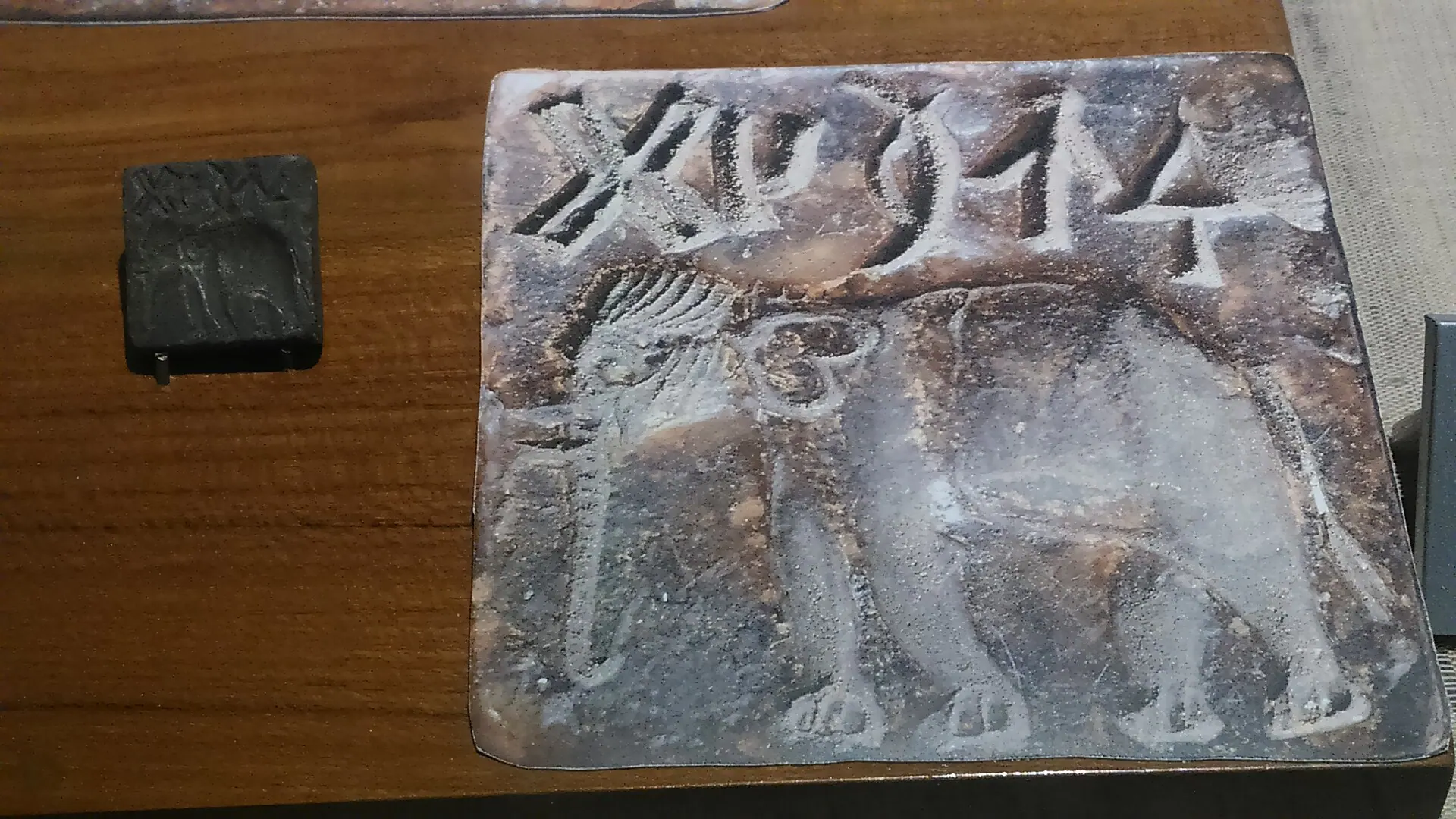
The Indus script’s cruelty is its brevity. On Harappan seals a unicorn or elephant shares a few centimeters with a handful of signs - enough to prove a system, not enough to yield a Rosetta Stone moment. Since the 1920s excavations announced a Bronze Age urban culture, those tiny strings have attracted linguistic hope, statistical models, and press conferences. Consensus has not followed.
That does not make the parent civilization legendary. The Indus Valley Civilization is excavated fact; the script is an open epigraphic problem inside it. Alien authorship talk is noise. Competing Dravidian or Indo-Aryan readings are serious hypotheses that still owe the field a demonstration the short corpus can carry.
Peers include Linear A, Phaistos Disc, and Voynich Manuscript. Licensed seal photography belongs here because the steatite faces are the data.
Statistical studies of sign order, positional habits, and pairwise frequencies show structure. Structure is not the same as a dictionary. Without longer texts or a bilingual, every linguistic identification must overperform on a thin sample. That is why careful papers sound cautious and viral posts sound finished.
Meanwhile seals still teach economic and identity history even while mute: who stamped what, which animals paired with which sign groups, how craft specialists moved motifs across cities. The script problem and the civilization’s reality are different sentences. Keep them that way.
Short seal texts frustrate bilingual hopes. Without a Rosetta-style key, statistical sign studies and careful typology do more than viral "decoded" videos.
Indus signs still refuse a settled decipherment. Seals and tablets keep scholars arguing about writing versus proto-writing - a better mystery than inventing a lost mother-tongue empire.
Statistical catalogs of Indus signs keep growing while claimed alphabets come and go. Patience is the honest method: short texts punish overconfident translators.
Until a bilingual inscription appears, every full alphabet claim should be read as a hypothesis. The seals remain short, stubborn, and firmly tied to Harappan sites - not to Pacific motherlands.
