BEINECKE RARE BOOK & MANUSCRIPT LIBRARY, YALE / PUBLIC DOMAIN

Voynich ManuscriptDraft

Beinecke MS 408 · Voynich MS · Cipher manuscript (Beinecke catalog wording)
EVIDENCEABCDE
UNRESOLVEDA · Physically verified or firmly documented

Mainstream consensus: Real manuscript (object existence Grade A); script undeciphered; meaning unresolved; extraordinary decipherments unproven.

Short answer

The Voynich Manuscript is an illustrated codex in an undeciphered script, held at Yale's Beinecke Library. Radiocarbon dating of the vellum points to the early 15th century. The physical book is real; what the script means remains one of history's most inviting open puzzles.

Mainstream view

A genuine historical manuscript on early-15th-century vellum with unknown script and language. Many proposed decipherments fail reproducibility or paleographic constraints. Hoax and cipher hypotheses remain discussed; none is settled consensus for meaning.

Alternative claim

Alien language, perfected forbidden cipher, or modern hoax engineered to fool experts - competing unverified theories circulated in media and enthusiast communities.

Short answer

The Voynich Manuscript is a real illustrated codex in an undeciphered script, held at Yale’s Beinecke Library. Vellum radiocarbon dates cluster in the early 15th century. The physical object is Grade-A documented; what the script means remains unresolved. It is not proven alien text - and spectacular decipherment claims usually fail specialist tests.

What it is

Entry class: manuscript / undeciphered script. Location: Beinecke Rare Book & Manuscript Library (MS 408), Yale. Consensus dating: early 15th-century vellum (c. 1404–1438 by AMS summaries). Claimed dating/authorship: many sensational theories, from Roger Bacon to aliens to modern hoax - evaluate each separately.

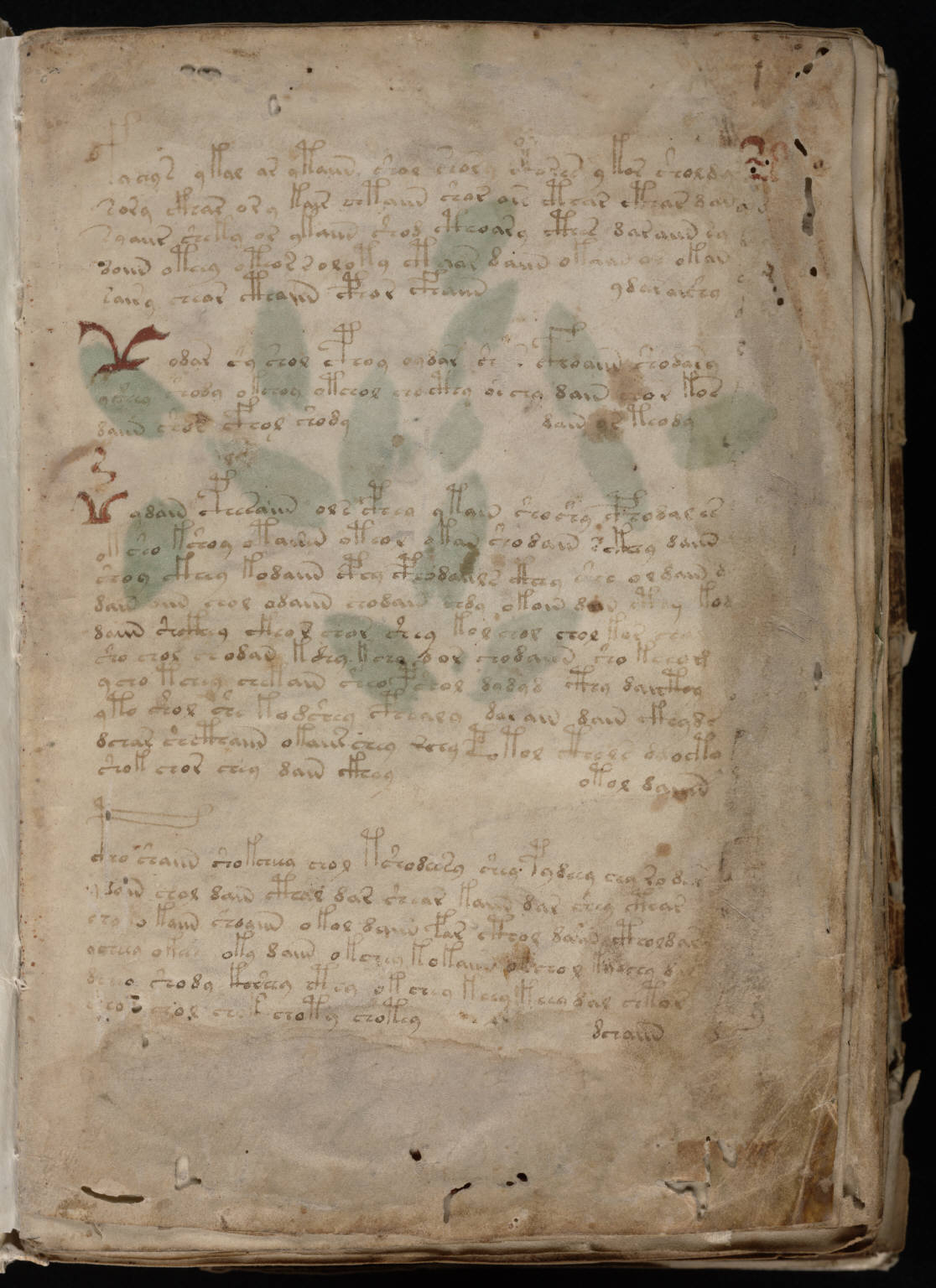
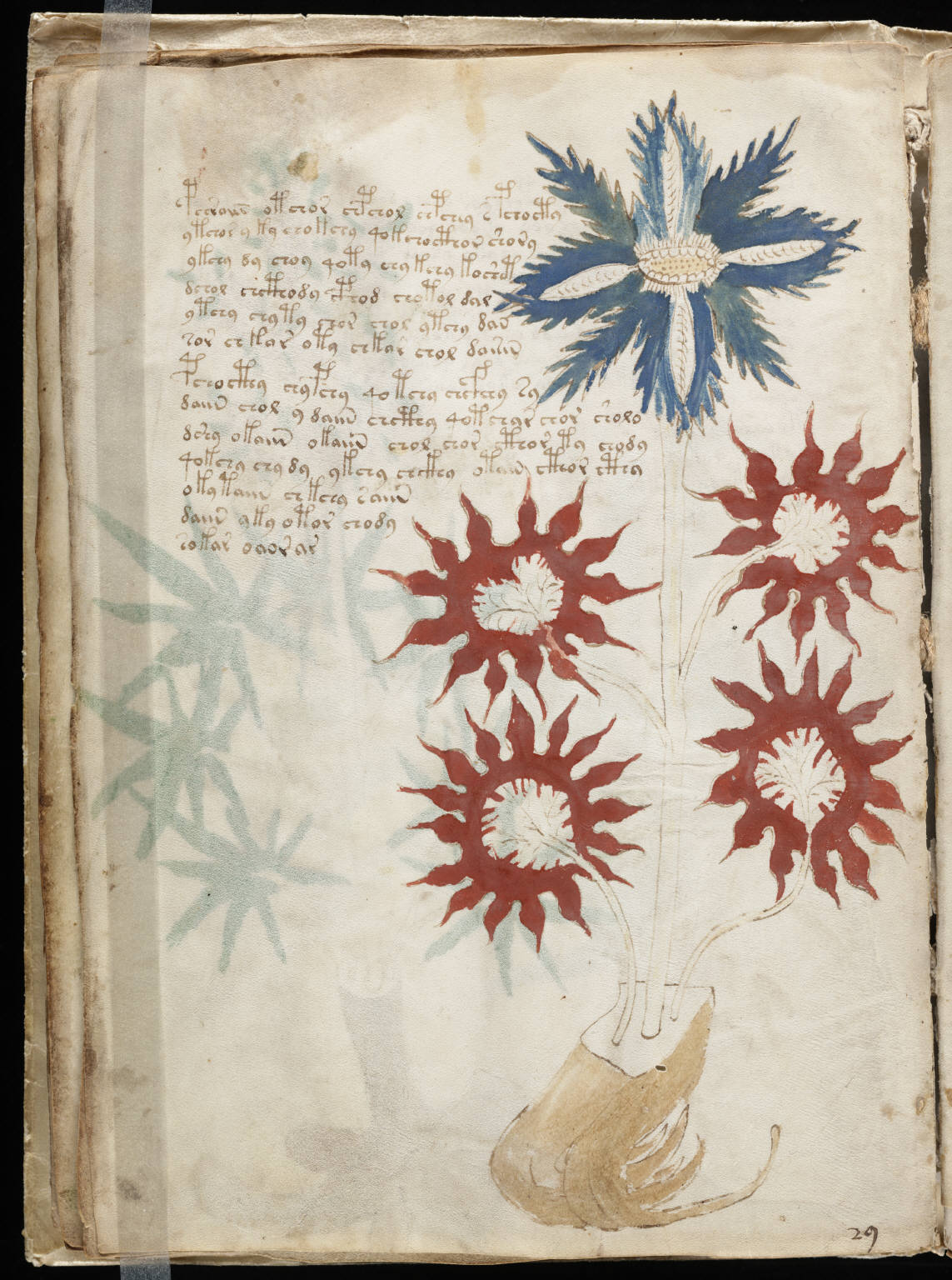
Illustrations include botanical-like plants, astronomical/zodiac rounds, and bathing figures that fuel speculative readings. PreferRealAsset folio scans on this page are Beinecke-derived public-domain reproductions of the real codex - not AI “translations.”

Mainstream view vs alternative claims

Mainstream manuscript study treats the book as a genuine historical object with unknown script. Alternative claims leap to aliens, perfected forbidden ciphers, or purely modern fabrication.

ClaimMainstream view
Alien languageNo evidence; European manuscript context
Definitively solved by recent AI/amateur claimNo broad consensus; reproducibility required
20th-century fake objectEarly-15th-century vellum dating weighs against
Roger Bacon authorshipMembrane dating post-dates Bacon; unproven

Evidence rating

Evidence level: A for the physical manuscript’s existence, institutional provenance, and radiocarbon-constrained membrane dating.

Meaning status: unresolved. The script remains undeciphered; cipher-vs-natural-language and intentional-nonsense hypotheses stay open. Extraordinary “solved!” claims are not mainstream consensus.

Timeline

  • c. 1404–1438 — Radiocarbon ranges for sampled vellum.
  • 17th century — Early-modern scholarly letters on ownership and failed decipherment.
  • 1912 — Wilfrid Voynich acquires and publicizes the manuscript.
  • 1969 — Beinecke Library accession pathway completes modern institutional home.
  • 2009 onward — Dating results and digital facsimiles broaden research access.

Key debates and stories

Attributed cards cover Voynich’s acquisition, Kircher/Marci-era letters, radiocarbon dating, and recurring “solved!” headlines. Prefer Beinecke primary pages over viral decipherment posts.

Peers include other undeciphered scripts and mystery texts. Cross-category: Cicada 3301 (phenomena) for another cryptography-and-curiosity culture crossover - entertainment adjacency, not equivalence.

Facsimile coffee-table books, puzzle communities, novel plots, and documentaries that promise a breakthrough every few years.

FAQ

Is the Voynich Manuscript real? Yes - Beinecke MS 408 is a physical illustrated codex at Yale.

Has anyone deciphered it? No solution has lasting specialist consensus.

How old is it? Vellum AMS ranges commonly cited around 1404–1438; authorship remains debated.

Is it an alien book? No evidence for extraterrestrial authorship.

Can I see the pages online? Yes - Beinecke digital images and public-domain reproductions.

Could it be a hoax? Text-origin hypotheses (including constructed nonsense) remain open; early-15th-century membrane dating rules out a purely modern fake of the object itself.

Sources

Beinecke Library pages and public-domain scans are linked in the Sources panel.
Documentary photos

Rights-cleared documentary stills and serious reference images. These are not AI illustrations.

Voynich Manuscript folio with plant-like illustration and undeciphered Voynichese script (Beinecke MS 408).
Herbal / botanical folio from Beinecke MS 408Credit: Beinecke Rare Book & Manuscript Library, Yale / public domain
Another botanical-style Voynich Manuscript folio with undeciphered script.
Botanical-section folioCredit: Beinecke Library, Yale / public domain
Voynich Manuscript folio with circular zodiac-like diagram and undeciphered script.
Zodiac / roundel section folioCredit: Beinecke Library, Yale / public domain
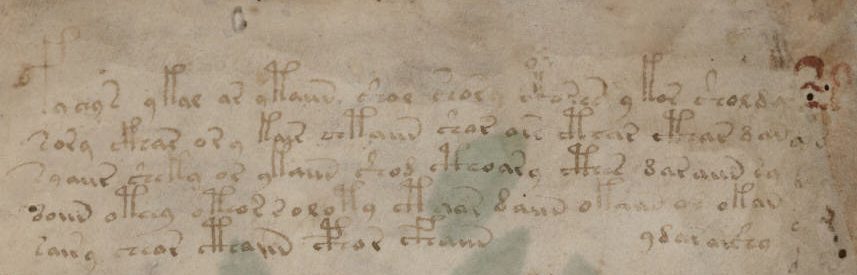
Close detail of undeciphered Voynichese letterforms from the Voynich Manuscript.
Detail of undeciphered Voynichese scriptCredit: Beinecke Library, Yale / public domain (detail crop)

Key debates and stories

Attributed discovery narratives, debates, and claim histories from named sources. Links open the originals; AnomalyWiki does not verify these claims.

Claims vs mainstream

The claim

The Voynich Manuscript is an alien or extraterrestrial text.

Mainstream view

No evidence supports non-human authorship. It is studied as a medieval/early modern European manuscript puzzle.

The claim

A recent AI or amateur decipherment has definitively solved it.

Mainstream view

High-profile claims appear regularly; specialists require reproducible methods that fit linguistic and codicological facts. None currently holds broad consensus.

The claim

It is a meaningless modern hoax with no historical value.

Mainstream view

Radiocarbon dating of the vellum to the early 15th century and documented early-modern provenance weigh against a 20th-century fabrication of the whole object - though intentional cipher/nonsense hypotheses for the text remain debated.

The claim

Roger Bacon definitely wrote it.

Mainstream view

Early modern and 20th-century attributions (including Bacon) lack convincing proof; dating of the membrane post-dates Bacon’s lifetime.

Timeline

  1. c. 1404–1438Radiocarbon dating of vellum samples clusters in the early 15th century.Source: University of Arizona AMS dating reported via Beinecke / scholarly summaries
  2. 17th centuryEarly-modern correspondence (including Marci to Kircher) discusses attempts to decipher the book then in Central European scholarly circles. Source: Beinecke provenance notes; Kircher correspondence tradition
  3. 1912Wilfrid Voynich acquires the manuscript and publicizes it to scholars.Source: Beinecke Library Voynich manuscript history
  4. 1969Beinecke Library receives the manuscript (gift connected to H. P. Kraus / Voynich estate pathway).Source: Beinecke catalog history
  5. 2009–2010sRadiocarbon results widely reported; digital facsimiles expand public research access.Source: Beinecke digital library; Arizona AMS reporting summaries

FAQ

Is the Voynich Manuscript real?

Yes. It is a physical illustrated codex (Beinecke MS 408) held at Yale’s Beinecke Rare Book & Manuscript Library.

Has anyone deciphered it?

No solution has lasting specialist consensus. Claims appear often; they must be reproducible and fit manuscript evidence.

How old is it?

Radiocarbon dating of the vellum points to the early 15th century (commonly cited around 1404–1438). Authorship and exact composition history remain debated.

Is it an alien book?

There is no evidence for extraterrestrial authorship. Scholarship treats it as a historical European manuscript mystery.

Can I see the pages online?

Yes. The Beinecke Library provides high-resolution digital images for research; public-domain reproductions also circulate via archives and Commons.

Could it be a hoax?

Some researchers argue the text could be meaningless or constructed nonsense, but the physical book’s early-15th-century membrane dating rules out a purely modern fake of the object itself. Text-origin hypotheses remain open.