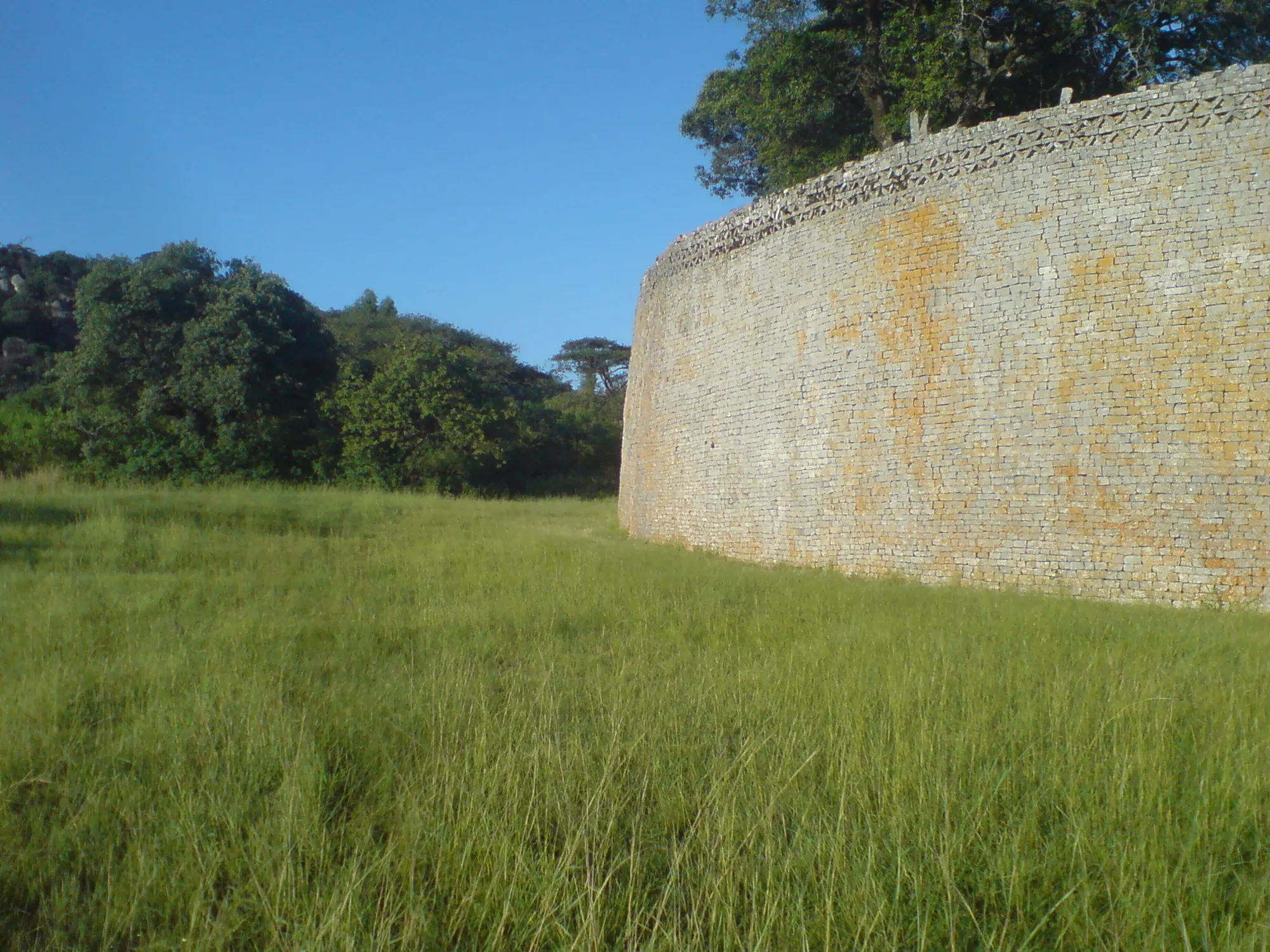
Exterior wall of the Great Enclosure at Great Zimbabwe.
JENS KLINZING / WIKIMEDIA COMMONS

Great Zimbabwe

Great Zimbabwe National Monument · Zimbabwe ruins
ARCHAEOLOGICAL

Mainstream consensus: Verified medieval African urban complex and UNESCO World Heritage Site.

Share this page
Short answer

Great Zimbabwe is a medieval stone city in southeastern Zimbabwe, capital of a Shona-linked trading polity that flourished roughly the 11th–15th centuries CE. Archaeology credits African builders; colonial-era myths of foreign architects were political fiction dressed as excavation talk, not dig results.

Mainstream view

Great Zimbabwe was built and occupied by African societies ancestral to Shona traditions, controlling inland-to-coast trade including gold. Dry-stone architecture reflects regional skill, not imported mystery races.

Alternative claim

Older colonial narratives and some fringe retellings deny African authorship or invent Phoenician, biblical, or lost-race builders.

Great Zimbabwe’s walls do not need a mystery race to look impossible. Dry-stone courses curve into the Great Enclosure, choke into passages, and rise into a conical tower that still photographs like a dare. Specialists place the capital’s monumental life in the medieval centuries, when inland African polities converted cattle, gold, and Indian Ocean trade links into political gravity.

Colonial-era writers tried to steal the credit anyway - Phoenicians, biblical travelers, anyone but the people whose ceramics and settlements match the ruins. That historiography was racism with a pith helmet. Excavation restored authorship to African builders and turned Great Zimbabwe into a national and UNESCO emblem rather than a puzzle for European fantasy.

Peers include other monumental African and global centers such as Aksum and megalithic comparison sites like Baalbek. Licensed enclosure photos belong here because the stone is the evidence.

Trade wealth mattered. Inland gold and ivory moved toward the Indian Ocean world; imports and status goods moved back. Great Zimbabwe’s walls are monumental politics in stone - enclosures that sorted access, spectacle, and sacred space. Oral traditions and archaeology together situate the site inside African state formation, not outside it.

Colonial denial of African authorship was never a neutral hypothesis. It was a governing ideology looking for ruins to misread. Modern Zimbabwe’s name and heritage programs reversed that theft. Visitors still feel the walls’ weight; they should also feel the scholarly correction that restored the builders’ names to the landscape.

Colonial administrators once insisted the stone city must be foreign. Radiocarbon dates, local ceramics, and oral histories rebuilt the credit line to African builders - a correction as important as the architecture itself.

Great Zimbabwe's granite walls answer colonial myths with local chronology. The builders were Shona-speaking African societies; the romance of foreign founders was politics, not masonry.

Tour guides today walk the Great Enclosure with Shona history in the foreground. That itinerary is the corrective the stones always deserved.

Documentary photos

Rights-cleared documentary stills and serious reference images. These are not AI illustrations.

Great Enclosure wall, Great ZimbabweCredit: Jens Klinzing / Wikimedia Commons

Key debates and stories

Attributed discovery narratives, debates, and claim histories from named sources. Links open the originals; AnomalyWiki does not verify these claims.

Claims vs mainstream

The claim

Foreign (non-African) builders constructed Great Zimbabwe.

Mainstream view

Excavation, ceramics, and chronology support African authorship; colonial foreign-builder theories served racist politics, not evidence.

The claim

The ruins are too sophisticated for local societies.

Mainstream view

Dry-stone walls and enclosure planning fit regional Iron Age trajectories and trade wealth.

The claim

Great Zimbabwe is mythical.

Mainstream view

It is a conserved archaeological landscape with extensive scholarly literature.

Timeline

  1. c. 11th–12th centuries CEEarly growth of the Zimbabwe culture settlement toward monumental stone construction.Source: Great Zimbabwe chronologies
  2. c. 13th–14th centuries CEFlourishing capital with Great Enclosure and hill complex; long-distance trade connections.Source: Archaeological syntheses; UNESCO summaries
  3. c. 15th century CEPolitical and economic shifts; decline of the site as capital as power centers move.Source: Regional Zimbabwe culture history
  4. 1986UNESCO World Heritage listing of Great Zimbabwe National Monument.Source: UNESCO World Heritage Centre

FAQ

Who built Great Zimbabwe?

African societies of the Zimbabwe culture, ancestral to Shona traditions. Colonial foreign-builder myths are rejected by archaeology.

When was Great Zimbabwe occupied?

Major monumental occupation is generally placed in the medieval centuries, roughly the 11th through 15th centuries CE.

Why is it called Zimbabwe?

The name relates to stone houses / venerated houses in Shona; the modern country took its name from this heritage.

Was it only a ruin without a polity?

No - it was a capital tied to regional trade, including gold routes toward the coast.