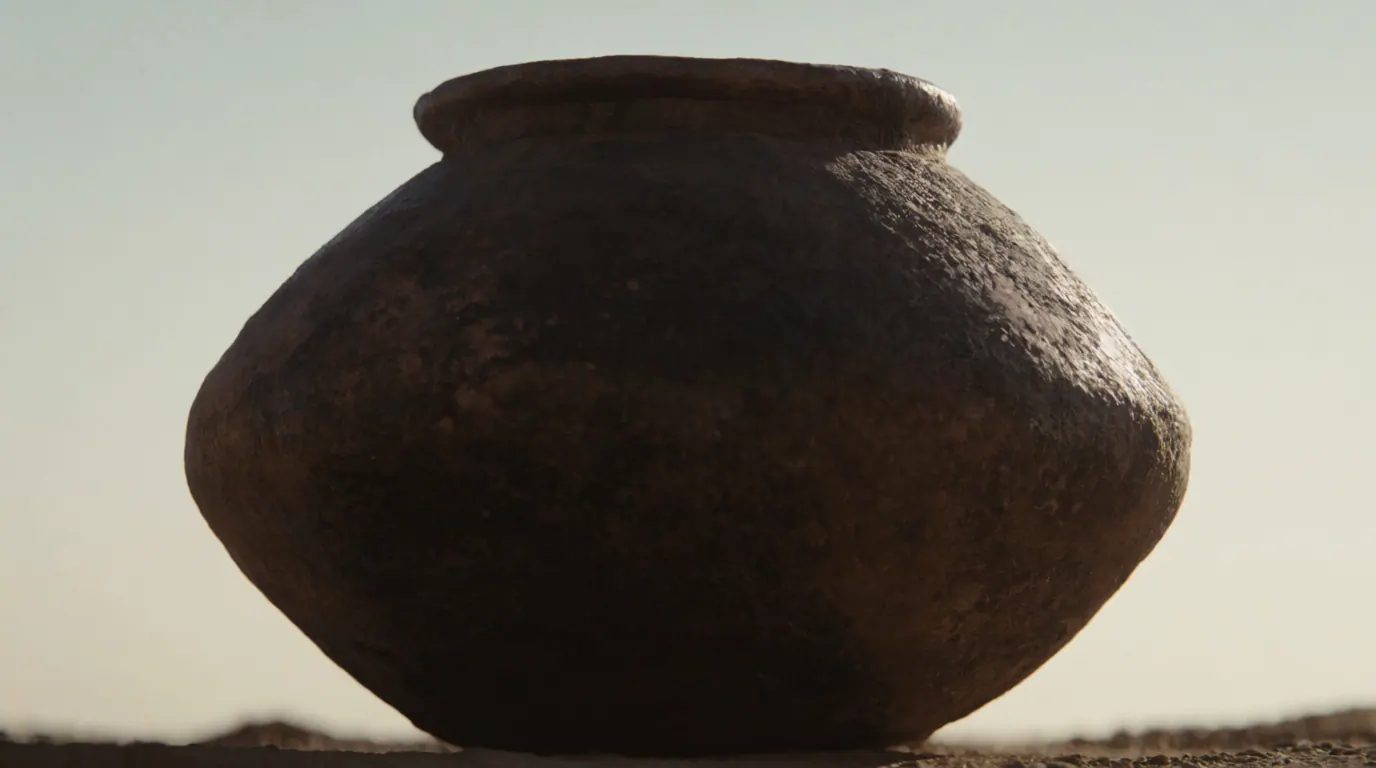
AI illustration of Baghdad Battery (front view) for reference only.
AI ILLUSTRATION FOR REFERENCE ONLY

Baghdad Battery

Parthian battery · Khujut Rabu jar
MUSEUM OBJECT

Mainstream consensus: The jars are real archaeological objects; the galvanic-cell electroplating interpretation is rejected by mainstream archaeology.

Share this page
Short answer

The Baghdad Battery is a Sasanian-style clay jar with a copper cylinder and iron rod, reported near Khujut Rabu outside Baghdad and publicized by Wilhelm Konig in 1938 as a galvanic cell. Replicas can make tiny currents, but archaeologists reject ancient electroplating - comparable jars look like sealed document containers.

Near Khujut Rabu, outside Baghdad and close to the ruins of Ctesiphon, excavators in the 1930s recovered unglazed clay jars that held rolled copper cylinders sealed with bitumen and, in the famous specimen, an iron rod down the axis. Wilhelm Konig, then working with the Iraq Museum laboratory, published in 1938 the idea that the assembly was a galvanic cell - a Parthian or Sasanian battery that might have electroplated gold onto silver.

The nickname stuck because the parts really do look like a wet cell if you squint, and hobby reconstructions filled with vinegar or other electrolytes can register a small voltage. That demonstration is chemically unsurprising and historically thin. No wires, plating baths, or securely electroplated artifacts from the period accompany the jars, and materials specialists have long noted that the region's fine gold-on-silver work matches mercury fire-gilding, not electrochemical plating.

Dating is softer than the television voiceovers admit. Konig favored a Parthian horizon; pottery style arguments push many specialists toward a Sasanian date, and the original excavation notes were never as tidy as later retellings. Comparable jars without metal cores preserve flaky papyrus or parchment remains, which is why the mainstream storage-or-ritual-container reading keeps winning peer review even when the battery myth wins thumbnails.

Pair the jar with other OOPArt magnets such as the Antikythera mechanism - a real machine with a real gear train - to see how different too-advanced rhetoric behaves when the paperwork is strong. Licensed photos of the copper-and-iron assembly belong here; AI plates are illustrations only and do not upgrade Konig's hypothesis into a power grid.

The useful lesson is not that ancient people never noticed chemistry. It is that a sticky nickname can outrun accession notes for decades, and that the next claim about secret Parthian wiring should arrive with a plating bath, a wire, or a securely dated electroplated object - not only a jar that can make a meter twitch when you pour vinegar into a replica.

Sightings and object accounts

Attributed sightings, recoveries, and object histories from named sources. Links open the originals; AnomalyWiki does not verify these claims.

Claims vs mainstream

The claim

The jars prove Parthian or Sasanian electroplating workshops.

Mainstream view

No electroplated objects, wiring, or plating baths are known from the period; regional gilding matches fire-gilding.

The claim

Because replicas produce voltage, ancient builders intended batteries.

Mainstream view

Accidental electrochemical behavior under modern electrolytes does not prove ancient electrical use.

The claim

Scientists refuse to discuss the find.

Mainstream view

The objects are discussed in museum and materials literature; the dispute is about function.

Timeline

  1. 1936Clay jars with copper cylinders are associated with excavations near Khujut Rabu outside Baghdad.Source: Konig-era Iraq Museum reporting summaries
  2. 1938Wilhelm Konig publishes the galvanic-cell electroplating hypothesis.Source: Konig 1938 paper discussed in later materials studies
  3. 1970s-2000sPopular science and television reconstructions demonstrate tiny voltages with added acid electrolytes.Source: Myth-testing and hobby reconstruction coverage
  4. 2000sMaterials specialists restate that regional gilded silver matches mercury gilding, not electroplating.Source: British Museum specialist commentary summarized in reference literature

FAQ

Is the Baghdad Battery a real artifact?

Yes. Clay jars with copper cylinders and iron rods were reported from near Baghdad; the controversy is about function.

Did ancient people use it to make electricity?

No archaeological consensus supports intentional electrical use despite modern replica voltages.

Why do people call it a battery?

Wilhelm Konig's 1938 paper proposed a galvanic cell for electroplating; popular science kept the nickname.

What do archaeologists think it was for?

Leading alternatives treat the jars as sealed containers for papyrus, parchment, or ritual materials.

Were the gold-plated objects electroplated?

Materials specialists point to conventional gold plating and mercury fire-gilding, not electroplating baths.