



Overview
Some mysteries arrive through the ears. In Taos, New Mexico, and Kokomo, Indiana, residents lay awake to a low hum their neighbors could not hear. On 4625 kHz, a Russian shortwave station nicknamed the Buzzer has broadcast a rasping tone since at least the early 1980s. In 1997, NOAA hydrophones caught the Bloop rising out of the Pacific, and the internet imagined a sea giant.
Each story mixes a measurable signal with a human listener, and that pairing is where the arguments start. Sometimes the instruments hear something nobody can explain; sometimes people hear something no instrument can find.
Sounds the machines caught
The Bloop is the cleanest solved case. Hydrophones built partly for nuclear-test monitoring picked up a powerful, rising ultra-low-frequency sound in 1997. It did not match known whale calls, and for years "unknown animal" filled the gap. As catalogs of Antarctic ice noise grew, NOAA matched the signature to icequakes - ice cracking and calving thousands of kilometers away.
UVB-76 is the opposite: completely real, completely audible, and still officially unexplained. Anyone with a shortwave receiver can tune in to the buzz. Rare voice breaks read out Russian code words and names, which fed Cold War legends about doomsday switches. Most monitors think it is a mundane channel marker for a military radio network.
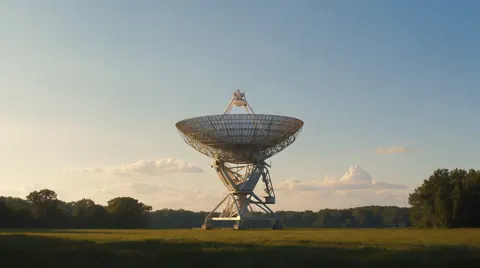
The Wow! Signal of 1977 was never a sound anyone heard - it was a column of characters on a radio-telescope printout near the hydrogen line. It still belongs with the listening mysteries: a single loud moment, no repeat, and no way to test it.
Sounds people heard
The Hum has followed small communities since at least the 1970s in Bristol, England, and the 1990s in Taos, where locals organized surveys and university teams brought microphones and vibration sensors. Kokomo traced part of its complaints to industrial equipment that was then fixed, yet some hearers kept hearing. Recent research increasingly points to a rare low-frequency tinnitus for the cases no meter can catch.
Havana Syndrome raised the stakes. Starting in late 2016, U.S. and Canadian personnel in Cuba described a sudden directional sound or pressure, then headaches, dizziness, and memory trouble. Clinicians documented real symptoms. In 2020 the National Academies named directed radio-frequency energy as the most plausible mechanism for some early cases; later U.S. intelligence assessments judged a foreign weapon very unlikely. The HAVANA Act of 2021 authorized compensation without settling the cause.
Telling the cases apart
The useful question is always the same: did an instrument record it, did a person perceive it, or both? Recorded-only sounds tend to resolve through better catalogs, as the Bloop did. Perceived-only sounds tend to resolve, if at all, through medicine and acoustics. The hardest cases sit in between - real distress, partial measurements, and no single source anyone can point to.
Related hubs
FAQ
Why can neighbors disagree about a hum? Hearing sensitivity, local industry, and expectation all differ, and some hearers have a rare low-frequency tinnitus that feels exactly like an outside noise.
Is UVB-76 a spy numbers station? Most radio monitors think it is a military command-network marker rather than a classic numbers station. Its exact purpose has never been officially confirmed.
What caused Havana Syndrome? Nobody has settled it. A 2020 National Academies panel called pulsed radio-frequency energy the most plausible mechanism for some cases, while most U.S. intelligence agencies later judged a foreign attack very unlikely.
Was the Bloop a giant sea creature? No. NOAA's Pacific Marine Environmental Laboratory matched the 1997 recording to icequakes - Antarctic ice cracking and calving - heard across thousands of kilometers of ocean.
Sources
- Encyclopaedia Britannica, The Hum - https://www.britannica.com/science/the-hum
- The World / PRI, numbers stations - https://www.pri.org/stories/2014-08-15/mysterious-numbers-stations-are-still-air-and-still-mysterious
- U.S. National Institutes of Health - https://www.nih.gov/