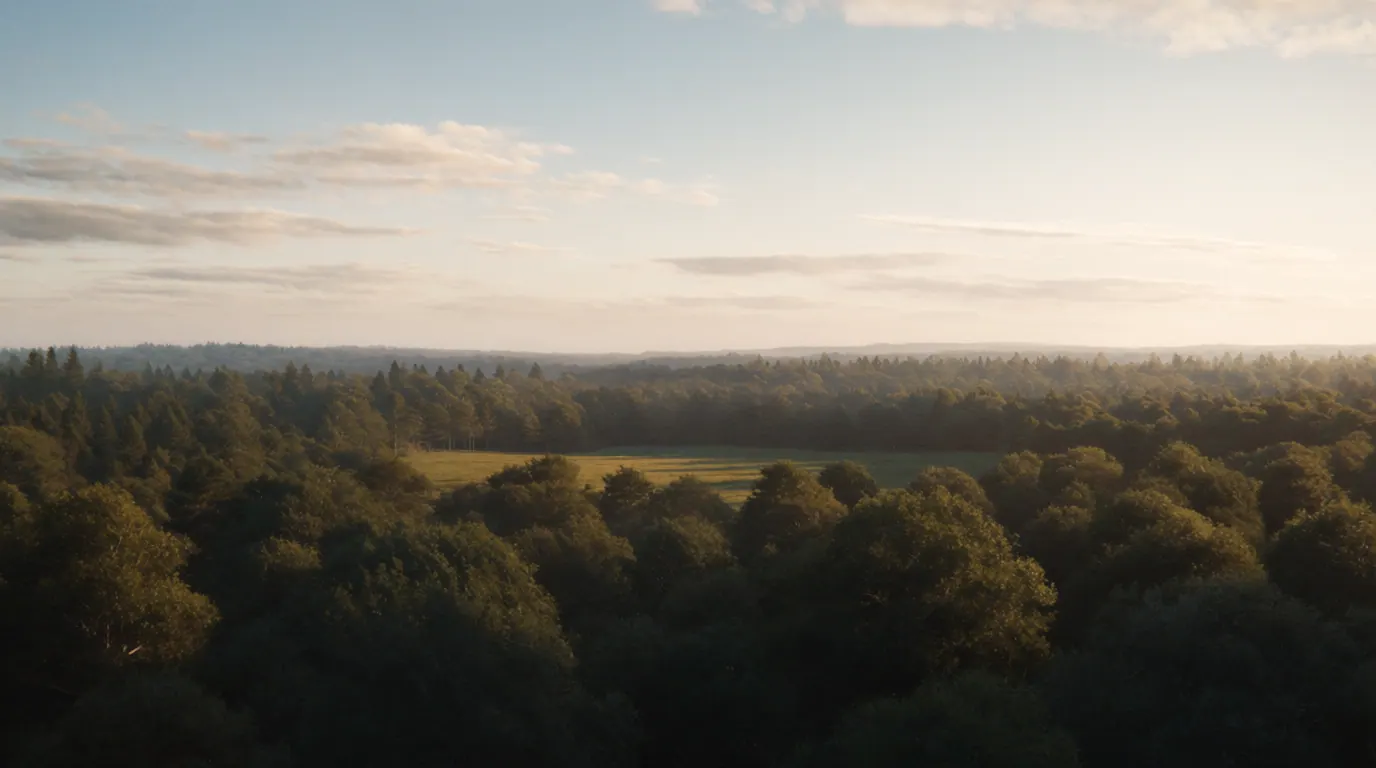
AI illustration cover for Rendlesham Forest Incident
AI ILLUSTRATION FOR REFERENCE ONLY

Rendlesham Forest Incident

Rendlesham Forest UFO incident · Britain's Roswell
UNRESOLVED

Mainstream consensus: Multiple USAF witnesses, Lt Col Halt's memo, and UK National Archives releases document multi-night light reports near RAF Woodbridge. Ministry of Defence files and skeptical reconstructions (the Orford Ness lighthouse, a fireball, and bright stars) explain much of the reported geometry without confirming a non-human craft, while later witness embellishments remain disputed.

Share this page
Short answer

Over Christmas 1980, US airmen from RAF Woodbridge chased strange lights into Rendlesham Forest, finding ground depressions and radiation readings. Colonel Charles Halt's memo and his recorded night patrol made this "Britain's Roswell." Skeptics, backed by witness statements, trace much of it to the Orford Ness lighthouse; some airmen still call it unexplained.

What happened

Over Christmas week 1980, U.S. Air Force security personnel stationed at RAF Woodbridge in Suffolk, England, reported strange lights in the pine woods beyond the base's east gate. In the early hours of 26 December, patrolmen including Jim Penniston and John Burroughs followed a glowing object among the trees and later described a metallic, triangular shape with pulsing lights that moved and then vanished. Two nights later, deputy base commander Lt Col Charles I. Halt led a larger party back into the forest. His team noted shallow ground depressions, took radiation-meter readings near the marks, and Halt narrated moving lights onto a microcassette while the patrol watched the sky.

Halt summarized the nights in a memo titled "Unexplained Lights," sent to the UK Ministry of Defence on 13 January 1981. The document stayed relatively obscure until a 1983 News of the World story and subsequent Freedom of Information releases made "Rendlesham" shorthand for Britain's best-known UFO case. Released MoD files show interest and correspondence; they do not show a confirmed alien landing. Skeptical readings emphasize the Orford Ness lighthouse beam sweeping through the trees, bright stars and meteors, and the way stress plus unfamiliar woodland optics can turn ordinary lights into a structured craft. Halt and other witnesses have disputed lighthouse-only explanations for parts of what they recorded.

Later retellings complicated the evidence further. Penniston's claims about binary codes and notebook sketches grew more elaborate in subsequent decades - a pattern investigators flag when evaluating memory after fame. The Halt tape remains a primary-feeling artifact: a named officer narrating in real time. Whether those lights were lighthouse, flare, craft, or a stack of misidentifications is still argued in books and documentaries. Rendlesham endures because it sits at the intersection of military witnesses, a contemporaneous memo, audio, and a skeptical counter-story that never fully satisfied the people who filed the report.

Related phenomena

What witnesses reported

USAF security patrolmen Jim Penniston, John Burroughs, and Ed Cabansag reported chasing a glowing object into the forest on the first night. Deputy base commander Lt Col Charles Halt led a second patrol that recorded ground depressions, radiation readings, and moving sky lights on a hand-held microcassette tape. Suffolk police who separately attended the scene reported only the Orford Ness lighthouse.

Proposed explanations

  • Mainstream

    The recurring flashing light seen on both nights was the Orford Ness lighthouse beam, visible through gaps in the trees and misjudged as near and low. A bright fireball meteor the same evening likely triggered the initial alert, and the three ground depressions were later identified as old rabbit diggings.

    Ian Ridpath case archive; Suffolk police correspondence (1999)

  • Alternative

    An unidentified craft, possibly landed, left physical trace evidence and radiation readings, based on Halt's memo, his recorded tape, and later elaborated accounts from Penniston and Burroughs describing closer contact.

    Halt memo (1981); later Penniston and Burroughs interviews

  • Disputed

    Whether the lighthouse explains every detail Halt narrates on tape, including a light that seemed to "beam down" and throw off glowing particles, remains argued between skeptical researchers and the original witnesses.

    Codename Rendlesham documentary (2020); Ridpath-witness rebuttals

Case accounts

Attributed incident and cultural accounts from named sources. Links open the originals; AnomalyWiki does not verify these claims.

Claims vs mainstream

The claim

Jim Penniston touched a landed, physical craft and later decoded a binary message from notes made that night.

Mainstream view

His original January 1981 statement describes an object roughly 50 meters away, not direct contact. The touch, binary code, and alternate landing-site claims only appeared in interviews beginning in the 1990s and are not corroborated by Burroughs, Cabansag, or Halt's contemporary records.

The claim

The flashing light seen on both nights proves an intelligently controlled craft, not a lighthouse.

Mainstream view

Burroughs's and Cabansag's own 1981 statements describe following a light for about two miles before recognizing it as a beacon. Suffolk police who separately attended the scene independently reported only the Orford Ness lighthouse.

The claim

Ground depressions and radiation readings are physical proof of a landed vehicle.

Mainstream view

Local forester Vince Thurkettle identified the three depressions as old rabbit diggings. Halt's own radiation readings, around 0.1 milliroentgens, sit within normal background variation rather than indicating a dramatic radiological event.

The claim

The US and UK governments have hidden the full file on Rendlesham.

Mainstream view

The UK National Archives released the complete Ministry of Defence file in August 2009, and the US Air Force's Halt memo was released under the Freedom of Information Act back in 1983. Both describe lights and official uncertainty, not a confirmed cover-up.

Timeline

  1. 1980-12-26Security patrolmen Jim Penniston, John Burroughs, and Ed Cabansag follow a glowing light from RAF Woodbridge's East Gate into Rendlesham Forest, reporting a metallic, triangular object with pulsing lights before it is lost among the trees.Source: Halt memo (1981); witness statements, Ian Ridpath case archive
  2. 1980-12-28Lt Col Charles Halt leads a follow-up night patrol into the forest, records three ground depressions and 0.1-milliroentgen radiation readings, then narrates moving star-like lights on a hand-held microcassette recorder for roughly 45 minutes.Source: Halt memo (1981); Halt tape transcript, Ian Ridpath case archive
  3. 1981-01-13Halt sends his memo titled "Unexplained Lights" to the UK Ministry of Defence.Source: Halt memo, The National Archives (DEFE 24/1948)
  4. 1983-06The US Air Force releases Halt's memo under the Freedom of Information Act to researcher Robert Todd of Citizens Against UFO Secrecy.Source: Ian Ridpath case archive
  5. 1983-10The News of the World runs "UFO Lands in Suffolk - Official," bringing the case to wide public attention for the first time.Source: Ian Ridpath case archive
  6. 1998-10Astronomy writer Ian Ridpath pinpoints the exact forest vantage point where the Orford Ness lighthouse lines up with the farmhouse Halt described, matching his account of the light's position.Source: Ian Ridpath case archive
  7. 2009-08-17The UK National Archives releases the complete Ministry of Defence file DEFE 24/1948 on the incident as part of a wider UFO-files release.Source: The National Archives; Associated Press/NBC News
  8. 2010-12On the 30th anniversary, Jim Penniston shifts his account to a third alleged landing site, a change researchers note contradicts his original 1981 statement and sketch map.Source: Ian Ridpath case archive
  9. 2020The documentary Codename Rendlesham revisits the case with Halt-era participants, John Burroughs, Ian Ridpath, and folklorist David Clarke.Source: BBC News; Chill Factor Films

FAQ

What happened at Rendlesham Forest?

Over several nights around Christmas 1980, USAF security patrolmen based at RAF Woodbridge/Bentwaters reported chasing glowing lights into the forest, finding ground depressions and elevated radiation readings on a follow-up patrol.

Who was Colonel Halt and why does his memo matter?

Lt Col Charles Halt was the deputy base commander who led the second-night patrol. His January 1981 memo to the UK Ministry of Defence, titled "Unexplained Lights," is the case's central official document.

Was the Rendlesham light just a lighthouse?

Astronomy writer Ian Ridpath identified the Orford Ness lighthouse as the likely source of the flashing light both nights, a reading supported by the patrolmen's own 1981 statements and by Suffolk police who attended independently.

Did Jim Penniston really touch a craft?

His original 1981 statement describes an object about 50 meters away, not direct contact. The touch and binary-code claims appeared only in interviews decades later and are not corroborated by the other patrolmen.

Were the radiation and ground depressions proof of a landing?

A local forester identified the depressions as old rabbit diggings, and Halt's own radiation readings fall within normal background variation rather than indicating a dramatic event.

Has the UK government released its files on the case?

Yes. The National Archives opened the complete Ministry of Defence file (DEFE 24/1948) in August 2009, following the US Air Force's 1983 Freedom of Information release of Halt's memo.

Why is Rendlesham called "Britain's Roswell"?

It is the UK's most-cited UFO case, with a named military witness, an official memo, and a recorded tape - rare documentation that keeps it compared to the US Roswell legend.

Is the Rendlesham Forest Incident considered solved?

Mainstream researchers consider the lighthouse and fireball explanations strong for most reported lights, but some original witnesses still describe the first night as personally unexplained.