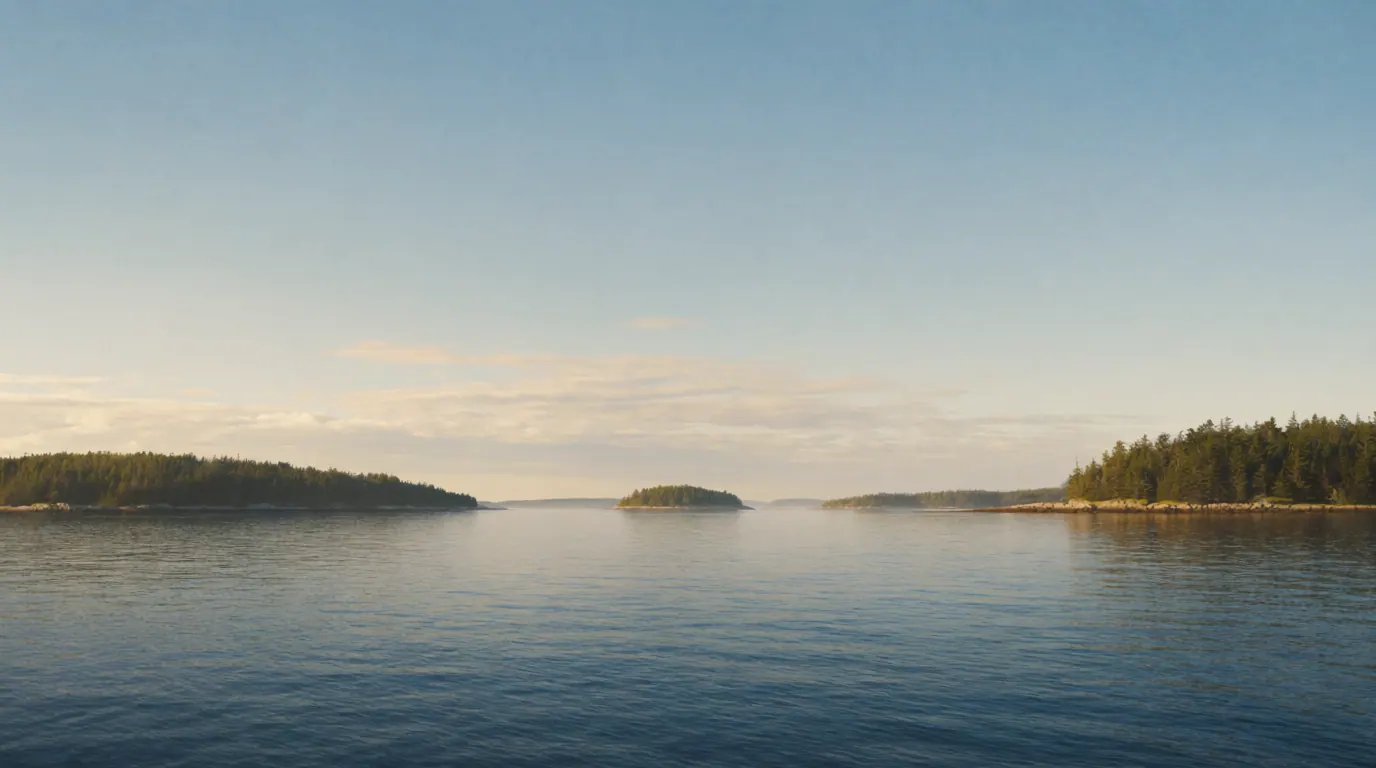
AI illustration cover for Shag Harbour Incident
AI ILLUSTRATION FOR REFERENCE ONLY

Shag Harbour Incident

Shag Harbour UFO Crash
UNRESOLVED

Mainstream consensus: A documented multi-witness sighting backed by same-night RCMP reports and a Royal Canadian Navy underwater search makes Shag Harbour one of the best paper-trailed UFO cases on record. No wreckage, body, or craft was ever recovered, and official Canadian files still list the object as unidentified rather than confirming an extraterrestrial vehicle.

Share this page
Short answer

On the night of 4 October 1967, at least a dozen witnesses in Shag Harbour, Nova Scotia, watched a row of lights descend into the water with a loud whistle and a flash. The RCMP logged it the same night, and the Royal Canadian Navy ran a two-day underwater search that found nothing. Official files list the object as unidentified.

Overview

The Shag Harbour incident is Canada's best-documented UFO water-impact case: on the night of 4 October 1967, multiple civilian witnesses along Nova Scotia's south shore reported a low, lights-bearing object that appeared to hit the water near the fishing village of Shag Harbour. Royal Canadian Mounted Police officers and local fishermen treated it as a possible aircraft downing. Divers and vessels searched; no wreckage and no oil slick matching a conventional crash were recovered. What keeps the file famous is not a recovered craft but the paper trail - RCMP telexes, Canadian Forces messages, and later Access to Information releases that show officials logged an unidentified object and coordinated a search.

Mainstream aviation history treats the night as an unresolved water-impact report with no confirmed airframe. Ufology treats it as North America's rare government-confirmed splashdown because the wording in period messages is unusually blunt about an unidentified flying object. Those two readings share the same documents; they disagree about what the silence of the seafloor means.

How the night unfolded

Witnesses described lights descending in a line, then a splash and a yellowish foam on dark water. Police arrived quickly enough to interview multiple independent observers and to request Coast Guard and military help. Divers worked in difficult autumn conditions. Nothing identifiable as an aircraft or missile came up. In the following days, separate radar and chase stories from elsewhere in Atlantic Canada were later braided into a longer Shag Harbour week narrative by researchers - a braid that mixes solid local testimony with thinner regional add-ons.

Decades later, civilian investigators and Canadian Forces Archives releases kept the case alive in documentaries and books. Skeptical readings emphasize misidentified aircraft, meteors, or search confusion; believers emphasize the multi-witness water impact and the official unidentified label. Neither side produced a hull. For craft-shape lore elsewhere, see Flying Saucer discussions that grew from other decades.

Related UFO cases

In popular culture

Canadian TV specials, Chris Styles and Don Ledger's research books, and UFO conference circuits made Shag Harbour a pilgrimage stop on Nova Scotia's coast. The village leans into tourism signage without claiming a recovered saucer. The durable image is boats on black water looking for something that never floated up.

What witnesses reported

Eighteen-year-old Laurie Wickens and several friends were first to report a row of four bright lights descending at an angle into St. Mary's Bay near the Shag Harbour government wharf, followed by a loud whistle and a flash on impact. RCMP Constable Ron O'Brien and Corporal Victor Werbicki reached the shore within minutes and saw a patch of yellowish foam where the object had gone under; they radioed Rescue Coordination Centre Halifax the same night.

Proposed explanations

  • Mainstream

    A bright meteor or re-entering debris produced the falling-lights effect, and the foam witnesses describe sinking was separate, coincidental debris or phosphorescence already in the water.

    Condon Report (Case 34) follow-up; prosaic-explanation case literature

  • Alternative

    A genuine unidentified craft entered the water and was tracked moving underwater toward a submarine net near the mouth of the bay, prompting the joint search.

    Researcher Chris Styles's archival work and witness interviews

  • Disputed

    Whatever entered the water, the same-night RCMP response and a two-day Royal Canadian Navy dive search make this one of the few UFO cases with a contemporaneous government paper trail.

    Department of National Defence file, Library and Archives Canada

Case accounts

Attributed incident and cultural accounts from named sources. Links open the originals; AnomalyWiki does not verify these claims.

Claims vs mainstream

The claim

Shag Harbour is the world's only government-confirmed UFO crash.

Mainstream view

Canadian officials labeled it a "UFO Report" after ruling out aircraft, an administrative designation rather than a confirmed finding of an extraterrestrial craft.

The claim

The object was tracked moving underwater toward a U.S. submarine base.

Mainstream view

Underwater-movement claims come from later witness interviews and researcher reconstructions; no public navy sonar log documents a tracked object.

The claim

The two-day Navy search found physical wreckage.

Mainstream view

Official search reports describe two days of diving in good conditions that "produced nil results" before the search was called off.

The claim

A meteor cannot explain the loud whistle and the bay-spanning foam patch witnesses described.

Mainstream view

Investigators favoring prosaic causes note that distance and sound estimates for fast, low nighttime events are notoriously unreliable, though no single mundane object has been matched to the full account.

Timeline

  1. 1967-10-04Around 11:20 p.m., Laurie Wickens and several friends see a row of four bright lights descend at an angle into St. Mary's Bay near the Shag Harbour wharf, followed by a whistling sound and a flash.Source: Shag Harbour UFO Incident Society official account
  2. 1967-10-04RCMP Constable Ron O'Brien and Corporal Victor Werbicki arrive within minutes, see a patch of yellowish foam on the water, and radio Rescue Coordination Centre Halifax; a NORAD radar check at Baccaro confirms no aircraft are missing.Source: RCMP / Department of National Defence case records
  3. 1967-10-05RCC Halifax sends a priority teletype to RCAF headquarters labeling the event a "UFO Report" after ruling out aircraft, flares, and other known objects, triggering a request for a navy underwater search.Source: Department of National Defence UFO Report teletype (Library and Archives Canada)
  4. 1967-10-05Maritime Command dispatches Fleet Diving Unit Atlantic divers to Shag Harbour with Coast Guard cutter support.Source: Canadian Forces Headquarters UFO file
  5. 1967-10-07A helicopter flies three additional divers from Shearwater to join the underwater search of the bay.Source: Canadian Forces Headquarters UFO file
  6. 1967-10-08After two days of diving over roughly half a mile by a mile and a half of seabed, the Navy reports "nil results" and the search is terminated that evening.Source: Royal Canadian Navy search report (Library and Archives Canada)

FAQ

What happened at Shag Harbour in 1967?

On 4 October 1967, witnesses in Shag Harbour, Nova Scotia, watched a row of bright lights descend into the water with a whistle and a flash, prompting an RCMP response and a navy search.

Did the Canadian government investigate Shag Harbour?

Yes. The RCMP responded the same night, and the Department of National Defence labeled it a "UFO Report" in an official teletype before tasking a Royal Canadian Navy dive search.

Did divers find any wreckage?

No. Navy divers searched the bay for two days and reported "nil results" before the search was called off.

Was the object tracked moving underwater?

That claim comes from later witness interviews and researcher Chris Styles's work, not from any public official sonar or submarine-net log.

Is Shag Harbour officially explained?

No single explanation has been officially confirmed. Government files still list the object as unidentified rather than naming a cause.