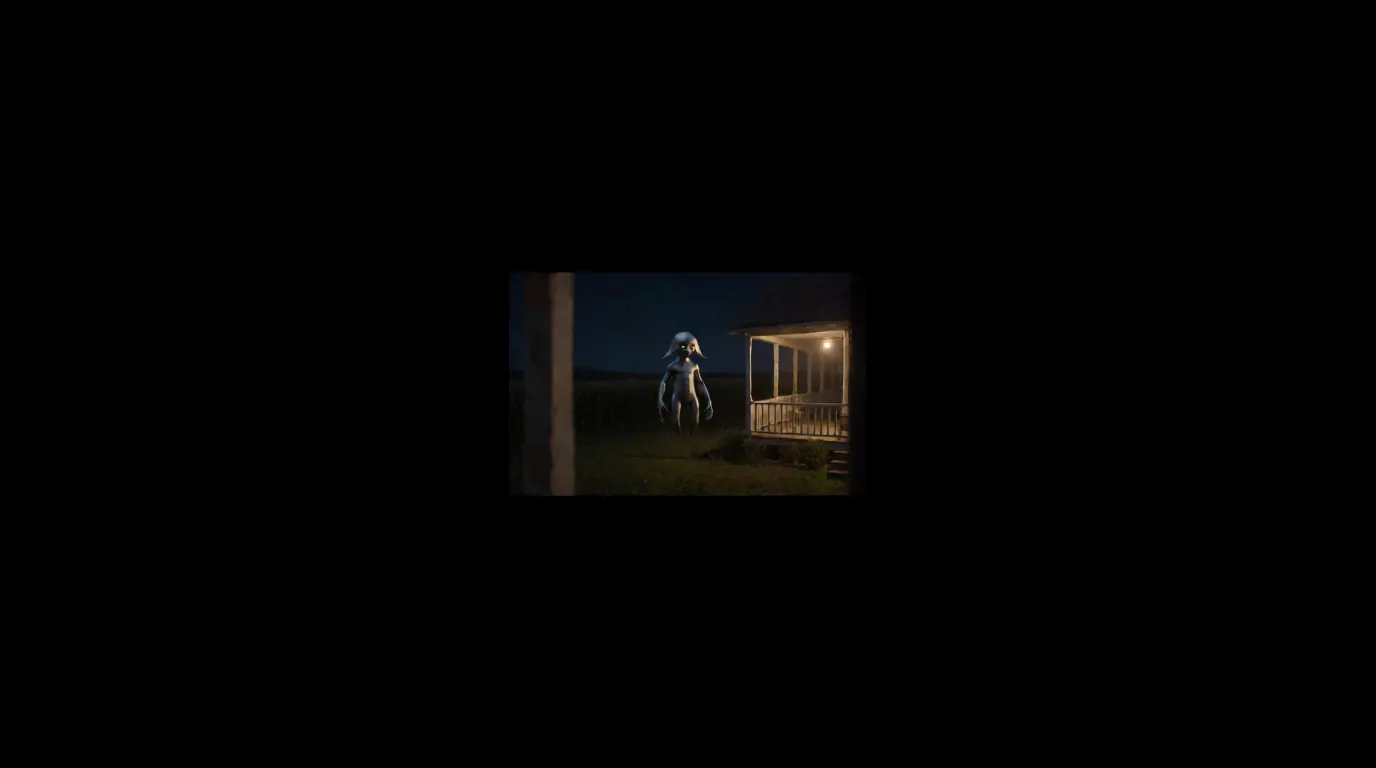
AI identification plate (In habitat) of Hopkinsville Goblins
AI ILLUSTRATION FOR REFERENCE ONLY

Hopkinsville Goblins

Kelly Green Men (period press; not reliably green in primary accounts) · Hopkinsville Little Men · Kelly–Hopkinsville entities · Kelly goblins
ALLEGED SIGHTING

Mainstream consensus: Police and next-day press documented a frightened multi-witness siege and gunfire, but investigators found no craft, tracks, or beings; officers denied the family had been drinking, and the Air Force logged the report as "Unknown" without a field probe rather than issuing a solved explanation; skeptics favor great horned owls plus a bright meteor and stress misperception, while ufologists treat the night as a classic unresolved close encounter.

Share this page
Short answer

Hopkinsville goblins are the small, metallic humanoids from the Kelly, Kentucky farmhouse siege of 21–22 August 1955. Eleven Sutton and Taylor relatives told police that clawed figures with glowing eyes besieged their home until gunfire drove them back. Mainstream analysts treat the night as a documented panic with no recovered beings, while ufologists keep it as a classic close encounter.

Overview

Hopkinsville Goblins - also called the Kelly–Hopkinsville creatures or “Kelly green men” in later headlines - are the small, metallic, big-eared humanoids reported at a farmhouse near Kelly, Kentucky, on the night of 21–22 August 1955. Multiple members of the Sutton and Taylor families told police they fired at beings that approached windows and the roof after a glowing object seemed to land in a nearby field. Officers who searched the property found fear, a damaged window screen, and no captured visitor. The case became a classic close-encounter-of-the-third-kind file in UFO literature and a punchline in national press that painted the beings green even when early local copy stressed “little men” in metal-looking garb.

What keeps the story encyclopedic is the density of named witnesses, timed police response, and immediate newspaper work - especially Joe Dorris’s 22 August 1955 Kentucky New Era report - plus later skeptical reconstructions that favor great horned owls, meteors, and misperception under stress. For the press cliché that borrowed “green” language around this flap, see Little Green Men. Project Blue Book’s wider catalog context sits at Project Blue Book.

Origin of the legend

Billy Ray Taylor’s well-water outing and claimed saucer glimpse, followed by hours of alleged approaches by roughly three-to-four-foot figures with oversized ears or side flaps, glowing eyes, and clawed hands, form the core narrative. Lucky Sutton and others described ineffective shotgun and pistol fire; the beings supposedly floated or bobbed rather than walked like ordinary animals. The families drove into Hopkinsville for help; city police, state troopers, and military police from Fort Campbell joined a night search that found no tracks or landing scar matching the tale.

Wire services and out-of-town papers soon attached “little green men” humor. Local retrospective pieces and family interviews later insisted the glow was silvery or greenish-silver rather than cartoon green - a color dispute that matters because it shows media branding overwriting witness language. CUFOS-linked investigators Isabel Davis and Ted Bloecher later produced a detailed case monograph; J. Allen Hynek discussed the episode in The UFO Experience. Skeptical Inquirer work by Joe Nickell and others argues owl silhouettes, rural night acoustics, and a bright meteor context can explain much without spacecraft.

Andrew Ledwith’s next-day drawings, made while interviewing shaken witnesses, froze the ear-flap goblin look that games and toys still copy. Tourism and Kelly festival culture turned a terrifying farm night into regional folklore branding.

Similar beings

Dover Demon is another short, pale, large-eyed figure from a brief U.S. flap. Greys dominate later abduction art with different anatomy. Flatwoods Monster shares 1950s rural America plus press-drawing dynamics. Nordic Aliens sit at the opposite aesthetic pole - tall and humanlike. Compare types, do not merge cases.

In popular culture

Video games, Halloween costumes, Kentucky festival culture, and endless UFO listicles keep the ear-flap goblin visible. The entertainment afterlife is louder than any physical evidence recovered in 1955.

Overview
In August 1955 press and family retellings, the Kelly–Hopkinsville figures read as knee-high to chest-high humanoids with oversized round heads, large luminous eyes, long thin arms, and hand-like claws. Reporters stressed a metallic or silvery cast under porch light, not the bright green skin of later cartoon “little green men.” Ear-like side flaps or pointed tops appear in some drawings and later ufology art. The siege framing - peering in windows, grabbing at screens, retreating when shot - fixed a template for “goblin” UFO beings separate from smooth grey contactee types.
Height & build
About three to four feet tall in the Kentucky New Era account; top-heavy silhouette with a large head on a small body. Witnesses described them as “little men,” not child-sized Greys and not the winged or insectoid shapes of other 1950s flaps.
Head & face
Round or bulbous heads dominate early descriptions - Ledwith's sketches render the head as "almost perfectly round." Some family members mentioned pointed or ear-like extensions at the sides; mouths were thin or barely noted. Faces were often seen only in flashes at windows and on the roof.
Eyes
Large, round, and glowing yellow or yellowish in classic retellings - the strongest visual cue in art and festival merchandise. Radio engineer Andrew Ledwith's day-after witness sketches for CUFOS describe the eyes as "like saucers," with a glowing yellow rim. Skeptical reconstructions note that great horned owl eyeshine can look like glowing eyes when a bird is lit from below.
Skin / covering
Metallic, silvery, or shiny skin in the 22 August 1955 newspaper language; “green” coloring is mostly later headline drift and festival branding, not the core primary description.
Limbs
Long arms relative to the torso, reaching nearly to the ground in family descriptions. Ledwith's CUFOS sketches give the hands two or three taloned fingers with webbing between them - the most specific limb detail in any contemporary record of the case. Legs were short and bird-like; several retellings say the figures “flip-flopped” or floated away rather than running like humans.
Movement & sound
Witnesses described a bobbing, hopping, or floating gait on the ground and on the roof. Clawing on metal screens and wood was audible; gunshots (.22 rifle and shotgun) punctuated the night. Family members said figures dropped off the roof or rolled away when hit, without bodies left behind.
Lookalikes
Great horned owls (size, ear tufts, eyeshine, roof and porch behavior at night); later Grey alien art (smooth grey skin, no ear flaps); pop-culture “little green men” (green skin joke label - see [Little Green Men](/beings/aliens/little-green-men/) for the archetype, not this case file).
Witness consistency
Small stature, luminous eyes, clawed hands at the house, and gunfire without recovered remains recur across Sutton–Taylor statements and next-day police quotes. Ledwith drew three separate sketches the day after - one each from the women's, Billy Ray Taylor's, and the other men's testimony - and all three converged on a round head, saucer-like eyes, and metallic skin, which investigators cited as the strongest internal-consistency evidence for the case. Exact metallic shade, precise count of figures, and whether a saucer landed nearby vary between Taylor's story and later investigator summaries.

Documented encounters and accounts

Published contact, sighting, and related accounts summarized from named sources. Links let you read the originals; AnomalyWiki does not verify these claims.

Claims vs mainstream

The claim

The witnesses were drunk or exaggerating under the influence.

Mainstream view

Responding officers told the Kentucky New Era the next day that "there was no drinking involved"; skeptics instead point to fright, darkness, and animal misidentification rather than intoxication.

The claim

Metallic goblins from a landed saucer physically besieged the Sutton farmhouse.

Mainstream view

Eleven people gave consistent fright narratives to law enforcement, but no specimen, spent casing, landing mark, or craft was recovered; Taylor’s separate saucer landing claim was not verified on site.

The claim

Gunfire proved the beings were armored or impervious to bullets.

Mainstream view

Witnesses said shots seemed to bounce or knock figures down, yet police found no bodies and no embedded projectiles; the “armor” line is attributed lore, not lab-tested fact.

The claim

Project Blue Book investigators swarmed Kelly the next day and officially closed the case.

Mainstream view

Transcriptions of the actual case card (file #10073) list the conclusion as "Unknown - Not identified," not a solved hoax. Project head Edward Ruppelt later wrote that reports naming "beings" were routed to an informal crackpot file and excluded from the official unexplained list on policy grounds, not after a field investigation; some retrospectives still describe the case loosely as "filed as a hoax."

The claim

The creatures were green little men exactly as festival T-shirts show.

Mainstream view

The 22 August 1955 Kentucky New Era story emphasizes metallic little men; green skin is later press and pop-culture drift tied to the “little green men” joke phrase, not the primary witness color language.

The claim

Skeptics have fully closed the case as owls only.

Mainstream view

Joe Nickell and others argue great horned owls plus meteor activity explain key cues, but that model is a reconstruction, not an official explained ruling; families and ufologists still dispute whether owl biology fits every claimed behavior.

Timeline

  1. 1955-08-21 ~19:00Billy Ray Taylor reportedly saw a disc-shaped object land beyond the tree line while getting water from the well; family members later said figures began appearing at the house.Source: Kentucky New Era, 22 Aug 1955 (Patrick Gross transcription)
  2. 1955-08-21 ~20:00–22:00Sutton and Taylor adults described repeated approaches by small glowing figures; gunfire damaged a window screen; figures retreated when shot according to family statements.Source: Kentucky New Era, 22 Aug 1955
  3. 1955-08-21 ~23:00The group fled to Hopkinsville; city police, county deputies, state police, and Fort Campbell MPs returned to the Kelly farmhouse with witnesses.Source: Kentucky New Era, 22 Aug 1955
  4. 1955-08-22Officers reported no tracks, footprints, or landing evidence; press published the “space ship and twelve little men” story regionally and on wire services.Source: Kentucky New Era, 22 Aug 1955
  5. 1955-08-22 ~02:15The search party left the Kelly farmhouse after roughly three hours with nothing extraordinary found; the Sutton and Taylor families were alone in the house again.Source: NICAP (Hendry summary, drawing on Davis & Bloecher 1978)
  6. 1955-08-22 ~03:00–05:15Family members said glowing figures returned to peer in windows through the pre-dawn hours; the last sighting fell about 5:15 a.m. The household avoided reporters afterward as crowds and sightseers descended on the farm.Source: NICAP (Hendry summary); Kentucky New Era follow-up coverage
  7. 1955-08-22 (USAF filing)Project Blue Book logged the Kelly incident (case narratives cite file #10073) without a full field investigation; index entries often list the case as hoax or unknown depending on card version.Source: Blue Book case card transcriptions (Patrick Gross); see [Project Blue Book](/phenomena/ufo-program/project-blue-book/)
  8. 1972–1978Allan Hendry and CUFOS researchers (Davis/Bloecher) reframed the siege as a major close encounter of the third kind in ufology literature.Source: NICAP Hendry summary; Davis & Bloecher monograph (1978)
  9. 2006Skeptical Inquirer published Joe Nickell’s owl-and-meteor reconstruction, renewing mainstream debate on misidentification versus an unresolved anomaly.Source: Skeptical Inquirer, Nov/Dec 2006

FAQ

When did the Kelly–Hopkinsville incident happen?

On the night of 21–22 August 1955 near Kelly, Kentucky. Multiple Sutton and Taylor family members reported small metallic beings around a farmhouse after a claimed landing; police searched and found no captured visitor.

Were the creatures actually green?

Early local reporting stressed “little men” with metal-looking clothing. Out-of-town headlines and later folklore painted them green; family retrospectives often describe a silvery or greenish-silver glow instead of cartoon lime skin.

What did police find at the farm?

Officers reported frightened witnesses and a damaged window screen, but no tracks or landing scar matching the saucer story. The case became famous for testimony density, not recovered technology.

What is the leading skeptical explanation?

Writers such as Joe Nickell have argued great horned owls, night misperception, and meteor context can explain much of the siege without spacecraft. Believers keep the CE3 reading alive through CUFOS-era casework and Hynek’s attention.

How is this different from “little green men” as a phrase?

Little green men is a pulp and headline cliché that predates and outgrew Kelly. Hopkinsville is a specific multi-witness police-called flap often mislabeled with that green branding.