Overview
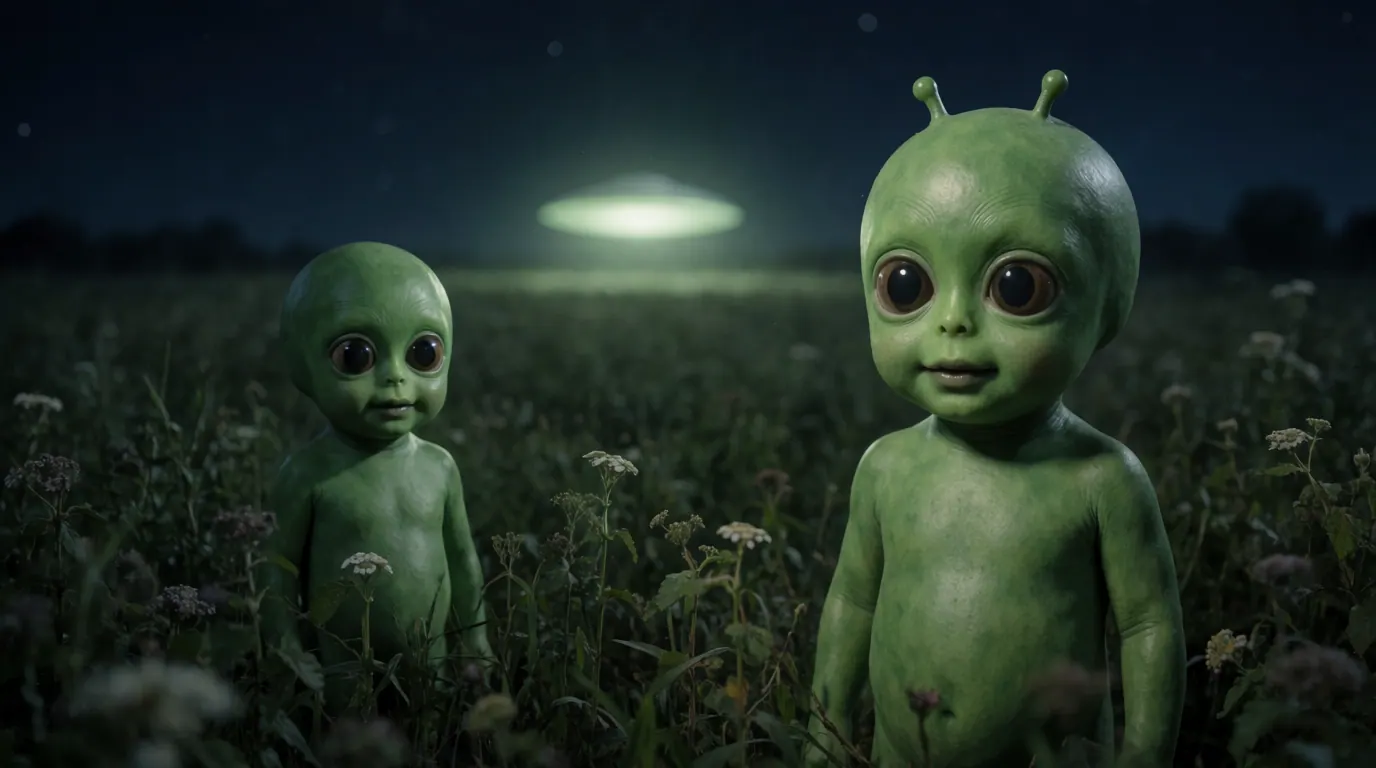
“Little green men” is a mid-century American press and pulp cliché for small alien visitors - bright green skin, big heads, cartoon menace - more slogan than consistent witness anatomy. Science-fiction magazines and newspaper jokes used green Martians decades before the 1955 Kelly–Hopkinsville farm siege, and reporters later draped that paint over Kentucky “little men” who were described as silvery or metal-clad in the earliest local coverage. Serious UFO typologies after the 1960s preferred grey-skinned abductors; green stayed the novelty-store default.
Understanding the phrase means tracking language: pulp expectation, headline humor, and only sometimes a sighting file. The Hopkinsville Goblins entry covers the Kentucky case on its own terms; little-green-men lore covers the broader green-alien brand.
Origin of the legend
Genre historians at the Encyclopedia of Science Fiction trace “little green men” phrasing through 1930s–1950s magazines - Venusians and Martians in Astounding, Weird Tales, and Fredric Brown’s satiric Martians, Go Home era - while newspaper columnists after Orson Welles’s 1938 War of the Worlds panic already joked about little green visitors. By 1951–52, major U.S. papers used the phrase in flying-saucer mockery and book reviews.
When the Sutton–Taylor families reported small beings near Kelly, Kentucky, in August 1955, the Kentucky New Era wrote of “little men” and metal-looking clothing. Out-of-town headlines and later folklore painted them green, helping weld the cliché to a real police-called flap. Local retrospectives noted how quickly national color branding outran witness vocabulary. Pulp cover artists and toy makers then kept lime-green aliens in stock long after abduction literature standardized Greys.
Similar beings
Hopkinsville Goblins are the keystone case often mislabeled green. Greys replaced the cliché in later abduction art. Nordic Aliens and Reptilians show how color and body-plan brands compete. Mantis Aliens are a later insectoid niche, not a green dwarf joke.
In popular culture
Mars Attacks!, comic-strip villains, Halloween masks, and foam antenna headbands keep little green men commercially immortal. The joke works because audiences already know the punchline - which is exactly why historians separate the cliché from any single farmhouse night.