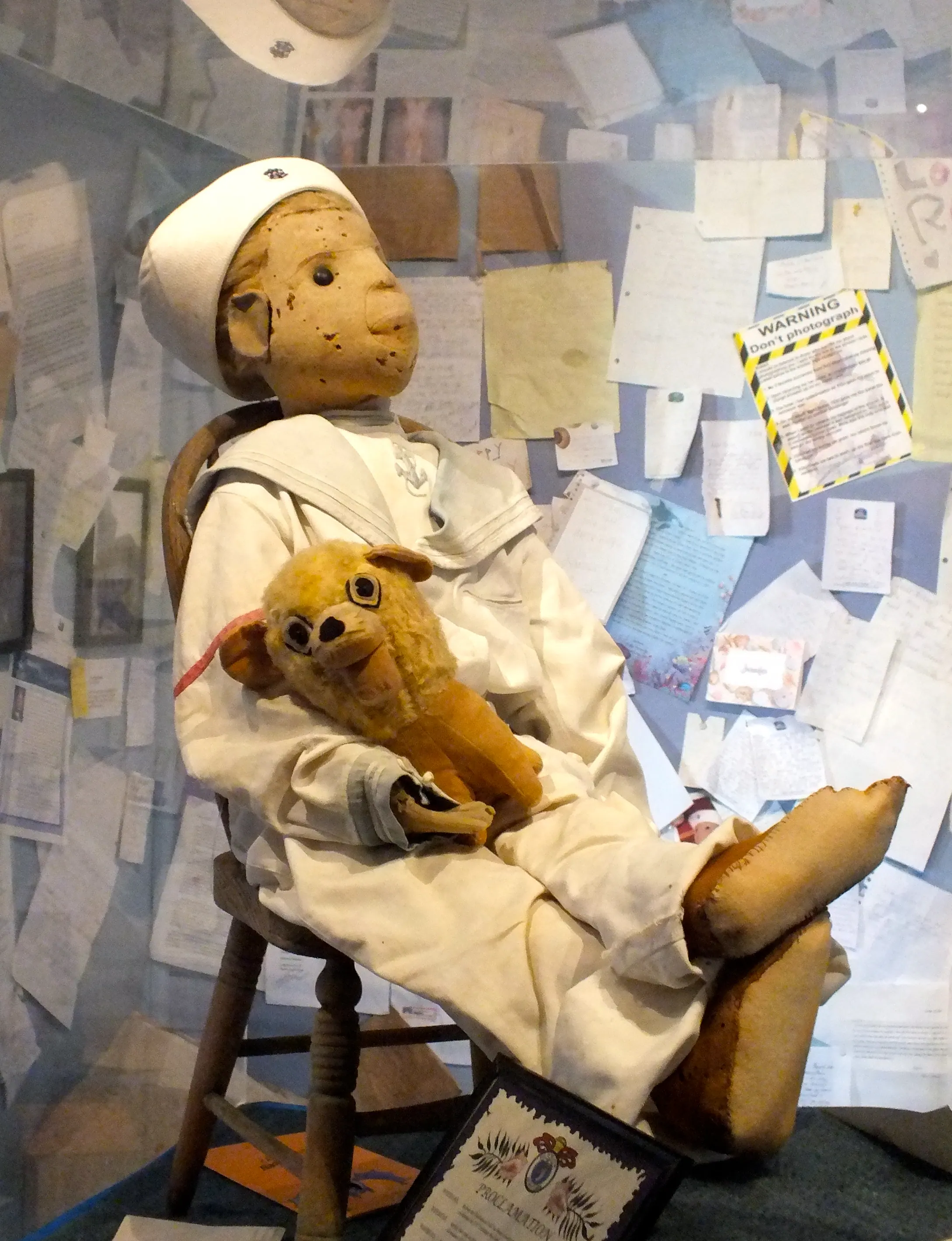
Behind glass at Fort East Martello, Robert the Doll sits in a stained sailor suit with a face more like weathered cloth than porcelain. Accession records tie the figure to Robert Eugene Otto and a Key West childhood where boy and toy shared a name. That human story is strange enough without Hollywood props on the same shelf.
Eaton Street and the blame game
Early twentieth-century retellings describe young Gene Otto blaming Robert when china broke or footsteps sounded in the Artist House attic. Neighbors swapped secondhand fright; later tenants added giggling-in-the-attic beats that never arrived as dated police files. Historians read those tales as domestic folklore around a real oversized Steiff-style companion.
Apology notes and dark tourism
Since Myrtle Reuter donated Robert in 1994, visitors have mailed and pinned apology letters for rude photographs. Staff treat the wall as participatory theater that keeps the object famous. Camera failures near the case circulate online, but conservators handle a static textile body between documented moves. Asking permission before a flash is courtesy culture, not a laboratory protocol.
Telling Robert from generic creep dolls
Identification locks the cream sailor middy, seated wooden chair, letter collage backdrop, and pitted matte face in licensed museum photography. Annabelle-style Raggedy Ann props and Halloween decorations lack Key West provenance. Okiku shares haunted-doll economics but different materials and shrine context.
In popular culture
Ghost tours and Key West postcards recycle the seated sailor shot whenever haunted-doll lists need a Florida entry. Hollywood marketing sometimes blurs Robert with Annabelle in thumbnails, which is why museum captions stress Otto provenance and Fort East Martello accession. The letter wall became a social ritual visitors perform for a souvenir story.
Local journalism still revisits the case each Halloween season, usually pairing licensed museum photos with the permission ritual. That seasonal spike is media history. It does not convert apology letters into laboratory data. Conservators care about textile humidity and light exposure; tour scripts care about goosebumps. Keeping those jobs separate is how an encyclopedia can love a strange doll without lying about physics.
Key West’s Artist House later marketed its own haunted-attic brand while Robert sat across town in a brick fort museum. Visitors sometimes expect movie jump scares and meet a quiet case instead. The gap between expectation and fabric is where folklore does its work. Photograph the sailor suit, read the Otto dates, then decide what kind of wonder you came for.

