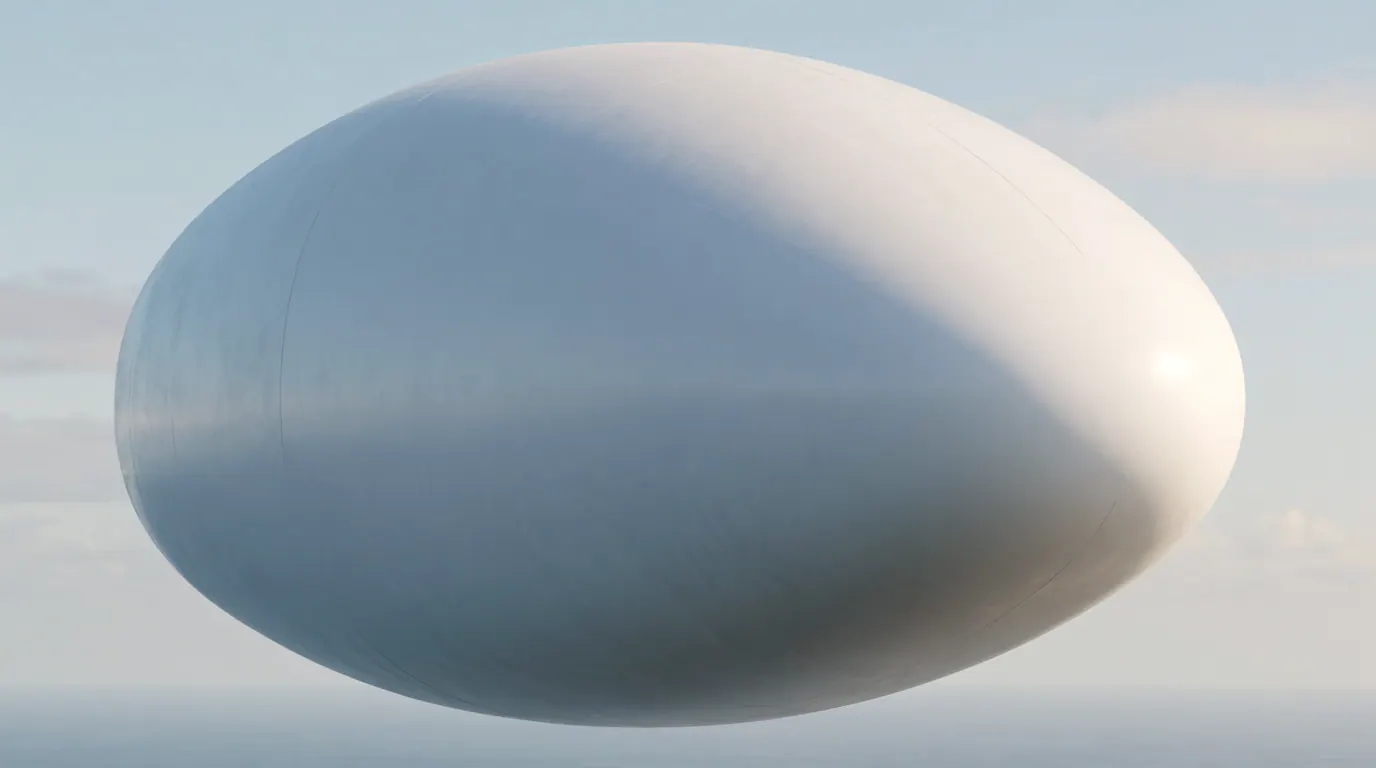
The Tic Tac label names a white capsule-shaped unidentified aerial vehicle type that U.S. Navy aircrew described during the November 2004 USS Nimitz Carrier Strike Group events off southern California, then cemented through the FLIR1 infrared clip. The focus here is silhouette and documentary media, not a courtroom of every radar track.
Pilots who closed visually spoke of a smooth oblong about fighter-jet length, roughly forty to forty-six feet in later summaries, with no wings, rotors, nacelles, or windows. The exterior read as opaque solid white - matte enough that one AAWSAP-era paraphrase compared it to a candy shell or whiteboard rather than chrome. Extreme acceleration claims remain attributed testimony; sensor limits, classified programs, and misidentification stay live mainstream alternatives.
FLIR1, authorized for public release by the Department of Defense in 2020, shows an infrared hotspot with HUD overlays, not a daylight museum photograph of a recovered hull. Rights-cleared stills belong in documentary slots. AI identification plates clarify a clean daylight capsule silhouette and must stay labeled as illustrations. Do not invent panel lines, alien glyphs, or engine bells the witnesses did not report.
How the nickname outgrew one sortie
Later UAP discourse reused Tic Tac for unrelated white oblongs. Encyclopedia discipline keeps Nimitz-associated morphology here and pushes full incident chronology toward case files when those exist. Sibling craft labels - rotating dark oblongs, ocean specks, classic saucers - are different shape memes, not interchangeable icons.
What the public record still lacks
Wonder can keep the capsule image; closure should notice what is missing - no recovered craft, no surveyed measurement, no official identification that ends the file. The type is famous because trained observers and a public sensor clip exist together, and because that combination still refuses a single prosaic stamp. Compare with black-triangle lore only when the question is shape taxonomy, not when a caption tries to merge fleets without paperwork.
Analysts who slow the FLIR1 clip frame by frame still disagree about range and relative motion. That disagreement is itself part of the public record. It is why a craft-type page can teach the white capsule silhouette without pretending the kinematics file is closed.
Sensor clip versus recovered craft
FLIR1 and pilot testimony put a durable unidentified oblong into public evidence. They do not hand over a hangar. Keeping that distinction sharp is how the Tic Tac stays a serious UAP case instead of a toy commercial.
