Location and access
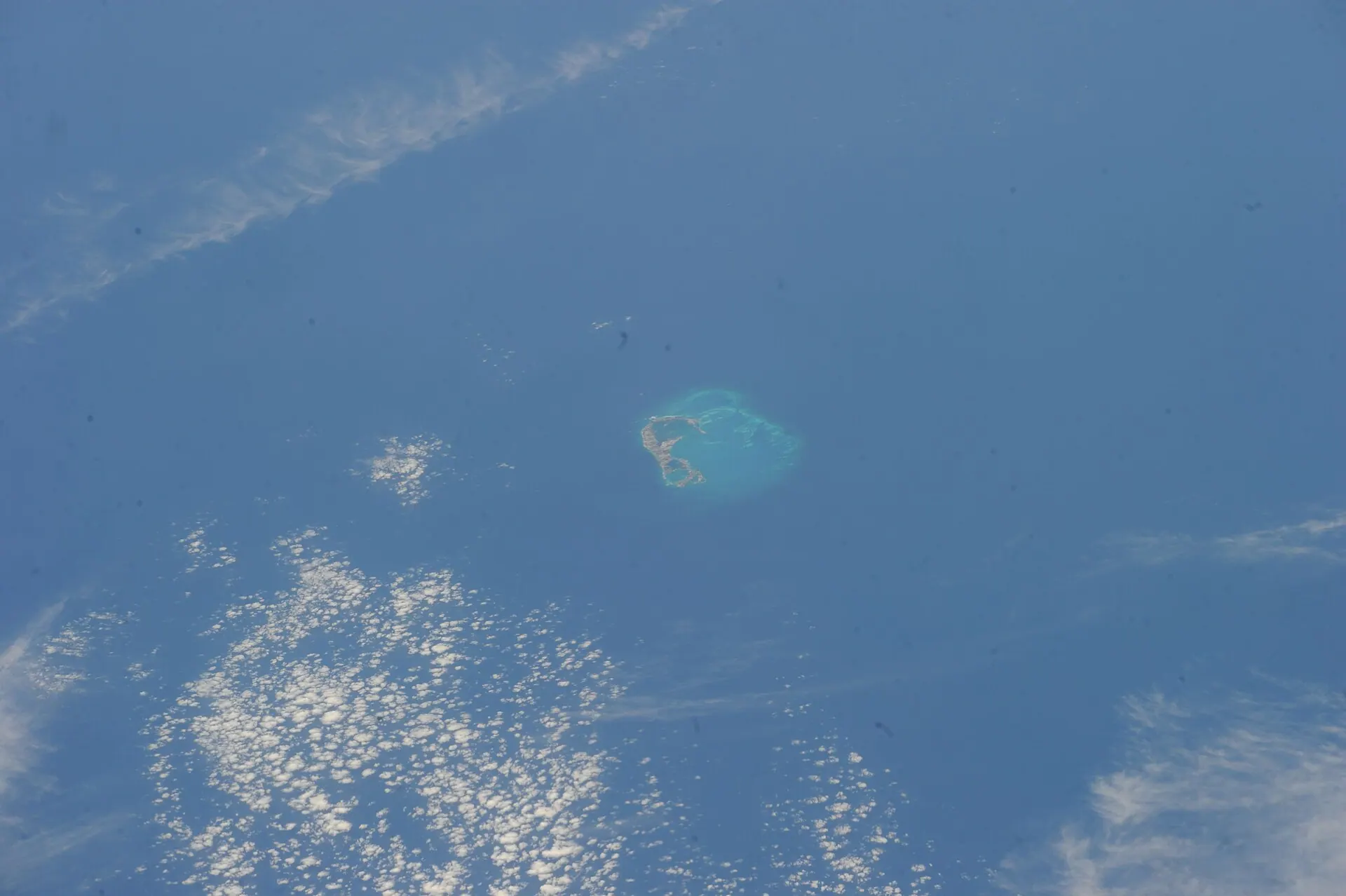
The "Bermuda Triangle" is not an officially recognized geographic area. The U.S. Board on Geographic Names does not use the term, and the U.S. Navy states plainly that it does not believe the zone has any unusual properties. The loosely drawn region typically runs from Miami, Florida, to Bermuda, to San Juan, Puerto Rico, and back, covering open Atlantic water and airspace crossed daily by commercial shipping, airliners, cruise ships, and private boats without any special permit or restriction.
Nothing about transiting the area differs from any other stretch of open ocean. Lloyd's of London, the world's leading specialist marine insurer, does not charge higher premiums for vessels crossing this heavily traveled corridor, a fact the Navy cites directly as evidence against any elevated risk.
History and legend
Two well-documented losses anchor the legend. In March 1918, the Navy collier USS Cyclops disappeared with 309 people aboard en route from Barbados, almost certainly sunk by an unexpected storm; no wreckage has ever been found. On December 5, 1945, Flight 19, five Navy TBM Avenger torpedo bombers on a routine training mission out of Fort Lauderdale, vanished after the flight's lead instructor radioed that he was uncertain of his position and that the aircraft's compasses were malfunctioning. Official Navy investigation records concluded the planes most likely ran out of fuel and crashed into rough, dark seas; a PBM Mariner rescue aircraft sent to search for them was lost separately to a mid-air fuel-system explosion.
The "Bermuda Triangle" as a named, bounded mystery zone is a much later invention. Writer Vincent Gaddis coined the term in a February 1964 Argosy magazine article, "The Deadly Bermuda Triangle," drawing the now-familiar Miami-Bermuda-San Juan outline and folding Flight 19, the Cyclops, and other losses into one storyline. Charles Berlitz's bestselling 1974 book, which proposed a connection to the lost city of Atlantis, sold more than five million copies and turned Gaddis's magazine framing into an international phenomenon. The Navy has pushed back directly: its own fact sheet notes that Project Magnet, a decades-long magnetic survey program, "passed over the area hundreds of times and never noticed any unusual magnetic disturbances."
Related places and beings
The Bermuda Triangle is the direct template for the Bridgewater Triangle in Massachusetts, which writer Loren Coleman consciously modeled on it decades later, and it belongs to the same wider catalog of American disappearance lore as Area 51 and Dulce Base. The single case most responsible for the entire legend is Flight 19, the lost 1945 training flight whose official Navy record still competes with decades of retelling.
In popular culture
Flight 19 became the Bermuda Triangle's signature story after Steven Spielberg's 1977 film "Close Encounters of the Third Kind" depicted the missing aircrew reappearing decades later, neither aged nor injured, implying alien abduction. Books, documentaries, and cable specials have returned to the same handful of cases - the Cyclops, Flight 19, the civilian tanker Marine Sulphur Queen - ever since, each retelling adding detail the original Navy reports never contained. The legend endures less because the region is unusually dangerous than because Gaddis and Berlitz gave a scattered set of real maritime tragedies one unforgettable name.

