Location and access
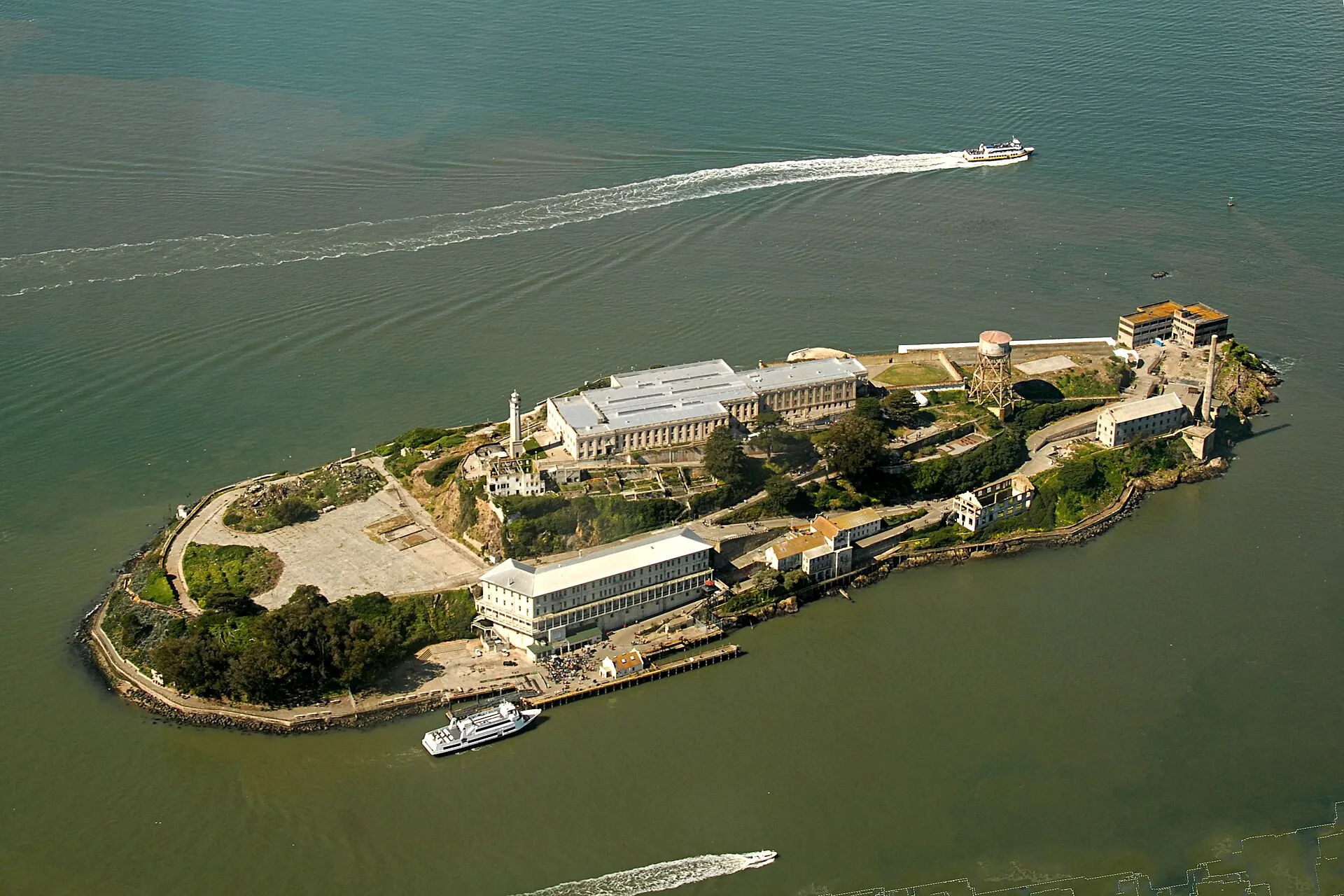
Alcatraz Island sits in San Francisco Bay, roughly a mile and a half from the mainland, operated today by the National Park Service as part of Golden Gate National Recreation Area. Visitors reach the island exclusively through official Alcatraz City Cruises ferries departing Pier 33 in San Francisco; the Park Service strongly recommends booking tickets weeks in advance due to consistently high demand, with both standard daytime tours and a separately ticketed, atmospheric night tour available for visitors who want to experience the cellhouse after dark. The self-guided audio tour, narrated in part by former guards and inmates, remains one of the most popular ranger-led programs in the entire National Park System, and the island's cold winds, fog, and isolation from the mainland are frequently cited by visitors as adding to its unsettling reputation entirely apart from any ghost story.
History and legend
Alcatraz's fortification began in the 1850s as a U.S. Army defensive position guarding the entrance to San Francisco Bay, chosen for its naturally isolating position surrounded by cold, fast-moving water. The island subsequently served as a U.S. Army military prison from 1861 until the federal Bureau of Prisons assumed control in 1933, converting the existing fortress into a purpose-built maximum-security civilian penitentiary that opened for its first inmates in 1934. Alcatraz was specifically designed to house the country's most difficult and high-profile prisoners under conditions stricter than any other federal facility, including Al Capone, George "Machine Gun" Kelly, and Robert Stroud, later nicknamed the "Birdman of Alcatraz." The prison's D-Block segregation unit, reinforced and expanded around 1940, became particularly notorious for its extreme isolation cells, holding the system's most difficult inmates in near-total sensory deprivation as a disciplinary measure of last resort. Rising operating costs and deteriorating infrastructure, worsened dramatically by the bay's corrosive saltwater environment eating away at pipes and cell bars, eventually forced Alcatraz to close as a federal penitentiary in 1963; a decade later, in 1973, it reopened to the public as a National Park Service historic site and has drawn millions of visitors since.
Ghost stories at Alcatraz draw directly on this documented, genuinely harsh institutional history rather than inventing anything from nothing. Capone, suffering visibly from the effects of untreated neurosyphilis by the late 1930s, was permitted to join the prison's informal band, the Rock Islanders, playing banjo during supervised recreation time, a real historical detail that slowly evolved over decades into the enduring "phantom banjo" legend staff and visitors still describe hearing faintly near his old cell block. D-Block's isolation cells generated the most persistent and dramatic reports, including a widely circulated but entirely uncorroborated story about inmate Rufus "Whitey" Franklin allegedly screaming about a glowing-eyed presence that attacked him in cell 14D. The broader legend reached a national television audience in 1992 when the paranormal series "Sightings" aired a widely cited investigation of the cellhouse and D-Block, cementing Alcatraz's modern reputation as one of America's most reliably "haunted" former institutions.
Related places and beings
Readers interested in other former institutions carrying heavy ghost reputations should see Eastern State Penitentiary, a direct architectural and thematic parallel among former American prisons with its own extensively documented isolation-cell history, alongside Winchester Mystery House and Myrtles Plantation for other heavily toured American haunted landmarks built on real, verifiable history. Borley Rectory and Tower of London offer British counterparts where documented institutional history and ghost legend similarly intertwine across very different cultural contexts. Cross-category, the poltergeist phenomenon entry covers the broader folklore of unexplained noises, clanking, and disturbances reported inside institutional buildings worldwide, closely matching many of the staff accounts collected at Alcatraz over the decades since it closed.
In popular culture
Alcatraz's prison history and ghost lore have inspired numerous films, most famously "Escape from Alcatraz" (1979) starring Clint Eastwood and dramatizing the real, still-unresolved 1962 escape attempt by Frank Morris and the Anglin brothers. The island remains a fixture of paranormal television, true-crime documentaries, and dedicated ghost-hunting series well beyond the original 1992 "Sightings" segment, regularly ranking among the most requested filming locations for productions wanting an instantly recognizable, genuinely imposing former-prison backdrop. Its dual identity as both a rigorously documented federal institution preserved by a government agency and a magnet for popular ghost tourism makes it one of the most visited historic sites in the entire National Park System, drawing visitors with starkly different reasons for making the ferry trip out into the bay.


