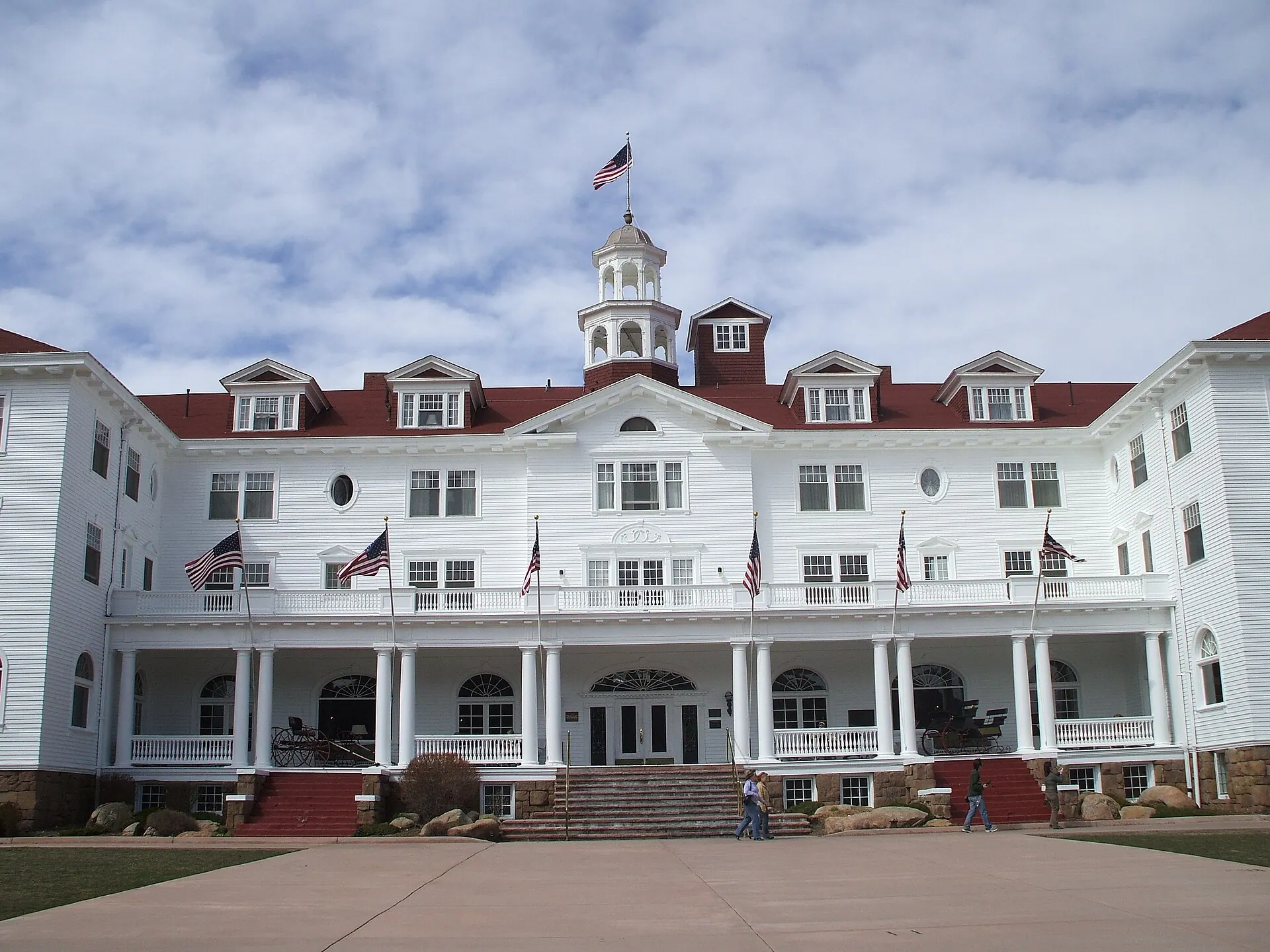
White Colonial Revival facade and red roof of the Stanley Hotel in Estes Park, Colorado
ROMINATOR / WIKIMEDIA COMMONS / PUBLIC DOMAIN

Stanley Hotel

The Stanley
FOLKLORE

Mainstream consensus: The hotel, its 1909 construction, and Stephen King's 1974 stay are well documented. The haunting claims tied to Room 217 and the lobby rest on staff folklore and visitor anecdotes accumulated since the early 20th century, not on independently verified evidence; the hotel itself now actively markets the ghost stories as part of its brand.

Share this page
Short answer

Colorado's Stanley Hotel is the real 1909 resort where a near-empty overnight stay in 1974 gave Stephen King the idea for "The Shining." Room 217's ghost story predates King by decades, tracing to a 1911 gas explosion that injured chambermaid Elizabeth Wilson. The hotel now leans fully into its haunted reputation as a tourism brand.

Location and access

The Stanley Hotel sits on a rise just outside downtown Estes Park, Colorado, about ninety minutes from Denver and a traditional gateway stop for travelers heading into Rocky Mountain National Park. It operates today as a full-service hotel, spa, and event venue, open year-round rather than seasonally as it once was, with Room 217 bookable directly as the "Stephen King Suite" and daily Shining-themed and ghost-adjacent walking tours built directly into the property's regular visitor offerings. Unlike many haunted attractions that rely on outside paranormal groups for programming, the Stanley's own concierge and tour staff run most of the haunted-history storytelling guests encounter, selling branded merchandise, costume events, and themed overnight packages that treat the ghost lore as a core part of the guest experience rather than an afterthought. The hotel's elevated setting, white colonial-revival facade, and sweeping mountain views also make it a popular wedding and conference venue entirely apart from its horror-adjacent fame.

History and legend

Inventor and Stanley Steamer creator F.O. Stanley arrived in Estes Park in 1903 while recovering from advanced tuberculosis and credited the thin mountain air with restoring his health well enough to build a business empire there. He and his wife Flora, an accomplished pianist, financed and opened the hotel in 1909, quickly drawing wealthy guests including Theodore Roosevelt and composer John Philip Sousa to what was then a remote resort town. The hotel's enduring ghost story predates its most famous literary guest by more than six decades: on June 25, 1911, a flood knocked out the property's electrical power, and the gas lanterns issued to guests and staff as a stopgap caused an explosion in Room 217 that seriously injured head chambermaid Elizabeth Wilson, an incident that began that specific room's haunted reputation almost immediately among hotel employees.

The hotel's fame expanded dramatically after a very different, much later visit. In late September 1974, novelist Stephen King and his wife Tabitha checked in as the hotel's only overnight guests the night before its seasonal winter closing, back when the Stanley still shut down for the off-season. King has described wandering the empty, half-lit, unheated corridors that night and feeling the setting was "perfect, maybe the archetypical" backdrop for a ghost story, crediting that specific stay with supplying the atmospheric seed for "The Shining," published in 1977. The hotel is frequently and incorrectly labeled "the hotel from the movie," but Stanley Kubrick's 1980 film adaptation was shot almost entirely on English sound stages and at Oregon's Timberline Lodge for its exteriors; it was instead the 1997 television miniseries, made with King's direct creative involvement, that filmed extensively on location inside the actual Stanley.

Related places and beings

Readers who enjoy real buildings with legend-heavy reputations should see Winchester Mystery House for another case of architecture and grief folded into American ghost lore, and Amityville House, Myrtles Plantation, and Borley Rectory for other houses where a single documented tragedy grew into a lasting haunted-house brand. Leap Castle offers a European architectural counterpart with its own violent history, and Aokigahara shows how a very different kind of real landscape can accumulate similarly heavy folklore over time. Cross-category, the poltergeist phenomenon entry covers the broader folklore tradition of unexplained sounds, movement, and disturbances, closely matching the piano music and phantom footsteps staff describe hearing at the Stanley.

In popular culture

The Stanley's connection to "The Shining" makes it one of the most referenced real hotels in horror culture worldwide, from King's own novel and the 1997 television miniseries filmed on site to annual Halloween-season "Shining"-themed maze walks, costumed balls, and a long-running presence in paranormal-investigation cable television specials. Stanley Kubrick's far more famous 1980 film adaptation, despite never actually filming there, still drives enormous visitor traffic from fans hoping to walk "the Overlook's" hallways, a mix-up the hotel's own staff have learned to gently correct on tours. The property leans into the broader association deliberately, branding ghost tours, retail merchandise, and Room 217 bookings around exactly the staff ghost stories that predate Stephen King's single, now-famous 1974 overnight stay by more than sixty years.

Photos and illustrations

Mix of rights-cleared documentary stills and AI illustrations (labeled).

The Stanley Hotel's white Colonial Revival main building in Estes ParkCredit: Rominator / Wikimedia Commons / Public domain
The door of Room 217, where Stephen King stayed in 1974Credit: Larry D. Moore / Wikimedia Commons / CC BY 4.0
A long guest corridor inside the hotelCredit: Larry D. Moore / Wikimedia Commons / CC BY 4.0
Illustrative scene for Stanley HotelAI illustration for reference only

Visiting

loading map…

Operating hotel and event venue near Rocky Mountain National Park, open year-round for paid stays. The Stanley runs its own Shining-themed and ghost-adjacent tours daily; Room 217 (the Stephen King Suite) can be booked directly. Check stanleyhotel.com for current rates and tours.

Legend vs history: Verified: F.O. Stanley built and opened the hotel in 1909; Stephen King and his wife stayed there one night in September 1974 and King has said the visit inspired "The Shining." Legend: that Room 217 is permanently haunted by chambermaid Elizabeth Wilson, and that F.O. and Flora Stanley's ghosts linger in the lobby. These are staff and visitor claims collected over decades, not independently verified hauntings.

Reports and stories

Attributed reports, haunt claims, and discovery narratives from named sources. Links open the originals; AnomalyWiki does not verify these claims.

Claims vs mainstream

The claim

Stephen King stayed in haunted Room 217 and the room's ghost directly inspired "The Shining."

Mainstream view

King has given differing accounts of his 1974 visit in interviews; it is "reasonably likely" he stayed in Room 217 since the hotel was nearly empty, per Wikipedia's summary of his Stephen King Companion account, but his own description credits the empty hotel's atmosphere and a bathtub-related thought, not a direct ghost encounter, as his spark for the novel.

The claim

The 1980 Stanley Kubrick film "The Shining" was filmed at the Stanley Hotel, making its hallways the real Overlook Hotel.

Mainstream view

Kubrick's film was shot primarily on sound stages and at Oregon's Timberline Lodge for exteriors, not at the Stanley; the Stanley is often mislabeled "the hotel from The Shining," but the 1997 TV miniseries, made with King's involvement, did film scenes on site.

The claim

Elizabeth Wilson, a chambermaid who survived a 1911 gas explosion in Room 217, still haunts the room as its "eternal" resident ghost.

Mainstream view

The 1911 explosion is documented hotel history and Wilson's injury and survival are reported, but accounts of her death and the specific haunting claim vary between retellings, with no independently verified record settling which version is accurate.

The claim

F.O. and Flora Stanley still haunt the lobby, with Flora's ghost playing piano no one else can hear.

Mainstream view

This is a staff-reported tradition tied to Flora's real skill as a pianist during her lifetime; it has no independent documentation beyond repeated anecdote from hotel employees and guides.

Timeline

  1. 1903Inventor F.O. Stanley, recovering from tuberculosis, visits Estes Park and credits the altitude with restoring his health.Source: Colorado Encyclopedia, Stanley Hotel entry
  2. 1909The Stanley Hotel opens, built and funded by F.O. Stanley, quickly drawing wealthy guests including Theodore Roosevelt and John Philip Sousa.Source: Stanley Hotel official "About" page; CBS News
  3. 1911June 25: a gas-lantern explosion in Room 217 injures head chambermaid Elizabeth Wilson after the hotel's power fails following a flood, beginning the room's haunted reputation.Source: Wikipedia, "The Stanley Hotel" (citing hotel-published history)
  4. 1974In late September, Stephen King and his wife Tabitha stay overnight as the hotel's only guests before its seasonal closing; King later credits the empty corridors with inspiring "The Shining."Source: Westword; Colorado Encyclopedia
  5. 1977Stephen King publishes "The Shining," using the Stanley as the model for the fictional Overlook Hotel.Source: Colorado Encyclopedia
  6. 1997A TV miniseries of "The Shining," made with King's creative input, films scenes on location at the Stanley Hotel.Source: Colorado Encyclopedia
  7. 2013The hotel survives Colorado's September floods largely unscathed.Source: Colorado Encyclopedia

FAQ

What is the Stanley Hotel?

A historic 1909 resort hotel in Estes Park, Colorado, built by Stanley Steamer inventor F.O. Stanley, now famous as the real-world hotel that inspired Stephen King's "The Shining."

Did Stephen King really stay in the haunted Room 217?

King and his wife stayed overnight at the Stanley in September 1974 as its only guests before winter closing; it is likely but not fully confirmed that he was given Room 217, one of the hotel's best rooms, which was available that night.

Was "The Shining" movie filmed at the Stanley Hotel?

No. Stanley Kubrick's 1980 film used sound stages and Oregon's Timberline Lodge for exteriors. The 1997 TV miniseries, made with King's involvement, did film scenes at the actual Stanley Hotel.

What is the story behind Room 217?

A 1911 gas-lantern explosion, caused by a power outage after a flood, injured chambermaid Elizabeth Wilson in Room 217; later ghost lore casts her as the room's lingering spirit, though accounts of her fate vary.

Is the Stanley Hotel actually haunted?

There is no scientific evidence of a haunting. Staff and guests report piano music, cold spots, and apparitions tied to F.O. and Flora Stanley and to Room 217, and the hotel now actively promotes these stories as part of its visitor experience.

Can you visit or stay at the Stanley Hotel?

Yes. It operates as a full-service hotel and event venue year-round, with Room 217 (the Stephen King Suite) and ghost-themed tours bookable directly through the hotel.