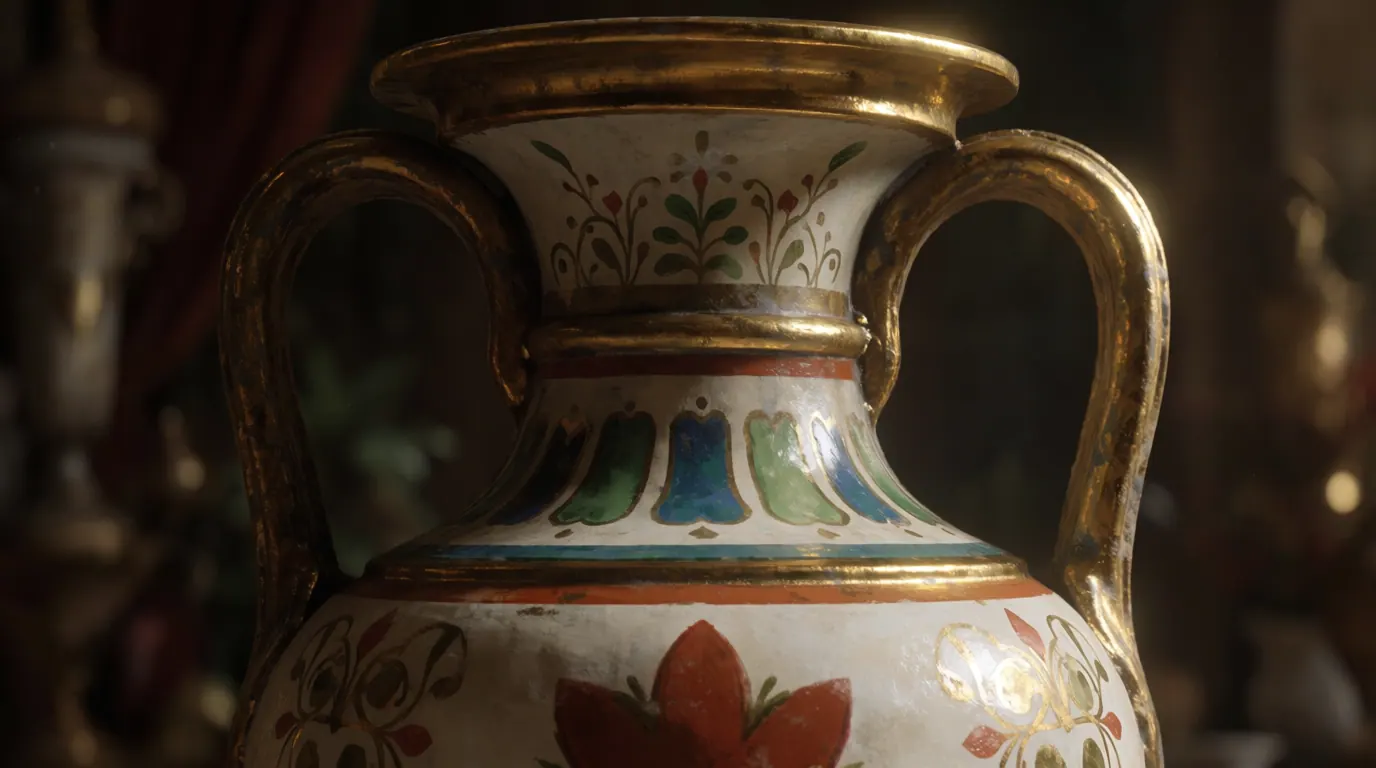
AI illustration of basano vase (front view) for reference only.
AI ILLUSTRATION FOR REFERENCE ONLY

Basano Vase

Vaso di Basano
FOLKLORE

Mainstream consensus: Treat as modern folklore unless a verified museum object with accession paperwork appears.

Share this page
Short answer

Basano vase lore names a silver floral urn whose owners die in succession, yet no major museum publishes a matching accession file. Folklorists and skeptical writers treat the tale as modern listicle fiction riding on antique silver photos, not a documented Renaissance murder piece.

In haunted-object anthologies, the Basano vase is a tarnished silver urn with floral work and a reputation for killing whoever keeps it. The story reads like a wedding gift gone grim - inherit the vase, read the warning, then misfortune stacks up. Curiosity seekers hunt for the real piece in Italian collections, yet skeptical writers repeatedly fail to match the name to a published museum accession.

The tale climbed out of late twentieth-century cursed-object paperbacks and early web lists that needed continental flair beside British and American haunted props. Authors pasted the Basano name onto dramatic silver stills without showing assay marks, estate papers, or a chain of custody. A 1988 reappearance motif - unnamed digger, auction deaths, police burial - still refuses to supply names for the finder, the buyers, or the cemetery.

Compare that floating provenance with a documented pub relic such as Busby's Stoop Chair, which at least sits in Thirsk Museum with a landlord donation story, or with the Hope Diamond, which has Jewel House paperwork. AI plates here are mood illustrations only; they are not catalog photographs of a verified Basano accession.

When a curse story cannot name the bride, the auction house, the officer, or the cemetery, the honest encyclopedia move is to say so. Wonder still works when the object might be stock silver; it stops working when anonymous body counts are sold as museum fact.

Italian listicle chains keep inventing new owner names; museum accession numbers never appear beside them. That gap is the story. Until a silver vase shows up in a public collection with a continuous ownership trail, Basano stays a traveling curse brand - vivid enough for Halloween, too thin for archaeology.

Auction catalogs for Italian silver rarely mention a Basano inscription set, which is the quiet fact under the scream. Paranormal blogs recycle the same owner chain with shifting surnames and no probate citations. Compare documented gem politics on other cursed-relic pages when you want paperwork; keep Basano filed as folklore that borrowed a vase shape.

Sightings and object accounts

Attributed sightings, recoveries, and object histories from named sources. Links open the originals; AnomalyWiki does not verify these claims.

Claims vs mainstream

The claim

A documented Renaissance vase kills successive owners.

Mainstream view

No reliable accession trail links one silver piece to the named deaths.

The claim

Photos online prove one canonical Basano vase.

Mainstream view

Blogs reuse unlike silver pieces without catalog matches.

The claim

Museums hide the vase for safety.

Mainstream view

Published holdings make a hidden masterpiece unlikely without evidence.

Timeline

  1. 1980s-1990sHaunted-object lists circulate a Basano vase entry with death sequences.Source: Pop folklore surveys
  2. 1988 (legend)Listicles claim an unnamed digger finds a beware note and auctions the vase.Source: Curse anthologies
  3. 2021Skeptical longform classifies the story as legend lacking a primary object.Source: Burials and Beyond

FAQ

Is there a real Basano vase in a museum?

Skeptical summaries note no stable accession number or continuous owner chain.

What does the curse supposedly do?

Retellings claim owners die mysteriously; deaths are anecdotal lists.

Why do photos look different?

Different blogs reuse unlike silver pieces without a catalog match.

How is this different from the Hope Diamond?

The Hope Diamond has museum custody; Basano lore lacks that identification.

Did it come from Renaissance Italy?

That backstory appears in listicles, not accession files.