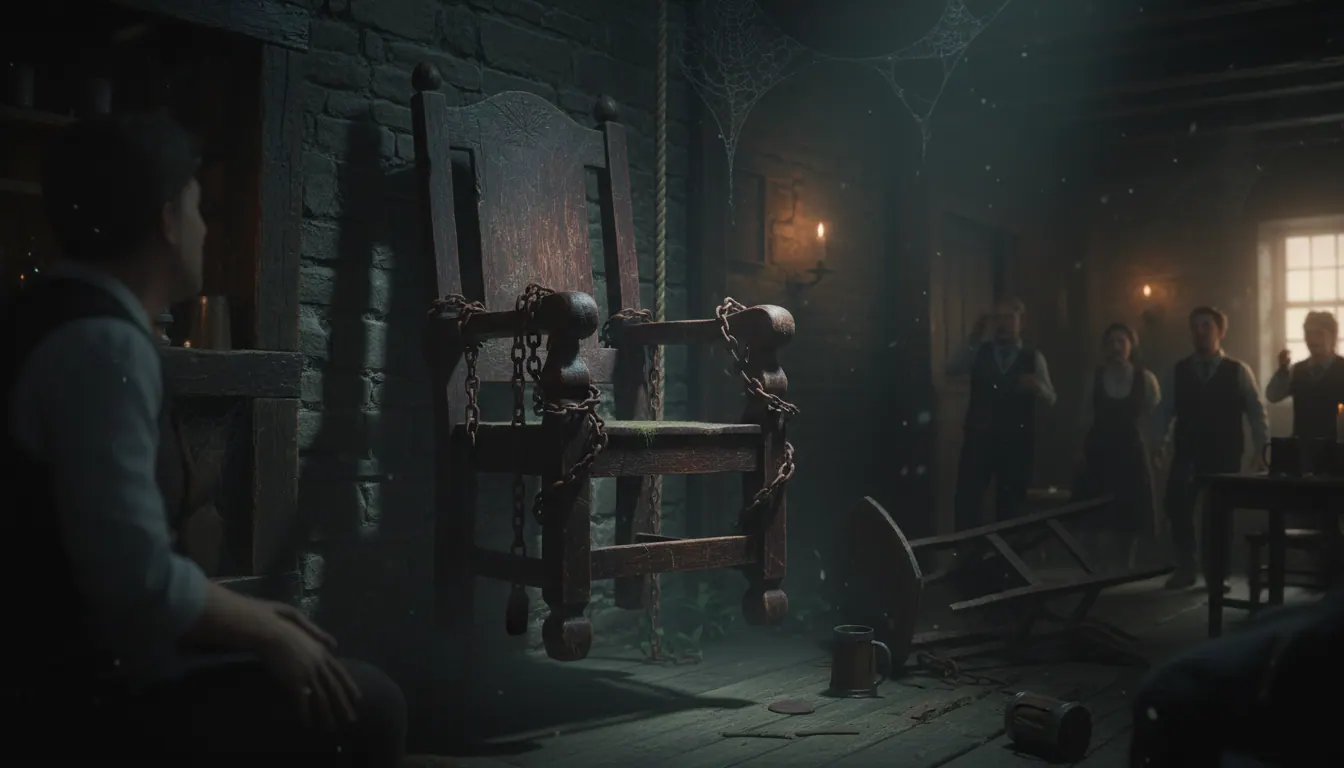
Thomas Busby's body hung in chains at the Sandhutton crossroads after his 1702 execution for murdering Daniel Auty. The nearby inn took the Busby Stoop name from that gibbet post, and somehow a wooden pub chair inherited the leftover dread.
Twentieth-century storytelling did the rest. Wartime aircrew lore claimed sitters never came home; 1970s accident tales piled on until the landlord donated the chair to Thirsk Museum in 1978 on the condition it be hung from the ceiling. Museum copy still walks visitors through the murder, the gibbet, and the hung seat.
That is enough for a proper cursed-object file - a real town, a real execution memory, a real mounted chair - without pretending coroners proved a supernatural mechanism. Furniture historians have even suggested the surviving chair's machine-turned spindles post-date 1702. Compare the floating Italian Basano vase legend or the documented gem politics of the Hope Diamond. AI plates illustrate the hung-chair motif, not the museum display.
Thirsk hung the chair so tourists would stop daring each other to sit. That practical museum choice now doubles as the legend's punchline. Visit for the gibbet history and the oak silhouette overhead; leave the sudden-death spreadsheet to pub storytelling.
Sandhutton crossroads lore and Thirsk Museum labels are the two poles of this story. One remembers a gibbet; the other hangs oak so visitors stop performing dares. Furniture dating arguments belong in the middle, not in a supernatural body count. A chair on a chain is better theater than another unverifiable death tally.
Local guidebooks still point visitors toward the Sandhutton junction and the museum's hanging display rather than toward a catalogue of modern "victims." That framing keeps Thomas Busby's documented hanging in view while treating later RAF and road-accident yarns as folklore that attached itself to oak. If you go, read the labels, look up at the chair, and leave the dare culture in the car park.