Location and access
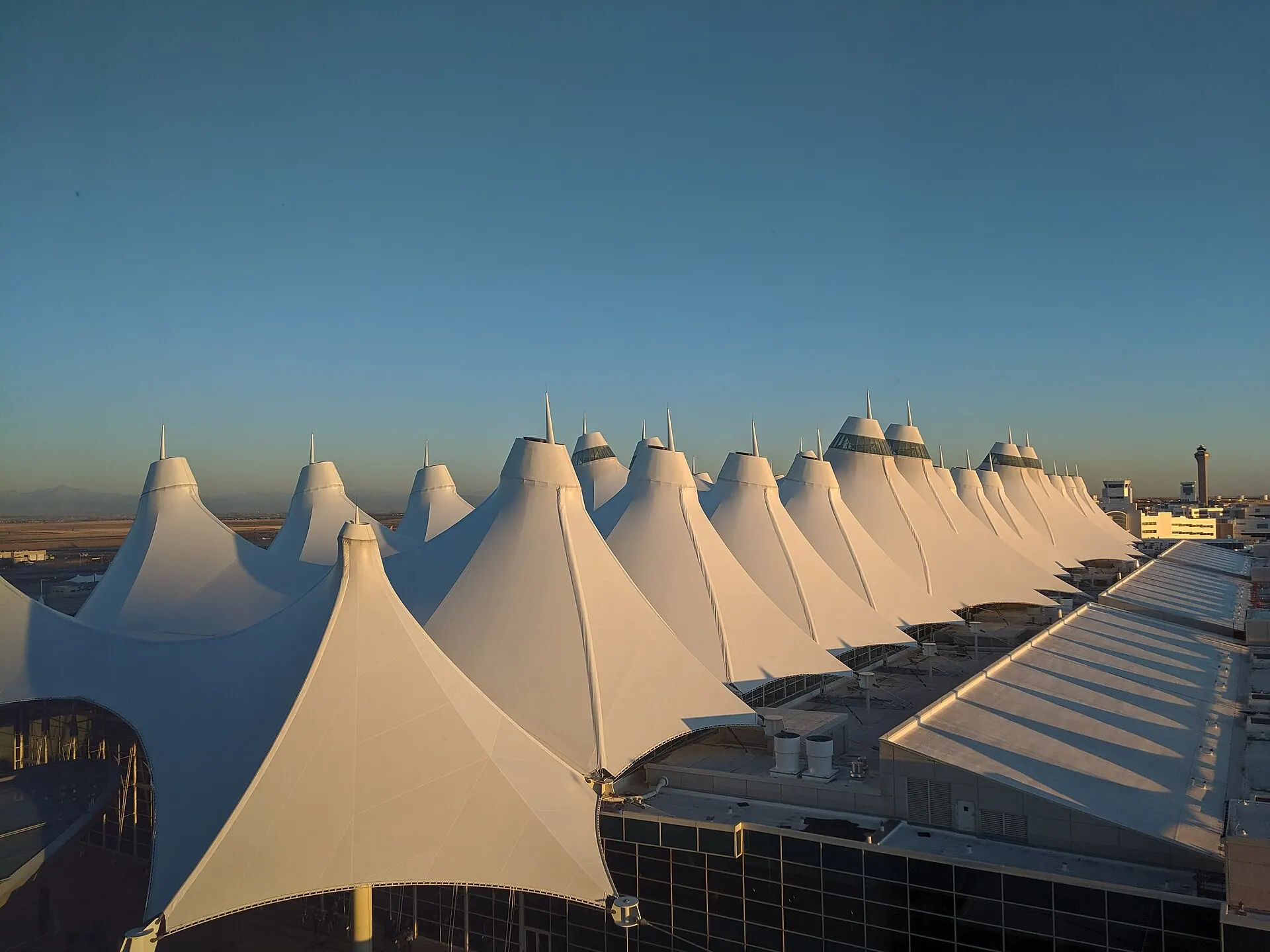
Denver International Airport sits about 25 miles northeast of downtown Denver, Colorado, at roughly 39.86 N, 104.67 W, making it one of the largest airports in the country by land area. It opened to the public on February 28, 1995, replacing the old Stapleton International Airport, after a construction schedule that ran 16 months late and roughly $2 billion over budget - delays that primed the public for rumor before a single plane landed.
Everything that fuels the airport's reputation sits in plain view for any traveler. The Masonic dedication capstone stands near the south entrance by the Westin hotel and the University of Colorado A-Line station. Leo Tanguma's murals hang inside the Jeppesen Terminal's great hall, and Luis Jiménez's blue "Mustang" sculpture, nicknamed "Blucifer," rears up over Peña Boulevard where every arriving driver passes beneath it. No part of the public terminal or grounds requires special clearance to view any of this.
History and legend
On March 19, 1994, workers sealed a dedication capstone at the airport's south entrance, carved with a Masonic Square and Compasses and the name of the "New World Airport Commission." According to Denver Public Library Special Collections and Archives, the commission was a short-lived group that organized the airport's opening festivities, named for Antonín Dvořák's "New World Symphony," and the Masonic emblem simply reflects the local lodges that crafted and laid the stone, as stonemasons have long done for civic monuments.
The airport finally opened in February 1995, scarred by automated-baggage-system failures and the well-documented cost overruns above. Those troubles, combined with Leo Tanguma's two 28-foot murals titled "Children of the World Dream of Peace," gave conspiracy theorists plenty of material: one panel's gas-masked child and armored soldier reads as apocalyptic in isolation, even though the full series moves from war and pollution toward a hopeful, peaceful recovery. Then came a tragedy that looked, to some, like an omen. Sculptor Luis Jiménez died in June 2006 when a loose section of his unfinished "Mustang" fell in his New Mexico studio and severed an artery in his leg. His children finished the piece, and the completed 32-foot blue horse, its red eyes a documented tribute to Jiménez's father's neon-sign shop, went up outside the terminal in February 2008.
Related places and beings
Denver International Airport belongs to the same strand of American secret-base folklore as Area 51 and Dulce Base, both treated by the same online communities as entrances to a deeper underground network. Theories about the airport's rumored sub-levels most often link them to Reptilians, the shape-shifting elite that some conspiracy writers claim secretly govern from below.
In popular culture
Jesse Ventura's television series "Conspiracy Theory" visited the airport in 2012 and filmed its host standing in mock horror before Tanguma's murals, giving the DIA legend a national audience. Travel writers, podcasters, and video essayists have returned to the same capstone, murals, and sculpture ever since, and gift shops near the terminal now sell "Blucifer" merchandise that leans into the demonic nickname Jiménez never intended for his tribute to his father's craft. The rumors persist less because of hidden evidence than because an unusually art-heavy airport gives travelers so much to stare at while waiting for a flight.


