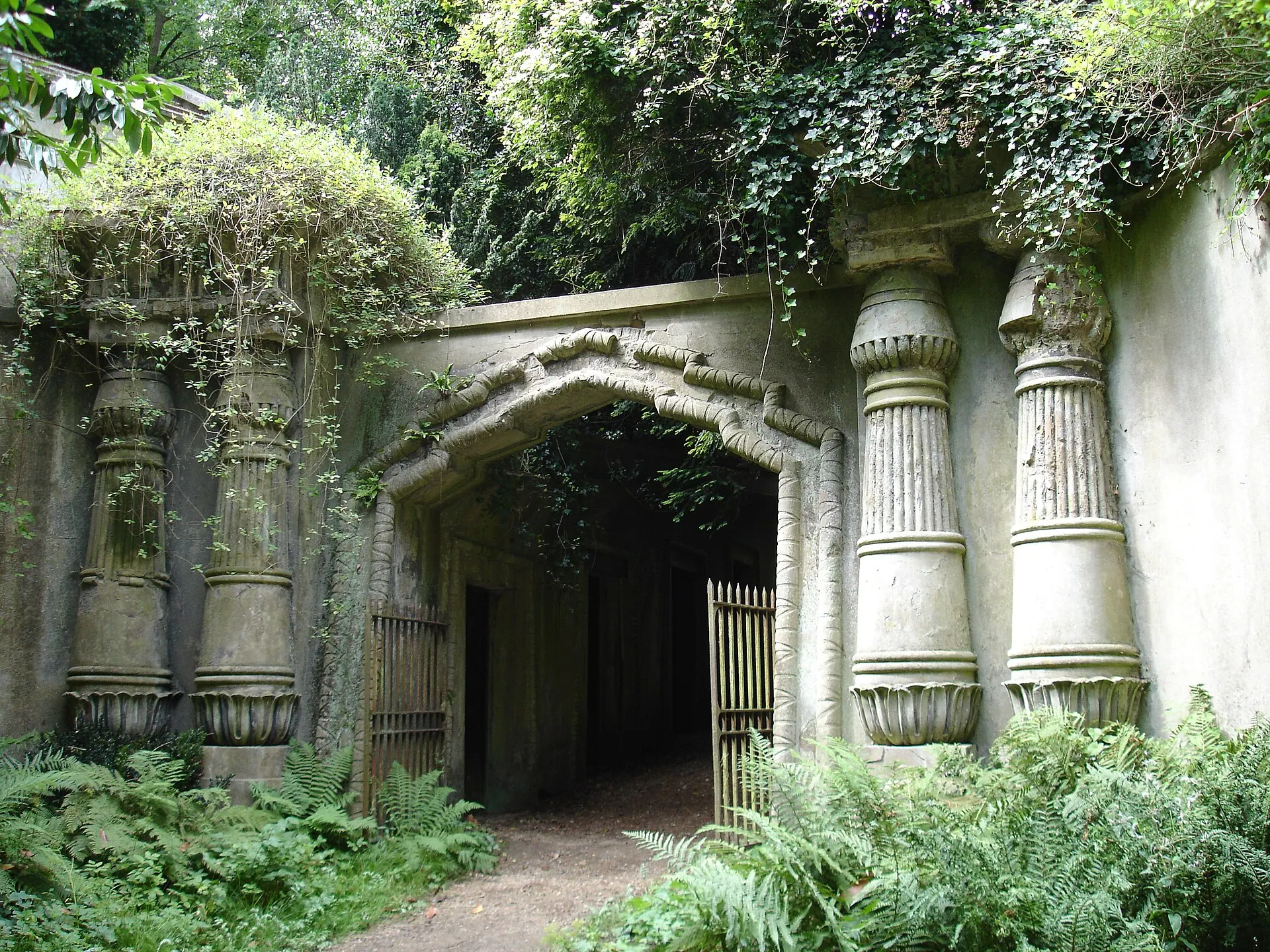
Ivy-draped Egyptian-style gateway with lotus columns leading into Highgate Cemetery's Egyptian Avenue
JOHNARMAGH / WIKIMEDIA COMMONS / PUBLIC DOMAIN

Highgate Cemetery

Highgate Vampire site
HISTORICAL SITE

Mainstream consensus: Highgate Cemetery's Victorian origins, architecture, and notable burials are thoroughly documented history. The 1970 "Highgate Vampire" episode is treated by journalists and historians as a media-amplified occult rivalry and moral panic rather than a genuine supernatural event, with no physical evidence ever produced despite extensive press coverage at the time.

Share this page
Short answer

Highgate Cemetery is a real Victorian burial ground consecrated in 1839, famous for elaborate tombs and Karl Marx's grave. In 1970, rival occultists David Farrant and Sean Manchester sparked a media panic over a supposed "Highgate Vampire," culminating in a mob breaking into the cemetery on a single chaotic night; mainstream historians treat the vampire as 1970s folklore.

Location and access

Highgate Cemetery sits in north London along Swains Lane, split into an East and a West side separated by the lane itself and connected by an underground passage. The East Cemetery, home to Karl Marx's grave among thousands of others, is open for self-guided visits with paid admission, allowing visitors to wander at their own pace among its Victorian monuments. The older, more overgrown West Cemetery, with its famous Egyptian Avenue, Circle of Lebanon tombs, and winding catacomb terraces built directly into the hillside, is accessible only on booked guided tours run by the Friends of Highgate Cemetery Trust, the volunteer-led charity that has managed and painstakingly restored the site since 1981. The Trust limits West Cemetery group sizes and tour frequency specifically to protect the fragile, often crumbling Victorian stonework from further deterioration.

History and legend

Consecrated in 1839, Highgate Cemetery was one of London's seven "Magnificent Seven," a ring of large private garden cemeteries built on the city's outskirts to relieve catastrophically overcrowded parish churchyards that had become genuine public health hazards. Its elaborate Victorian Gothic architecture, ornate mausoleums, and winding, tree-shaded paths quickly made it a fashionable and later a deeply prestigious resting place, culminating in philosopher Karl Marx's 1883 burial on the East side, now marked by an oversized bronze-headed monument that draws visitors and political pilgrims from around the world every year. By the mid-twentieth century, however, decades of financial trouble left the cemetery seriously neglected, its paths overgrown with ivy and self-seeded trees and many tombs vandalized or subsiding into the hillside, developing a local reputation among teenagers for after-dark trespassing dares.

That neglected, overgrown, genuinely atmospheric setting became the unlikely backdrop for the "Highgate Vampire" panic a generation later. In 1969 and early 1970, letters to the local Hampstead and Highgate Express, including one from self-described occultist David Farrant, described a tall, spectral figure glimpsed near the cemetery's crumbling walls. A subsequent television interview amplified Farrant's claim to a far wider audience, and on the night of March 13, 1970, a large crowd drawn directly by the broadcast gathered outside the gates, with some climbing the walls in a chaotic, impromptu "vampire hunt" that ultimately ended in police intervention and several arrests. Farrant's self-declared rival, bishop and self-styled vampire hunter Sean Manchester, soon issued his own competing claims to have tracked down and personally destroyed the vampire's remains, launching a decades-long public feud between the two men that kept the Highgate legend circulating in British tabloids well into the 1980s and beyond, each publishing his own books and magazine articles contradicting the other's version of events.

Related places and beings

Readers interested in other British sites where real history and modern paranormal claims intertwine should see Tower of London and Edinburgh Vaults for two very different examples of documented institutional violence feeding later ghost tourism, alongside Borley Rectory and Leap Castle for England and Ireland's most heavily tour-promoted haunted buildings. Paris Catacombs offers a continental parallel where death, legend, and modern dark tourism have layered together in a comparably dramatic underground setting. Cross-category, the shadow people entry covers the broader worldwide folklore of tall, dark, humanoid figures reported in low-light settings, a description that closely matches Farrant's original 1969 sighting account.

In popular culture

The Highgate Vampire panic has been the subject of numerous British television documentaries, true-crime-adjacent podcasts, and competing books published by both Farrant and Manchester themselves, each offering his own contradictory personal account across subsequent decades of public dispute. The cemetery's dramatically overgrown Gothic architecture also makes it a recurring filming and photography location for productions seeking an authentically eerie Victorian setting, appearing in horror films, music videos, and gothic-fashion photo shoots that reinforce its reputation well beyond the original 1970 incident. Modern ghost-walking tour companies across London continue to include Highgate on their standard Victorian-horror itineraries, usually pairing the vampire panic with the cemetery's genuinely macabre Victorian mourning customs for an evening of blended real and legendary history.

Photos and illustrations

Mix of rights-cleared documentary stills and AI illustrations (labeled).

The entrance to the Egyptian Avenue in Highgate West CemeteryCredit: JohnArmagh / Wikimedia Commons / Public domain
The Circle of Lebanon, a sunken ring of catacomb tombs in Highgate WestCredit: Doyle of London / Wikimedia Commons / CC BY-SA 4.0
Overgrown Victorian tombs among the trees at HighgateCredit: Calstanhope / Wikimedia Commons / CC BY-SA 4.0
Illustrative scene for Highgate CemeteryAI illustration for reference only

Visiting

loading map…

Highgate Cemetery is managed by the Friends of Highgate Cemetery Trust. The East Cemetery (including Karl Marx's grave) allows self-guided visits with admission tickets; the older West Cemetery is accessible only by guided tour, bookable via highgatecemetery.org.

Legend vs history: Verified: Highgate Cemetery was consecrated in 1839 as one of London's "Magnificent Seven" Victorian cemeteries and holds the graves of Karl Marx, George Eliot, and other notable figures. Legend: that a vampire or undead entity stalked the grounds in 1970, a claim propagated by two rival occultists and never substantiated by any physical evidence. The panic itself, including the mob incident, is well documented as a real social event.

Reports and stories

Attributed reports, haunt claims, and discovery narratives from named sources. Links open the originals; AnomalyWiki does not verify these claims.

Claims vs mainstream

The claim

A tall, dark, spectral figure with hypnotic red eyes, identified by occultists as a vampire, genuinely stalked Highgate Cemetery and the surrounding area in the late 1960s.

Mainstream view

David Farrant's original 1970 letter described a "tall man" figure with a "strange presence," which escalated in subsequent retellings; no photographic or physical evidence of the figure has ever been produced, and the description itself shifted across tellings.

The claim

Self-styled vampire hunter Sean Manchester tracked down and staked a specific vampire, ending the Highgate threat.

Mainstream view

Manchester publicly claimed to have found and destroyed a vampire's corpse in a nearby location, a claim never independently verified and widely viewed by journalists as part of his long-running rivalry with Farrant rather than a documented event.

The claim

The March 13, 1970 Highgate "vampire hunt" was a serious, organized paranormal investigation.

Mainstream view

BBC and contemporary press accounts describe the event as a chaotic mob scene, with hundreds of people, many simply curious or drunk, climbing the cemetery walls after a television appearance publicized the supposed hunt, resulting in arrests rather than any findings.

The claim

Headless and mutilated animal remains found in the cemetery in the 1970s prove occult vampire-related activity.

Mainstream view

Press and police at the time linked discovered animal remains to black-magic ritual practice by copycat individuals drawn to the publicity, a documented but distinct phenomenon from the original vampire claim itself.

Timeline

  1. 1839Highgate Cemetery is consecrated, becoming one of London's seven great Victorian "Magnificent Seven" cemeteries.Source: Friends of Highgate Cemetery Trust, official history
  2. 1883Karl Marx is buried in Highgate Cemetery's East side; his tomb later becomes a major monument and pilgrimage site.Source: Friends of Highgate Cemetery Trust, official history
  3. 1960sHighgate Cemetery falls into neglect and overgrowth, developing a reputation for vandalism and after-dark trespassing.Source: Atlas Obscura, "The Highgate Vampire"
  4. 1969-1970Reader letters to the Hampstead and Highgate Express, including from David Farrant, describe a ghostly or vampiric figure seen in the cemetery.Source: BBC News, "The Highgate Vampire panic"
  5. 13 March 1970Following a television appearance, a large crowd gathers and some break into the cemetery at night in an impromptu "vampire hunt," resulting in police intervention.Source: BBC News, "The Highgate Vampire panic"
  6. 1970sRival occultists David Farrant and Sean Manchester continue competing public claims about the vampire, fueling ongoing tabloid coverage.Source: Atlas Obscura, "The Highgate Vampire"
  7. 1981The Friends of Highgate Cemetery Trust forms to restore and preserve the overgrown, vandalized grounds.Source: Friends of Highgate Cemetery Trust, official history

FAQ

What is Highgate Cemetery?

A Victorian cemetery consecrated in 1839 in north London, one of the city's seven "Magnificent Seven" garden cemeteries, known for elaborate tombs and famous burials including Karl Marx.

What was the Highgate Vampire panic?

A 1970 media-fueled scare in which occultists David Farrant and Sean Manchester claimed a vampire haunted the cemetery, culminating in a crowd breaking into the grounds on March 13, 1970, during a chaotic impromptu "vampire hunt."

Was the Highgate Vampire ever proven real?

No. No physical evidence was ever produced; historians and journalists treat the episode as a 1970s occult rivalry and media panic rather than a documented supernatural event.

Who is buried at Highgate Cemetery?

Notable burials include philosopher Karl Marx, novelist George Eliot, and numerous other prominent Victorian and modern figures, alongside thousands of ordinary Londoners.

Can you visit Highgate Cemetery?

Yes. The East Cemetery, including Marx's grave, allows self-guided visits with admission; the older West Cemetery requires a booked guided tour through the Friends of Highgate Cemetery Trust.

Who were David Farrant and Sean Manchester?

Rival self-described occultists whose competing public claims about a Highgate vampire in 1970 drove the panic and decades of subsequent feuding and tabloid coverage between them.