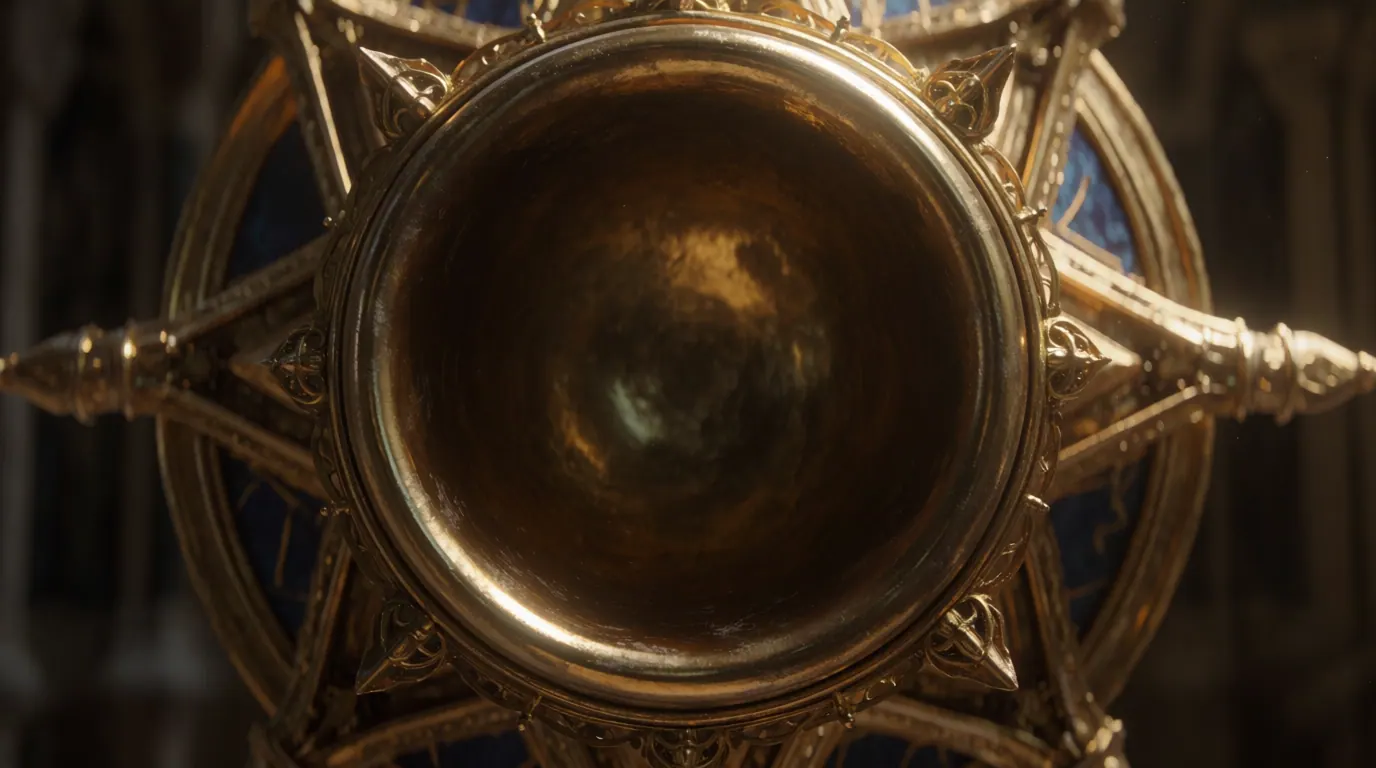
AI illustration of a hardstone chalice candidate (front view) for reference only.
AI ILLUSTRATION FOR REFERENCE ONLY

Holy Grail Relic Claims

Holy Grail · Santo Cáliz (Valencia) · Sangreal · Grail cup claims
FOLKLORE

Mainstream consensus: Venerated cups and Arthurian literature are historically real as culture; no peer-reviewed consensus identifies one surviving vessel as the unique Last Supper cup for archaeology.

Share this page
Short answer

Holy Grail relic claims name cups and chalices venerated across Europe as the Last Supper vessel, from Valencia's Santo Caliz to Arthurian romance props. Real treasuries hold dated metalwork and liturgy; a single archaeology-certified Grail remains faith and literature rather than a closed lab ID.

Holy Grail relic claims scatter cups, bowls, and dishes across Europe, each promising the vessel of the Last Supper or the cup of Christ. Individual candidates - Valencia's Santo Cáliz foremost among publicly documented treasuries - have cathedral homes and liturgical calendars. The singular one true Grail remains a faith-and-romance category, not a closed archaeological ID.

Romance first, cupboard second

Chrétien de Troyes made the Grail a moving target in late twelfth-century French verse before antiquarians tried to nail it to a cupboard. Later cycles added Galahad, bleeding lances, and castle tests that do not map cleanly onto any one agate cup. Pilgrims and tourists can stand before specific vessels with specific stories; that devotion is historical fact. What fails is the leap from this cup is holy to us to this cup ends the Grail question for archaeology.

Valencia's Santo Cáliz without the tournament

Valencia Cathedral's own chronology places the chalice in the Aragonese royal reliquary, then in the cathedral from 1437 as debt guarantee. Wartime moves during the Napoleonic invasion and Spanish Civil War are paperwork-grade history. Antonio Beltrán's 1960 study, still cited by the cathedral, dates the polished agate upper cup as an eastern Alexandrian-type vessel likely carved centuries before the medieval gold foot and handles. That is craftsmanship and devotion - not a lab certificate that ends every rival claim from Genoa to local parish lore.

Why pulp keeps inventing vaults

Templar tunnels, Nazi hunters, and bloodline thrillers treat every silver bowl as a plot coupon because romance already trained audiences to expect a finalist. Metalwork dates, repair histories, and liturgical inventories are the dull tools that actually move knowledge. When a documentary skips the inventory and cuts to torchlight, you are watching desire, not a shortlist.

Competing cups without a finalist

Valencia, Genoa, and other treasuries will keep their devotees. Literary studies will keep their French and German verse. Neither lane needs the other to vanish. The anomaly mood arises only when marketers insist on a single winner. Decline the tournament; keep the craftsmanship. Cross-link the Spear of Destiny to see how Christian sacred material culture attracts both pilgrimage and pulp.

In popular culture

From Wagner to Hollywood quest films, the Grail is a mood more often than a measured object. AI plates here show generic hardstone-chalice silhouettes only - disclosed illustrations, not substitute accession photos. Enjoy the longing; read the cathedral chronology when someone claims the case is closed.

Sightings and object accounts

Attributed sightings, recoveries, and object histories from named sources. Links open the originals; AnomalyWiki does not verify these claims.

Claims vs mainstream

The claim

One surviving European cup is proven to be the Last Supper vessel.

Mainstream view

Competing candidates and literary invention leave archaeology without a closed ID.

The claim

Templar or Nazi archives already settled the question.

Mainstream view

Pulp and thriller overlays; cathedral inventories and metalwork dating are the checkable trail.

The claim

Romance literature is irrelevant once a cathedral displays a cup.

Mainstream view

Liturgy and Arthurian romance are separate lanes that marketers often mash together.

Timeline

  1. c. 1180–1190Chrétien de Troyes Contes del Graal introduces the Grail into French romance.Source: Literary histories of the Grail
  2. 1437Valencia Cathedral receives the royal reliquary including the Santo Cáliz as debt guarantee.Source: Valencia Cathedral Holy Chalice chronology
  3. 1916Santo Cáliz installed for permanent public display in the Chapel of the Holy Chalice.Source: Valencia Cathedral history pages
  4. 1960Antonio Beltrán publishes archaeological study of Valencia's agate cup (eastern origin, c. 2nd–1st centuries BCE for the upper cup).Source: Valencia Cathedral about page citing Beltrán 1960
  5. 1982Pope John Paul II celebrates Eucharist with the Valencia chalice during a visit.Source: Valencia Cathedral history pages

FAQ

Has the Holy Grail been found?

No archaeological consensus names one surviving cup as the unique Last Supper vessel; rival treasuries keep competing candidates.

What is Valencia's Santo Cáliz?

A cathedral-venerated chalice with an agate upper cup and medieval gold mounts, transferred to Valencia Cathedral in 1437 and studied by Antonio Beltrán in 1960.

Are Grail stories and relic cups the same thing?

No. Arthurian romance and liturgical relic devotion are separate traditions that popular media often merges.

Did Nazis or Templars prove a Grail location?

Thriller plots recycle those themes; cathedral inventories and metalwork dating remain the checkable evidence.

Why do multiple cities claim a Grail?

Local devotion and tourism incentives favor unique claims; historians expect competing cups.

How should AI images of the Grail be read?

As illustrations of generic hardstone-chalice forms, not as photos of a certified miracle object.