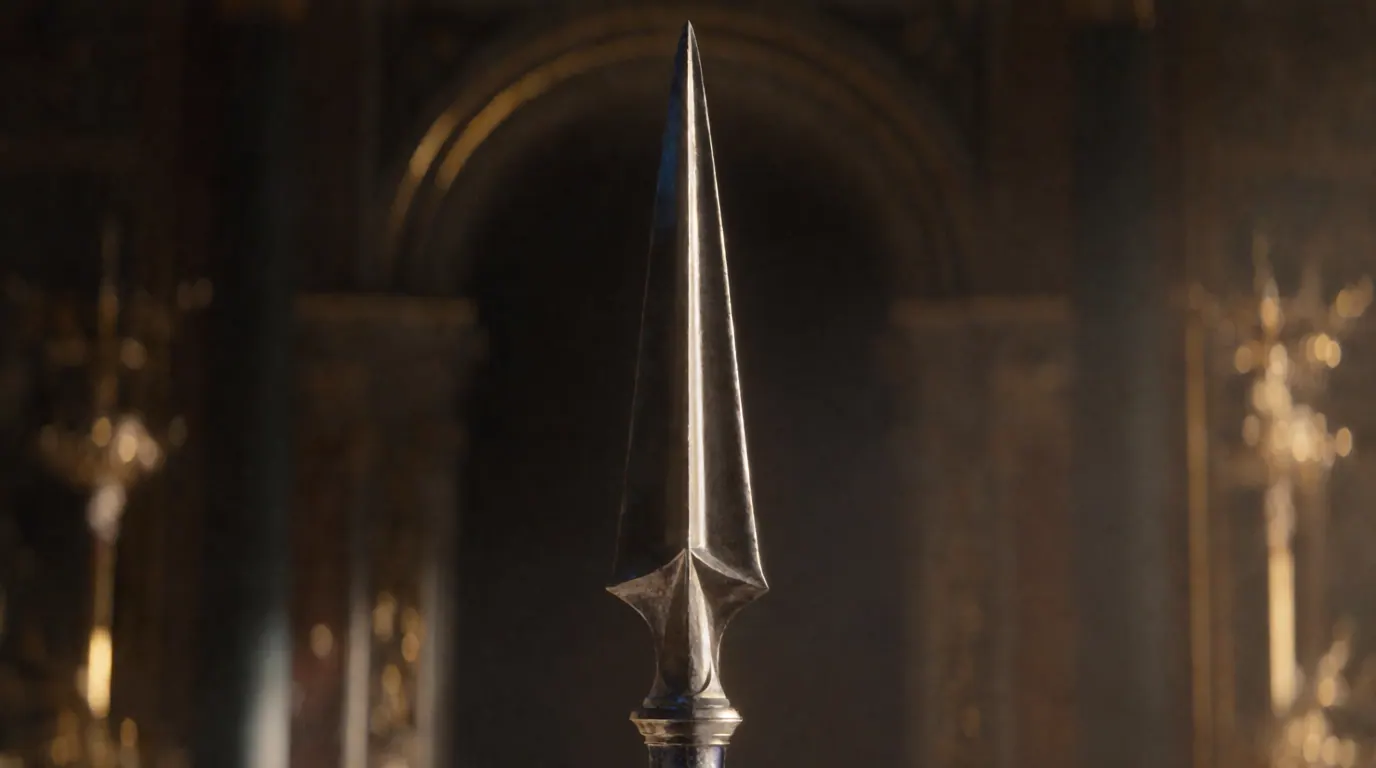
Call it the Spear of Destiny and the metal suddenly sounds louder than a museum case. Vienna's Imperial Treasury displays a Holy Lance that Habsburg ceremony once treated as sacred hardware. The iron is real, the fittings later, and the world-conquest legend mostly twentieth-century ink. Separate those layers and the object stays fascinating without needing a curse engine.
What the treasury actually shows
Kunsthistorisches Museum presentation places the lance among Habsburg regalia as a composite medieval relic - spearhead, sleeves, pins, and repairs stacked across centuries. That is how famous Christian relics often look under conservation light. A single Passion-era biography is the harder claim, and museum science does not grant it.
How the destiny myth attached
Modern occult writers argued that whoever held the spear steered history. The story scavenged Nazi interest in symbolic objects and then reverse-engineered causality from whoever happened to win wars. Custody lists do not behave like enchanted inventory. Rival lances in other cities also blunt any unique-power narrative.
Identification without the glow filter
Lock dark aged iron, bright later fittings, handheld spearhead scale, and Hofburg display context. Movie props and glowing CGI blades are lookalikes. Pair the lance with other cursed-relic celebrities when teaching method - provenance first, attributed motive talk second.
Why the case still draws crowds
A medieval weapon-shaped relic wrapped in Passion devotion is already a charged cultural object. Adding destiny marketing made it louder, not more measured. Read the treasury label, then the bestsellers, and keep them on different shelves.
Relic rivalry as a reality check
When multiple cities claim the same Passion weapon, the sociological pattern is relic culture, not a tournament bracket for magic. Vienna's lance can be historically important metalwork without being a destiny engine.
Ceremony without conquest magic
Habsburg ritual could treat a lance as sacred theater without granting it a geopolitics engine. Museum visitors can feel that charge and still refuse the twentieth-century destiny sales pitch. The iron remains; the superpower brochure does not have to.
Fittings tell on the timeline
Later sleeves and pins are not embarrassing secrets; they are how medieval relics were maintained and displayed. A composite object can be historically powerful without being a first-century snapshot. Conservation language beats destiny language here.