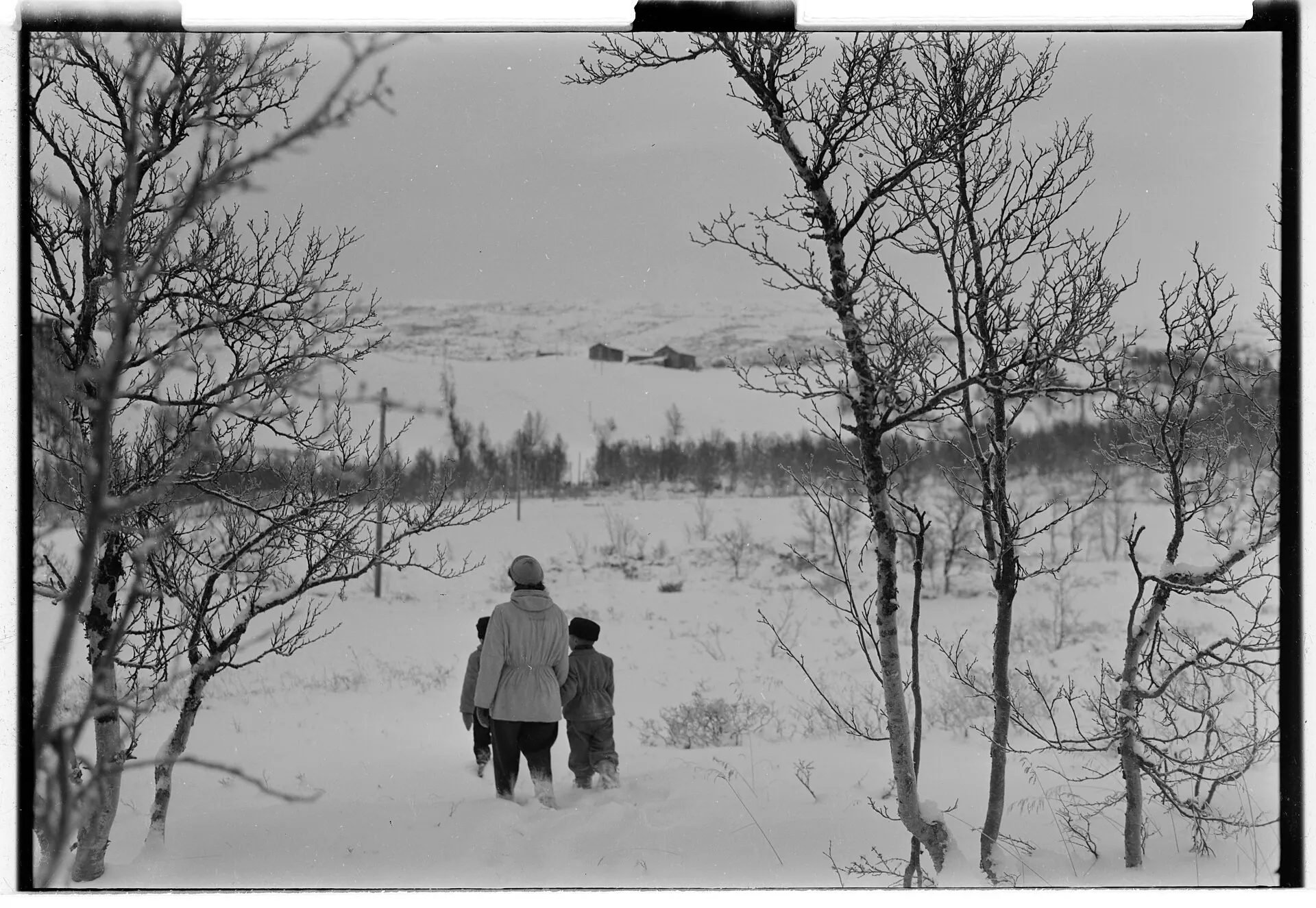
Winter view of Hessdalen Valley landscape, archival Norwegian photograph.
NATIONAL ARCHIVES OF NORWAY (RIKSARKIVET) / BILLEDBLADET NÅ / CC BY-SA 4.0

Hessdalen Valley

Hessdalen lights · Hessdalen phenomenon · Hessdalen
UNRESOLVED

Mainstream consensus: Multiple independent, instrumented campaigns since 1984 confirm recurring luminous events in the valley. No recovered object or agreed physical mechanism exists, and researchers themselves disagree about which natural model, if any, explains all of it.

Share this page
Short answer

Hessdalen Valley in Trondelag, Norway, has produced recurring unexplained lights since a dense wave of sightings in 1981, prompting engineer Erling Strand to found Project Hessdalen and, from 1998, run an automated camera and magnetometer station that has logged hundreds of events. Researchers still debate plasma, dust-combustion, and misidentification explanations; no exotic cause is confirmed.

Location and access

Hessdalen sits in Holtålen municipality, Trøndelag, Norway, roughly 62.793° N, 11.191° E, a narrow farming valley a few hours' drive south of Trondheim. There is no gate, ticket booth, or marked overlook. Visitors drive in on local roads and either stop near Hessdalen's small church or continue toward Finnsåhøgda, the hillside at the north end of the valley that skywatchers use most.

That detail matters for any proposed explanation: skeptical reviewers have pointed out that observers typically report the lights from that northern hillside looking south down the valley, not from the valley floor directly beneath them, which argues against models that put the light source at ground level right where people live. Project Hessdalen's own field station, nicknamed "the Blue Box," sits near that same hillside and streams a public live camera feed, so a curious visitor does not strictly need to travel to Norway to watch the sky the way locals do. Winter access means snow tires, short daylight, and real cold; parts of the valley are private farmland, and local guidance asks visitors to respect fences and livestock rather than wander at night.

History and legend

Local talk of odd valley lights predates the modern wave, but what put Hessdalen on the map was a cluster of sightings between 1981 and 1983, when residents and travelers reported silent, hovering lights, sometimes several a week. Engineer Erling Strand, then at Østfold College, organized Project Hessdalen and ran the first full instrumented field campaign in January and February 1984, deploying radar, a magnetometer, a spectrum analyzer, a Geiger counter, an infrared viewer, and cameras fitted with diffraction gratings for spectroscopy. That 1984 team documented 53 separate phenomena and captured a handful of usable spectrograms, including one showing a continuous optical spectrum stretching from roughly 430 to 710 nanometers, too faint and noisy to identify a specific source.

Fieldwork then went quiet for over a decade until Strand and colleague Bjørn Gitle Hauge installed the Automatic Measurement Station on 7 August 1998: a black-and-white CCTV camera and magnetometer wired to a computer that triggered an alarm recording whenever a sudden light entered its wide field of view. That station, later nicknamed the Blue Box, has run continuously ever since, giving the project what is likely the longest-running automated dataset on any reported light anomaly anywhere. In August 2000 and 2001, Italian radio astronomers from the CNR's Istituto di Radioastronomia joined as "EMBLA," adding ELF, VLF, and UHF radio receivers and spectrometers borrowed from radio-astronomy surveys; astrophysicist Massimo Teodorani led the optical side, publishing low-resolution spectra that suggested broad, thermal-like emission with possible emission lines.

Teodorani's 2004 survey in the Journal of Scientific Exploration proposed that the lights behave like a self-regulating plasma structure, sometimes appearing to eject smaller light balls and showing frequency shifts consistent with internal electrical activity, though he stopped short of naming a definite cause. Hauge's own 2007 preliminary spectral analysis, using early digital SLR cameras, reported tentative emission lines matching silicon, iron, scandium, and titanium, leading him to propose that burning dust from the valley's old mining deposits, which include the rare metal scandium, might ignite and hover as a glowing cloud. Physicists Gerson Paiva and Charles Taft later published a competing peer-reviewed model in the same journal, arguing the lights are better explained as clusters of charged dust, or "dusty plasma," ionized by alpha particles from natural radon decay in the valley's rock. Neither model has displaced the other, and no recovered object or agreed identification exists.

The legend layer sits on top of that research record. Online UFO communities and some television specials treat the valley as a confirmed extraterrestrial hotspot, and a handful of viral long-exposure photographs circulate as "proof," including at least one Commons-hosted image attributed to the lights by a contributor but never tied to any official Project Hessdalen measurement. Project Hessdalen's own materials are notably more careful, framing the valley as an open research puzzle rather than a closed case.

Related places and beings

Hessdalen belongs to a small cluster of anomalous-places entries defined by real, physically monitored land that has generated decades of competing explanations without a recovered object, the same pattern seen at Area 51 and Skinwalker Ranch. Mount Shasta and Sedona's vortexes share the hilltop-viewing culture of self-selected watchers, while the Bridgewater Triangle and Bermuda Triangle region show how a cluster of reports can calcify into a named "zone" long before any single cause is settled. Cross-category, the Wow! signal is Hessdalen's closest analogue outside places: both are logged by real instruments on specific dates and still lack a confirmed non-mundane source decades later.

In popular culture

Hessdalen's lights have aired on Norwegian television since the 1980s and remain a fixture of international UFO documentaries, clip compilations, and paranormal podcasts, almost always illustrated with the valley's own long-exposure photographs or Blue Box recordings. Project Hessdalen leans into that audience rather than fighting it: the project livestreams its camera feed, posts stacked long-exposure composites daily, runs an annual public field trip and science camp for students, and takes donations and merchandise sales through its own site, turning an open research question into a small but durable piece of tourism and media attention for Holtålen municipality. The valley rarely shows up in scripted fiction the way more cinematic UFO brands do, but it is a recurring reference point in "unexplained lights" roundups and Scandinavian science-meets-folklore coverage precisely because the instrumentation behind it, not just the stories, is real and ongoing.

Site photos

Rights-cleared documentary stills and serious reference images. These are not AI illustrations.

Hessdalen Valley in winter - landscape context for the light reportsCredit: National Archives of Norway (Riksarkivet) / Billedbladet NÅ / CC BY-SA 4.0
Hessdalen kirke and valley settingCredit: Ezzex / CC BY-SA 4.0
Contributor long-exposure light plate (attributed; not Project Hessdalen official proof)Credit: SuperWikiaBros / CC BY-SA 4.0

Visiting

loading map…

Rural valley with local roads and lodging nearby. Night observation from public roads and the hillside at the north end of the valley is common among visitors; respect private land, winter driving hazards, and local guidance. Not a ticketed "attraction," but Project Hessdalen's own live camera feed lets anyone watch the sky remotely.

Legend vs history: Decades of logged observations and several instrumented field campaigns are documented history. Extraterrestrial or occult interpretations are speculative overlays on a genuine, still-unsolved optical and electromagnetic research puzzle that physicists actively debate (plasma, dusty plasma, combustion, piezoelectric effects, and mundane misidentification all remain live hypotheses).

Reports and stories

Attributed reports, haunt claims, and discovery narratives from named sources. Links open the originals; AnomalyWiki does not verify these claims.

Claims vs mainstream

The claim

The lights are proven alien spacecraft.

Mainstream view

No recovered craft or consensus extraterrestrial identification exists; researchers debate plasma, combustion, and misidentification models instead.

The claim

Instrumentation has fully solved the phenomenon.

Mainstream view

The Automatic Measurement Station and EMBLA campaigns confirm recurring luminosity, but competing physical models (dusty plasma, dust combustion, piezoelectric) remain unresolved among the project's own researchers.

The claim

Burning scandium dust from the valley's old mines fully explains the lights.

Mainstream view

It is one hypothesis among several. Skeptical reviewers note Hessdalen's bedrock is mostly schist and sandstone with little quartz, and no demonstrated mechanism makes the tiny voltages involved ignite anything.

The claim

Every light reported in the valley over five decades is the same single phenomenon.

Mainstream view

Researchers and skeptics both note many reports match aircraft landing lights, car headlights, or atmospheric mirage effects; multiple event types likely overlap.

The claim

Viral long-exposure photos online are as reliable as campaign data.

Mainstream view

Prefer Project Hessdalen's logged Automatic Measurement Station and EMBLA records over uncorroborated social-media stills, several of which are not tied to any official measurement.

Timeline

  1. 1981-1983A dense wave of light reports in Hessdalen draws national attention in Norway and leads engineer Erling Strand to organize what becomes Project Hessdalen. Source: Project Hessdalen historical summaries; period Norwegian press
  2. 1984First instrumented field campaign (radar, magnetometer, spectrum analyzer, Geiger counter, infrared viewer, and grating-fitted cameras) documents 53 separate phenomena and a handful of usable spectrograms. Source: Project Hessdalen, "Final Technical Report 1984"
  3. 1998The Automatic Measurement Station (AMS), a camera-and-magnetometer rig later nicknamed the Blue Box, goes live on 7 August, giving the project a continuous, automated dataset that still runs today. Source: Project Hessdalen AMS station documentation
  4. 2000-2001Italian radio astronomers from the CNR's Istituto di Radioastronomia join as "EMBLA," adding ELF/VLF/UHF receivers and spectrometers; astrophysicist Massimo Teodorani leads optical spectroscopy in the field. Source: Teodorani, Strand & Hauge, "EMBLA 2001: The Optical Mission"
  5. 2004Teodorani's long-term survey in the Journal of Scientific Exploration proposes a self-regulating plasma model with possible emission-line signatures, without naming a final cause. Source: Teodorani, Journal of Scientific Exploration 18(2)
  6. 2007-2011Hauge's preliminary digital-spectrum analysis suggests silicon, iron, scandium, and titanium lines (a dust-combustion hypothesis); physicists Paiva and Taft later publish a competing dusty-plasma / radon-decay model in the same journal. Source: Hauge preliminary report; Paiva & Taft, Journal of Scientific Exploration 25(2)

FAQ

What are the Hessdalen lights?

Recurring luminous phenomena reported in Hessdalen Valley, Norway, especially since a dense 1981-1983 wave, studied continuously by Project Hessdalen since 1984.

What causes the Hessdalen lights?

No single cause is confirmed. Researchers have proposed a self-regulating plasma, a burning scandium-dust cloud from old valley mines, and a radon-driven dusty plasma; skeptics favor aircraft, headlights, and mirages for many individual reports.

Has anyone proven the lights are alien spacecraft?

No. No object has ever been recovered and no research team, including Project Hessdalen's own, claims an extraterrestrial identification.

Can I visit Hessdalen to see the lights?

Yes. It is a working valley with public roads; most observers watch from the hillside at the north end rather than the valley floor. Project Hessdalen also streams a live camera feed online for remote viewing.

What is the Automatic Measurement Station?

A camera-and-magnetometer rig, nicknamed the Blue Box, that Strand and Hauge installed in 1998 to record light events automatically around the clock; it is still running and is the longest continuous dataset on any reported light anomaly.

Why do researchers studying the same data disagree about the mechanism?

The valley's spectra are faint and noisy, so different teams emphasize different emission lines and physical models (combustion dust versus dusty plasma) without enough clean data to rule either out.

Are the viral long-exposure photos online reliable evidence?

Not necessarily. Some circulating images, including one hosted on Wikimedia Commons, are attributed to the lights by contributors but are not tied to any official Project Hessdalen measurement.