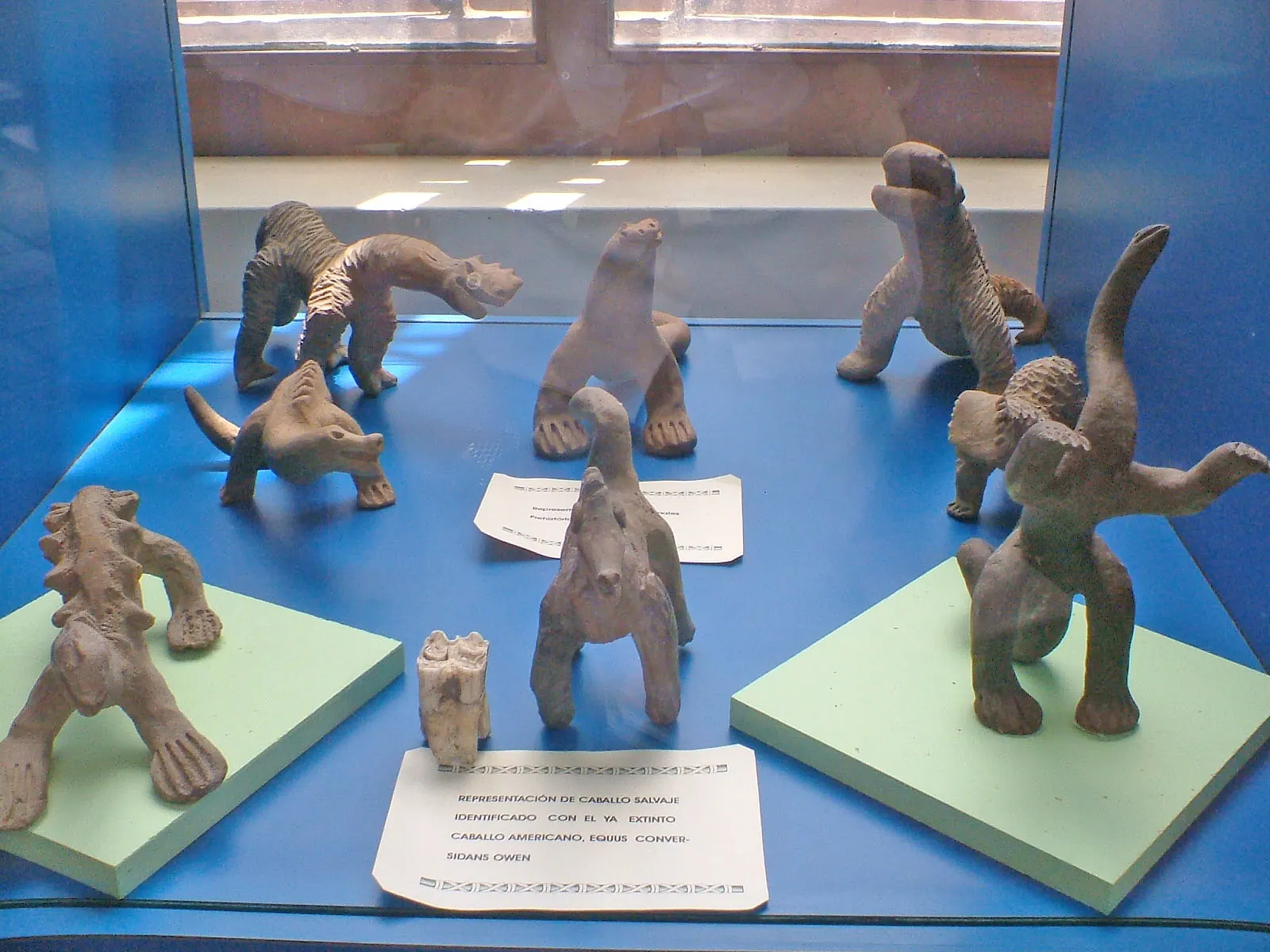
Waldemar Julsrud was a German-born hardware merchant running a hotel in Acámbaro, a small town in the Mexican state of Guanajuato, when he said a local farmhand led him to broken pottery on a hillside called El Toro in 1944. Rather than call in archaeologists, Julsrud began paying diggers directly for whatever they could bring him. Over the following years the pile grew into one of the strangest private collections in the Americas: tens of thousands of fired-clay figures depicting household animals, human faces, and - most famously - creatures that look remarkably like dinosaurs, down to upright tails and serrated backs.
That dinosaur detail is exactly what turned a local curiosity into an international talking point. If genuinely ancient, figures depicting animals that went extinct some 66 million years before any Mesoamerican culture existed would upend the fossil record. Fringe authors leaned hard into that framing, pairing Julsrud's figures with Ica stones and other "forbidden archaeology" favorites as supposed proof that humans once lived alongside dinosaurs.
Professional archaeology reached a different conclusion almost immediately. When Charles C. Di Peso examined the dig site in 1952, he found the fill laced with modern trash and recorded interviews in which local diggers described being paid by the piece, with Julsrud's evolving interests shaping what got made next. Di Peso published his findings in the peer-reviewed journal American Antiquity the following year, treating Acámbaro as a straightforward case of villagers manufacturing curios for a paying customer - a well-documented pattern around tourist sites across Mexico before and since.
Believers didn't let the matter drop. In 1969 a handful of shards, supplied outside any controlled excavation, were sent to the University of Pennsylvania's MASCA laboratory for thermoluminescence testing. Several samples returned surprisingly old firing dates, and that result still circulates as the collection's scientific vindication. The catch is that thermoluminescence measures the last time clay was fired, not when it was carved into a dinosaur - a forger working with old sherds, or submitting cherry-picked samples, would produce exactly this kind of result. No reputable team has since dated the figures under controlled, independently verified conditions.
The Acámbaro figures remain a staple of ancient-astronaut documentaries and creationist lecture circuits, usually displayed without mentioning Di Peso's fieldwork at all. The real story is still worth telling: a 20th-century forgery economy, scaled up by one collector's enthusiasm, that produced an archive of folk art mistaken - deliberately, by some promoters - for a lost prehistoric civilization.

