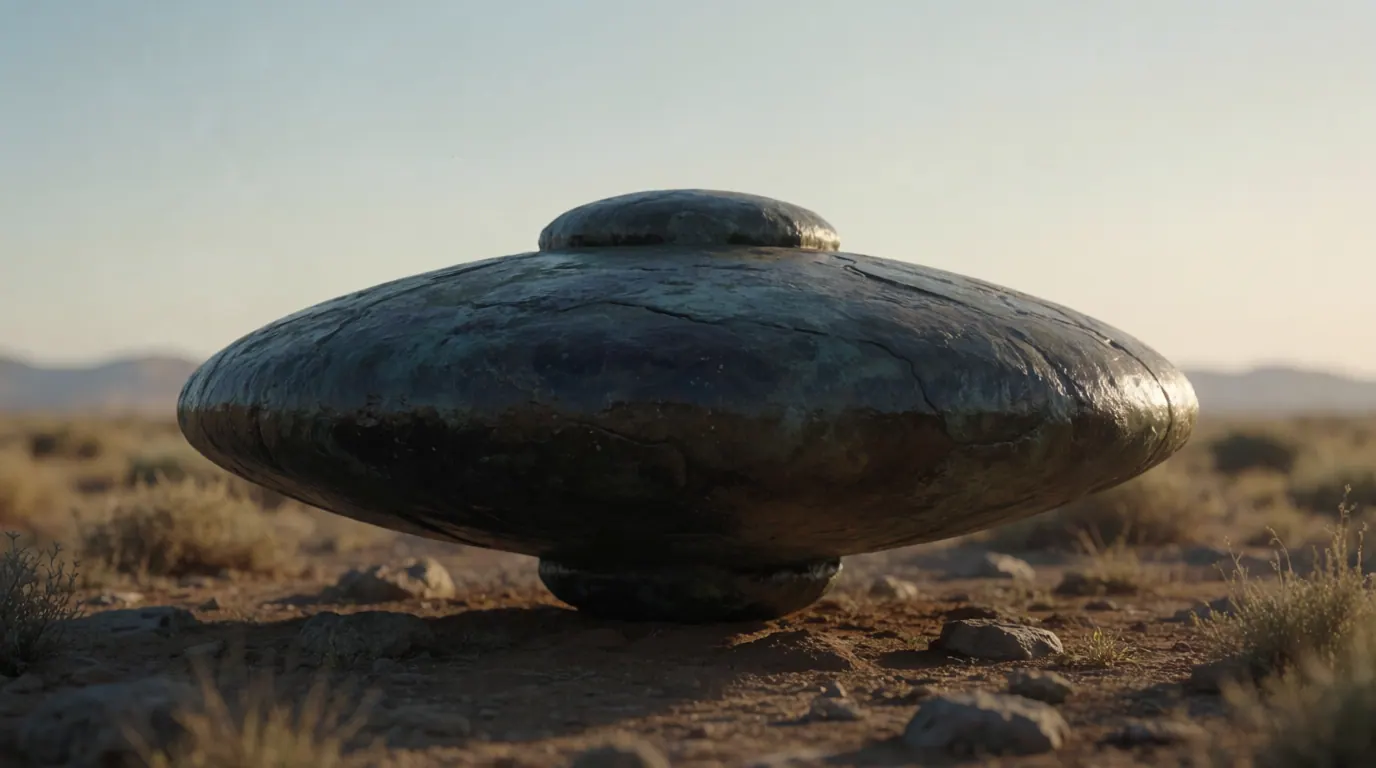
AI illustration for reference only, front view of a claimed engraved stone disc.
AI ILLUSTRATION FOR REFERENCE ONLY

Dropa Stones

Dropa discs · Dzopa stones · Bayan Kara Ula discs
HOAX

Mainstream consensus: Researchers tracing the story's publishing history found no supporting institutional record in China, no named museum holding, and a direct authorial confession: David Gamon told Fortean Times in 1995 that he wrote "Sungods in Exile" as fiction, inventing its supposed source, author, and decoder from scratch.

Share this page
Short answer

Dropa Stones describes supposed engraved stone discs from Tibet said to record a crashed extraterrestrial craft, a story popularized by Hartwig Hausdorf's 1998 book The Chinese Roswell. The core narrative traces to Sungods in Exile (1978), which author David Gamon admitted in Fortean Times was fiction he wrote under the pseudonym David Agamon, inventing even its supposed source, Karyl Robin-Evans.

Most entries in this wiki weigh competing claims. This one does not need to, because the author himself settled the question in print: David Gamon wrote "Sungods in Exile" as fiction, then told Fortean Times so in 1995. The story has outlived its own author's confession only because each retelling strips that part out before passing the tale along.

A novel dressed as an expedition report

"Sungods in Exile: Secrets of the Dzopa of Tibet" appeared in the UK in 1978, presented as the notes of a supposed Oxford professor named Karyl Robin-Evans, who had allegedly lived among a Tibetan "Dropa" tribe and photographed their stone-disc relics. The book credited its editing to one "David Agamon." No record of Professor Robin-Evans has ever surfaced in any university registry, and no Chinese institution has ever claimed custody of the discs the book describes in such specific, photographable detail.

The confession that should have closed the file

In 1995, Fortean Times published David Gamon's own account of writing the book: Robin-Evans was invented, "David Agamon" was Gamon's own pen name, and the entire premise drew on a 1960s magazine article and a 1973 French science-fiction novel, "Les disques de Biem-Kara," rather than any fieldwork. Gamon said he was inspired directly by the commercial success of Erich von Daniken's ancient-astronaut books - he was writing to a market, not reporting a discovery.

Why the confession didn't stop the story

Hartwig Hausdorf's 1998 book "The Chinese Roswell" carried the Dropa narrative to a much wider international UFO-subculture audience three years after Gamon's own admission had already settled the authorship question. That gap between confession and continued circulation is the real engine behind this legend's longevity: readers encountering Hausdorf's retelling, or the anthologies that followed it, rarely traced the citation chain back to the original 1995 Fortean Times piece.

Why "no object" ends the question

Out-of-place-artifact claims that still generate real debate, like the Baghdad Battery, at least start from a physical object sitting in a museum drawer that specialists can examine and disagree about. The Dropa Stones never clear that bar: no disc has ever been photographed under laboratory conditions, accessioned by a museum, or handed to an independent researcher for testing - because the discs, like their supposed discoverer, only ever existed on the page.

Sightings and object accounts

Attributed sightings, recoveries, and object histories from named sources. Links open the originals; AnomalyWiki does not verify these claims.

Claims vs mainstream

The claim

Chinese archaeologists in 1938 found stone discs in a cave proving a spacecraft crashed in the Himalayas.

Mainstream view

No excavation report, museum accession record, or named research institute documenting any such find has ever surfaced; the claim originates in a 1978 hoax book, not a field report.

The claim

Professor Tsum Um Nui decoded the discs' hieroglyphs and was ridiculed into obscurity for it.

Mainstream view

No university record, publication, or independent biography of this person exists outside the hoax literature; researchers treat the name as a fictional device invented for the book.

The claim

The book Sungods in Exile is a credible insider exposé by Oxford professor Karyl Robin-Evans.

Mainstream view

Author David Gamon admitted in a 1995 Fortean Times account that he invented the entire book, including its supposed author Robin-Evans, under the pseudonym David Agamon.

Timeline

  1. 1938 (claimed)A Chinese archaeological team allegedly discovers engraved stone discs in a Bayan Kara Ula cave - an event with no supporting excavation record outside Gamon's later book. Source: Claim literature only; no primary record located
  2. 1960s-1973David Gamon later said he drew his source material from a 1960s magazine article and a 1973 French science-fiction novel, "Les disques de Biem-Kara," by Daniel Piret. Source: Wikipedia, "Sungods in Exile"
  3. 1978"Sungods in Exile" is published in the UK, credited to the fictional Professor Karyl Robin-Evans and pseudonymous editor "David Agamon."Source: Wikipedia, "Sungods in Exile"
  4. 1995David Gamon admits in Fortean Times that he wrote the entire book as a hoax, inventing Robin-Evans and the Dropa narrative from scratch.Source: Wikipedia, "Sungods in Exile," citing Fortean Times 75
  5. 1998Hartwig Hausdorf's book "The Chinese Roswell" repopularizes the Dropa Stones internationally within the UFO subculture, years after Gamon's confession.Source: Wikipedia, "Sungods in Exile"

FAQ

Do the Dropa Stones actually exist in any museum?

No. No museum, archive, or photograph of a verified physical disc has ever been produced by anyone claiming to have found them.

Who invented the Dropa Stones story?

British writer David Gamon, who published the 1978 book "Sungods in Exile" under the pseudonym "David Agamon," crediting it to a fictional Oxford professor he invented, Karyl Robin-Evans.

Was "Professor Tsum Um Nui" a real scientist?

No university record, publication, or independent biography of that name exists outside the hoax book itself.

Did the author ever admit it was fake?

Yes. David Gamon told Fortean Times in 1995 that he invented the entire narrative, including its supposed author.

Why do people still talk about the Dropa Stones as real?

Hartwig Hausdorf's 1998 book "The Chinese Roswell" and later ancient-astronaut anthologies kept repeating the story internationally, years after Gamon's own confession.

Has any archaeologist investigated the claimed 1938 excavation site?

No excavation report or institutional record documenting the alleged find has ever surfaced in Chinese or international archaeological literature.