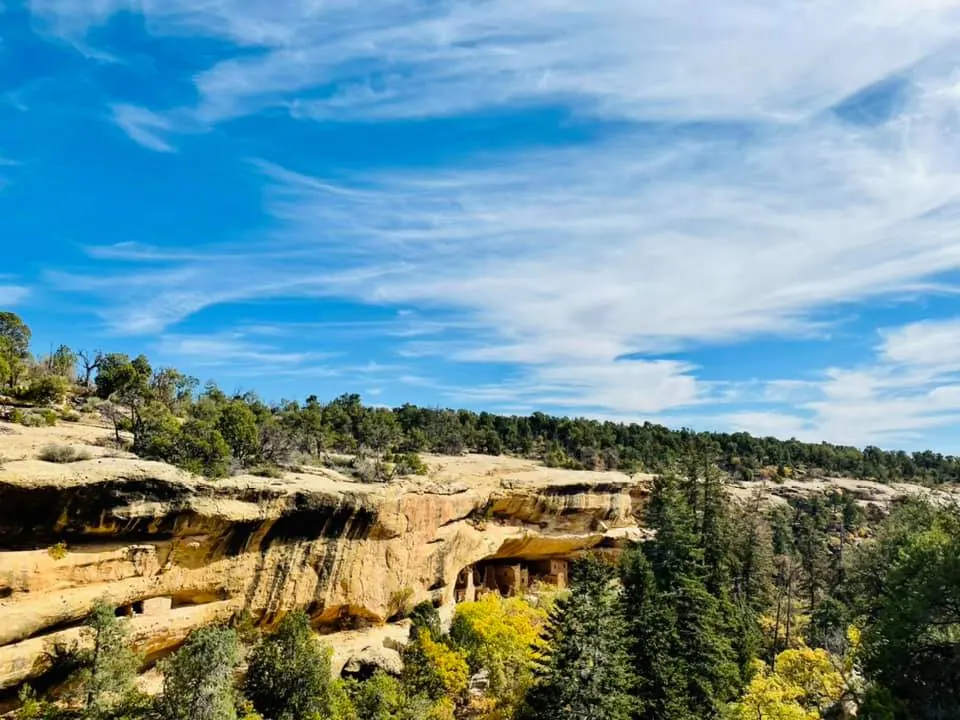
Cliff Palace, a multi-story Ancestral Puebloan dwelling built into a sandstone alcove at Mesa Verde, Colorado.
WIKIMEDIA COMMONS CONTRIBUTOR (CC BY-SA 4.0)

Ancestral Puebloans

Anasazi · Chaco Culture
ARCHAEOLOGICAL

Mainstream consensus: Extensively excavated settlement culture with direct, acknowledged descendant communities; modern scholarship and Pueblo communities prefer "Ancestral Puebloans" over "Anasazi."

Share this page
Short answer

Ancestral Puebloans built multi-story great houses at Chaco Canyon and cliff-hugging villages like Mesa Verde's Cliff Palace across the Four Corners region from roughly 850-1300 CE. Drought, resource strain, and social upheaval drove migrations south and east - not a mysterious vanishing - into communities whose Hopi, Zuni, and Rio Grande Pueblo descendants still live there today.

Mainstream view

Ancestral Puebloans built sophisticated multi-story masonry complexes and road networks centered on Chaco Canyon, then shifted population toward defensible cliff dwellings at Mesa Verde before a 13th-century megadrought and social stress drove migration to the Rio Grande, Hopi mesas, and Zuni areas where descendant Pueblo communities live today.

Alternative claim

Older popular accounts labeled the culture "Anasazi" (a Navajo term meaning roughly "ancient enemies") and framed their departure as a mysterious disappearance rather than a documented migration.

Chaco Canyon's Pueblo Bonito grew, room by room, into a roughly 600-room masonry complex rising several stories against a New Mexico canyon wall - the hub of a road network stitching together dozens of outlying great houses across the San Juan Basin between about 850 and 1150 CE. This was planned monumental architecture built without wheels or draft animals, using local sandstone and timber hauled in from surrounding mountains.

Population and influence later shifted north and west toward Mesa Verde, where communities built some of the most photographed architecture in North America directly into sandstone alcoves. Cliff Palace, with its roughly 150 rooms tucked under a canyon overhang, represents a deliberate architectural choice - defensibility and microclimate advantages archaeologists still debate the relative weight of, but not mystery for mystery's sake.

The name "Anasazi" carries baggage worth naming directly. It derives from Navajo and is commonly glossed as "ancient enemies" or "ancient ones who are not us" - a term applied by a different nation, not the builders' own word for themselves. Pueblo descendant communities and most working archaeologists now use "Ancestral Puebloans," and that is the name used here.

Tree-ring chronologies pinpoint a 23-year megadrought running from 1276 to 1299 CE, coinciding precisely with the final depopulation of both Chaco's heirs and Mesa Verde. Combined with resource strain and social pressures researchers are still refining, this drove the documented migrations south and east into the Rio Grande valley, the Hopi mesas, and Zuni territory - not a vanishing, but a relocation whose descendant communities still live in the Southwest and still trace their heritage to these canyons.

Peers facing comparable climate-driven population shifts include the Greenland Norse settlements, caught in a parallel medieval cooling squeeze on another continent, and the broader urban-mound tradition at Cahokia. The licensed Cliff Palace photo belongs here because that alcove architecture is the clearest surviving argument for why people actually built where they did, generation after generation.

Documentary photos

Rights-cleared documentary stills and serious reference images. These are not AI illustrations.

Cliff Palace, Mesa VerdeCredit: Wikimedia Commons contributor (CC BY-SA 4.0)

Key debates and stories

Attributed discovery narratives, debates, and claim histories from named sources. Links open the originals; AnomalyWiki does not verify these claims.

Claims vs mainstream

The claim

The Ancestral Puebloans mysteriously vanished without explanation.

Mainstream view

Tree-ring dated drought records and migration-era pottery and architecture trace population movement to the Rio Grande, Hopi, and Zuni regions - descendants, not disappearance.

The claim

"Anasazi" is simply a neutral historical name for the culture.

Mainstream view

The term comes from Navajo and is often translated as "ancient enemies" or "ancient ones who are not us"; most archaeologists and Pueblo communities prefer "Ancestral Puebloans."

The claim

Chaco Canyon's great houses required outside or non-Native expertise.

Mainstream view

Construction-phase studies, local sandstone sourcing, and a documented masonry tradition developing over generations support purely Ancestral Puebloan engineering.

The claim

Cliff dwellings like Cliff Palace were built mainly for mystical reasons rather than practical ones.

Mainstream view

Defensibility, microclimate advantages, and proximity to canyon-rim farmland are the leading explanations architectural archaeologists cite for the shift to cliff alcoves.

Timeline

  1. c. 850 CEMonumental multi-story construction begins at Chaco Canyon's Pueblo Bonito.Source: Chaco Culture National Historical Park chronology
  2. c. 1020–1140 CEChaco Canyon's road network and great houses reach peak regional influence across the Southwest.Source: Chacoan archaeological surveys
  3. c. 1190–1280 CEPopulation shifts toward defensible cliff dwellings, including Mesa Verde's Cliff Palace.Source: Mesa Verde National Park archaeological record
  4. c. 1276–1299 CEA severe, tree-ring documented megadrought (the "Great Drought") strains Four Corners farming communities.Source: Southwestern dendrochronology studies
  5. c. 1300 CEFour Corners populations largely migrate to the Rio Grande, Hopi mesas, and Zuni areas.Source: Ancestral Puebloan migration scholarship

FAQ

Who were the Ancestral Puebloans?

Farming communities who built monumental complexes at Chaco Canyon and cliff dwellings at Mesa Verde across the Four Corners region from roughly 850 to 1300 CE.

Why "Ancestral Puebloans" instead of "Anasazi"?

"Anasazi" comes from a Navajo term often translated as referring to outsiders or ancient enemies; Pueblo descendant communities and most archaeologists prefer "Ancestral Puebloans."

Did they mysteriously disappear?

No - tree-ring drought data and migration-era architecture trace their movement to the Rio Grande, Hopi, and Zuni regions, where descendant communities live today.

What was Chaco Canyon?

A monumental multi-story complex centered on Pueblo Bonito, connected by roads to dozens of outlying great houses across the San Juan Basin.

Why did people move into cliff dwellings like Cliff Palace?

Defensibility, favorable microclimates, and proximity to canyon-rim farmland are the leading explanations architectural archaeologists cite.

What role did drought play in the migration?

A documented 23-year megadrought from 1276 to 1299 CE strained farming communities and coincided with the final depopulation of Chaco and Mesa Verde.