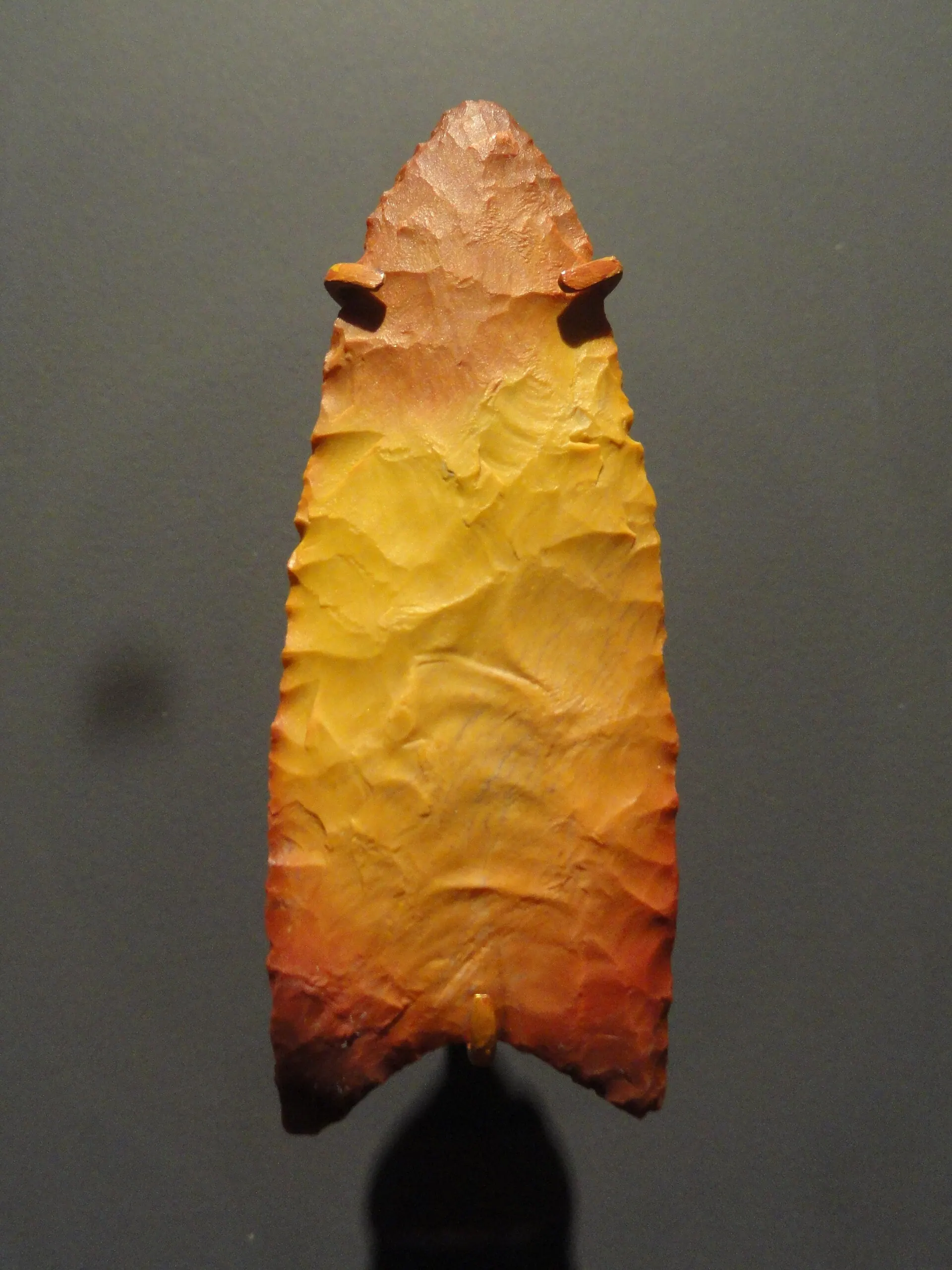
Clovis culture gets its name from a New Mexico farm town, not from the people who made its signature tool. In the early 1930s, excavators at nearby Blackwater Draw began pulling distinctively fluted stone spear points out of layers containing mammoth bone - evidence of skilled Ice Age hunters targeting some of the largest animals ever to share a continent with humans.
For decades, "Clovis-first" was close to doctrine: these fluted-point hunters, dated to roughly 13,050-12,750 years ago, were treated as the original colonizers of the Americas. That model held until Monte Verde, a waterlogged site in southern Chile, forced a reckoning. A skeptical site-visit panel in 1997 confirmed artifacts there dated to about 14,500 years ago - older than Clovis, and in South America, which made a simple north-to-south Clovis-first migration impossible to sustain.
The timeline has kept moving. Fossilized footprints preserved in ancient lakebed sediment at White Sands, New Mexico, bracketed by radiocarbon-dated seed layers, were published in 2021 with an estimated age of 21,000 to 23,000 years - a claim that remains actively debated among specialists but has reshaped how researchers frame the broader peopling-of-the-Americas question. Clovis is now understood as one notable technology among multiple early populations, not the founding chapter.
A persistent fringe idea claims a comet impact around 12,800 years ago wiped out Clovis culture and Ice Age megafauna in one catastrophic stroke - the Younger Dryas impact hypothesis. Most specialists remain unconvinced, favoring gradual climatic shifts and ecological pressure as megafauna populations declined across the end of the Pleistocene. Experimental flintknapping, meanwhile, has reproduced Clovis fluting using nothing beyond period tools and real skill, closing off any claim that the points themselves require explanation beyond human craft.
Peers in the "who got here first" conversation include Vinland at the opposite, much later end of pre-Columbian contact debates, and climate-pressured Southwest neighbors like the Ancestral Puebloans. The illustration here is AI-generated and labeled as such because no licensed period photograph exists for Ice Age hunting scenes - the fluted points themselves remain the real physical evidence.

