Excavated mudbrick structures and walkways at the Çatalhöyük UNESCO World Heritage Site, Konya, Turkey.
WIKIMEDIA COMMONS CONTRIBUTOR (CC BY-SA 4.0)

Çatalhöyük

Catal Huyuk · Catalhoyuk
ARCHAEOLOGICAL

Mainstream consensus: One of the most thoroughly excavated and studied Neolithic settlements in the world, with continuous research since 1961 and UNESCO recognition.

Share this page
Short answer

Çatalhöyük was a densely packed Neolithic town in central Anatolia where thousands entered mudbrick homes through roof hatches around 7,100 BCE. Excavations uncovered wall paintings, plastered bull skulls, and floor burials - an egalitarian urban experiment before kings or metal tools.

Mainstream view

Çatalhöyük was a tightly clustered agricultural town of mudbrick houses built wall-to-wall with no streets, entered via roof ladders, featuring elaborate wall art, plastered animal skulls, and sub-floor burials, reflecting a complex but largely egalitarian Neolithic society without clear evidence of centralized rulers.

Alternative claim

Some popular interpretations overstate the site's symbolic imagery (bull horns, leopard motifs) as proof of an advanced lost religious or esoteric tradition beyond what the archaeological record supports.

Çatalhöyük packed thousands of lives into a single sprawling mudbrick mass with no streets at all. Houses shared walls on every side, and residents climbed ladders through roof openings to get home - a settlement plan that reads almost like a single continuous building rather than a town, housing an estimated 5,000 to 8,000 people at its peak around 7,100 BCE.

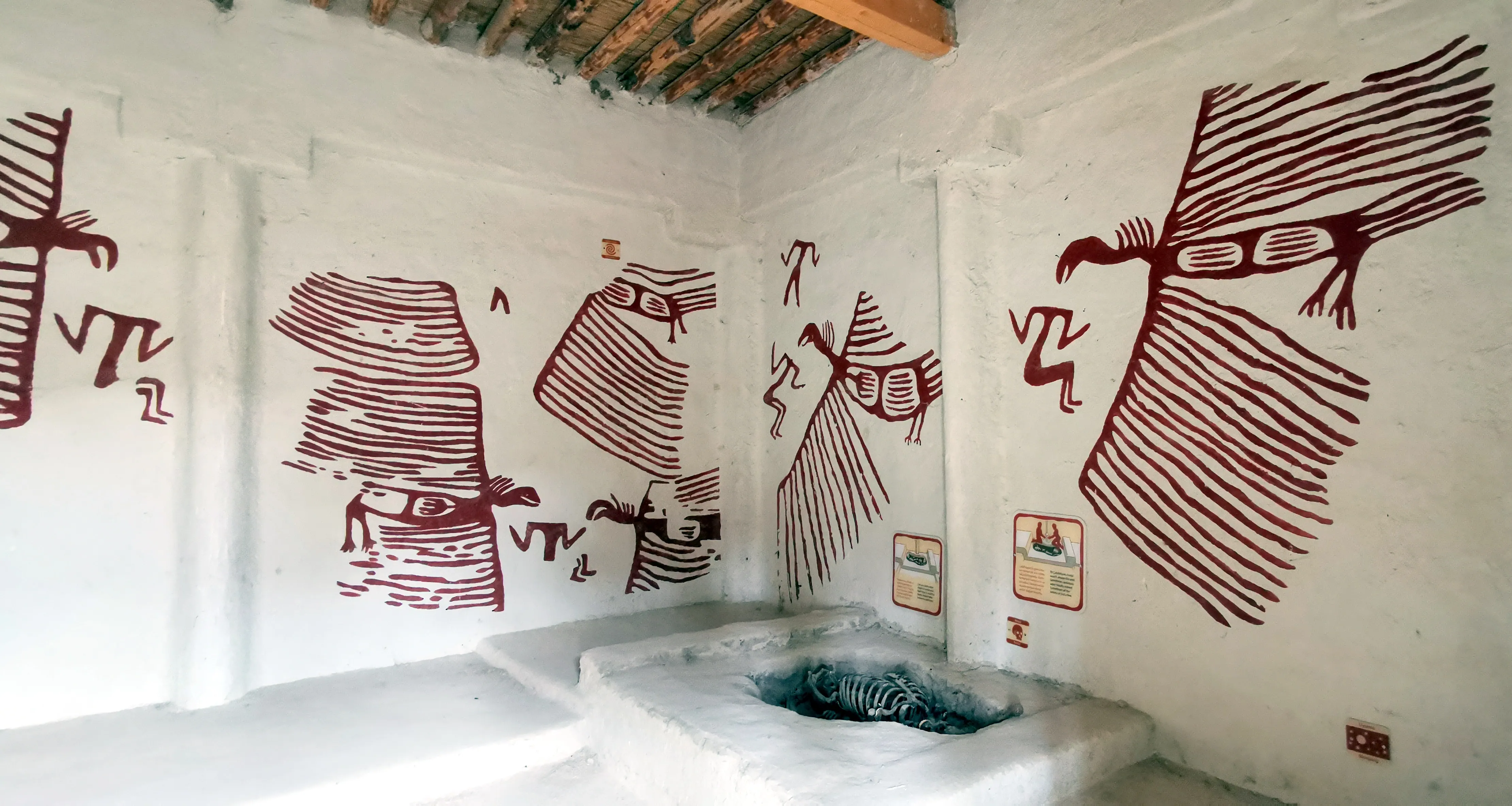
James Mellaart spotted the mound's unusual scale during a 1958 survey and began excavating in 1961, uncovering interior walls painted with hunting scenes, geometric patterns, and vultures, plus cattle skulls plastered directly into house walls. People buried their dead beneath their own floors, often in flexed positions - a domestic intimacy between living space and burial space that shaped how archaeologists think about Neolithic household identity.

What the site conspicuously lacks is a palace, temple complex, or obvious seat of centralized power. That absence, paired with roughly uniform house sizes, supports a reading of largely egalitarian social organization - complex symbolic life without a ruling class to orchestrate it. Fringe readings that stretch the bull-horn and leopard imagery into evidence of a "lost advanced religion" outrun what the wall art and burial patterns actually demonstrate on their own terms.

Ian Hodder's renewed excavation project, running continuously since 1993, has refined population estimates and tested new interpretive models against Mellaart's original findings, making Çatalhöyük one of the most intensively studied Neolithic sites anywhere. UNESCO recognized it as a World Heritage Site in 2012.

Peers in the early-settlement and ritual-landscape category include Nabta Playa for contemporary Saharan ceremonial life, and nearby Göbekli Tepe for an even older Anatolian monument built before farming itself. The licensed photo of excavated walkways belongs here because that maze of mudbrick walls is the clearest physical argument for how densely - and how communally - Çatalhöyük's residents actually lived.

Roof ladders and shared walls still argue for dense communal life more vividly than any fringe esoteric reading of leopard motifs on plaster.

Documentary photos

Rights-cleared documentary stills and serious reference images. These are not AI illustrations.

Excavated structures at ÇatalhöyükCredit: Wikimedia Commons contributor (CC BY-SA 4.0)

Key debates and stories

Attributed discovery narratives, debates, and claim histories from named sources. Links open the originals; AnomalyWiki does not verify these claims.

Claims vs mainstream

The claim

Çatalhöyük's layout proves it had no social organization at all.

Mainstream view

The lack of a clear palace or temple complex suggests a largely egalitarian society, but household-level ritual (burials, wall art) shows organized communal and symbolic life.

The claim

The site's bull and leopard imagery reveals a lost advanced religion.

Mainstream view

Archaeologists interpret the plastered skulls and wall paintings as symbolically significant domestic and communal ritual, not evidence of esoteric knowledge beyond the Neolithic world.

The claim

Çatalhöyük was the first city in human history.

Mainstream view

It is one of the largest and earliest known dense agricultural settlements, but specialists debate whether "city" (implying specialized labor and hierarchy) fits better than "large town."

The claim

Houses entered through roof holes imply defensive or secretive intent.

Mainstream view

Wall-to-wall construction with roof access likely reflects efficient land use and community design within a dense settlement rather than defense against external threats.

Timeline

  1. c. 7,100 BCEÇatalhöyük's lower settlement layers begin, marking the start of dense occupation.Source: Mellaart and Hodder excavation chronologies
  2. c. 7,100–6,500 BCEThe settlement reaches peak population, estimated between 5,000 and 8,000 residents.Source: Çatalhöyük Research Project population estimates
  3. 1958James Mellaart identifies the mound as a major prehistoric site during a survey.Source: Mellaart survey records
  4. 1961–1965Mellaart's initial excavations uncover wall paintings, plastered skulls, and sub-floor burials.Source: Mellaart excavation reports
  5. 1993Ian Hodder begins a long-running renewed excavation project that continues shaping interpretation of the site.Source: Çatalhöyük Research Project
  6. 2012UNESCO inscribes Çatalhöyük as a World Heritage Site.Source: UNESCO World Heritage Centre listing

FAQ

What was Çatalhöyük?

A densely packed Neolithic town in central Anatolia, home to thousands of people around 7,100 BCE, famous for wall-to-wall mudbrick houses entered through roof hatches.

Who discovered Çatalhöyük?

British archaeologist James Mellaart identified the site in 1958 and began major excavations in 1961.

Why did houses have roof entrances instead of doors?

The wall-to-wall construction left no street space for ground-level doors, so residents climbed ladders through roof openings instead.

What do the wall paintings and bull skulls mean?

Archaeologists interpret them as evidence of rich household and communal ritual life, not proof of a lost advanced religion beyond the Neolithic context.

Did Çatalhöyük have rulers or a palace?

No clear palace or temple complex has been found, pointing to a largely egalitarian social structure rather than centralized kingship.

Is excavation still happening at Çatalhöyük?

Yes - Ian Hodder's research project has continued excavation and analysis since 1993, building on Mellaart's original work.