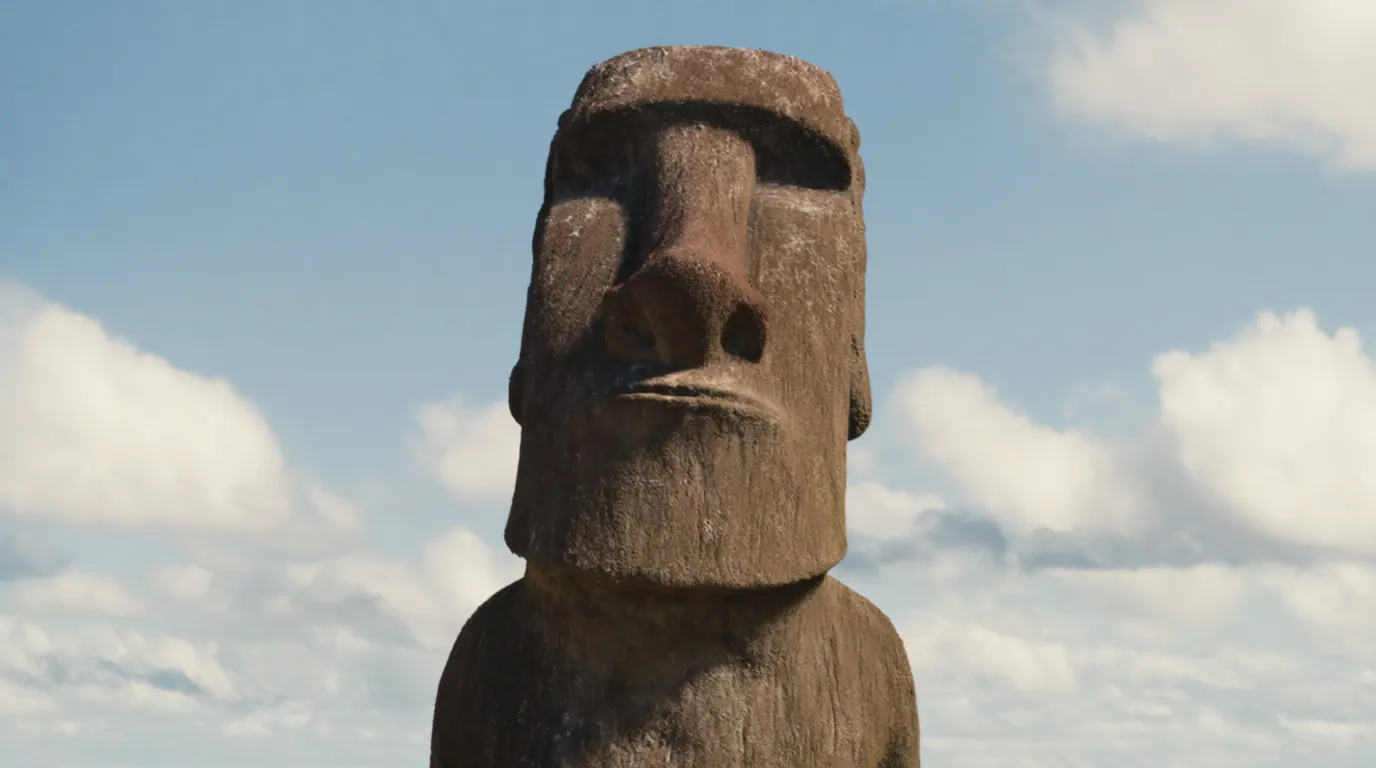
AI illustration of Moai (Front view) for reference only.
AI ILLUSTRATION FOR REFERENCE ONLY

Moai

Easter Island statues · Rapa Nui moai · moai heads (popular misnomer)
MUSEUM OBJECT

Mainstream consensus: Moai are extensively documented Polynesian stone monuments carved and moved by Rapa Nui communities. Transport experiments and quarry archaeology explain how without lost alien machinery. Fringe crane myths are modern entertainment layered on UNESCO-protected heritage.

Share this page
Short answer

Moai are the monumental ancestor statues of Rapa Nui (Easter Island) - elongated heads, heavy brows, and truncated torsos carved mainly from Rano Raraku volcanic tuff. Archaeology documents carving, ahu display, and rope-walking transport experiments. Ancient-astronaut crane myths are modern overlays on living Polynesian stonework.

On a windy Pacific island smaller than many cities, stone ancestors still watch the grass. Moai are Rapa Nui's monumental figures - elongated faces, heavy brows, long ears - carved mainly from the tuff cliffs of Rano Raraku and raised on ahu platforms that organized community memory across the island's coasts and interiors.

Quarries, platforms, and buried torsos

Walk the quarry slopes and unfinished giants still cling to the rock, tool marks crisp enough to show sequence. Downslope, statues buried to the chin created the pop-culture heads-only myth; excavation and erosion studies restore the truncated bodies. Red scoria pukao once crowned some standing figures like separate hats of contrasting stone. This is craftsmanship at landscape scale, not anonymous mystery props dropped by visitors from elsewhere.

Contact, annexation, and World Heritage

Jacob Roggeveen's 1722 visit wrote the statues into European journals centuries after carving peaked. Later colonial disruption, missionary pressure, and Chile's 1888 annexation reshaped island life while the moai became postcards. UNESCO's 1995 inscription of Rapa Nui National Park framed quarry and ahu as a protected cultural landscape still stewarded with descendant knowledge. The wonder deepens when the stone stays attached to living Polynesian history.

Walking without spaceships

Documentaries love to ask how. Rope-walking experiments popularized in the 2010s show coordinated teams can rock replica moai forward upright - slow, sweaty, and human. That does not end every transport debate, but it retires the claim that only lost anti-gravity or alien cranes could work. Pair this object page with Rapa Nui society context to keep ancestors attached to people, not to airport gift-shop silence.

In popular culture

Emoji heads, souvenir busts, and ancient-astronaut stills flatten living Polynesian art into mute idols. Games borrow the silhouette because it reads instantly. Visit the UNESCO description and island archaeology before trusting a caption that erases Rapa Nui hands from the story.

Rapa Nui carvers left unfinished giants still locked in the Rano Raraku cliff face, which is as close as archaeology gets to a freeze-frame of method. Tool marks, incomplete torsos, and transport roads around the quarry answer the how question with stone dust rather than starship speculation. When airport gift shops sell only the eyebrow emoji, return to those unfinished torsos for the fuller silhouette.

Sightings and object accounts

Attributed sightings, recoveries, and object histories from named sources. Links open the originals; AnomalyWiki does not verify these claims.

Claims vs mainstream

The claim

Moai could only move if ancient technology was lost or aliens helped.

Mainstream view

Published experiments show feasible upright transport with ropes and coordinated teams.

The claim

All moai face the sea.

Mainstream view

Many orientations exist; ahu layouts vary across the island.

The claim

The statues are only heads.

Mainstream view

Bodies are often buried by erosion and slope collapse, not absent by design.

The claim

Europeans found a mystery with no living cultural context.

Mainstream view

Rapa Nui oral history, archaeology, and ongoing descendant stewardship frame moai as ancestor images, not anonymous ruins.

Timeline

  1. 1250-1500 CEIntensive moai carving and transport on Rapa Nui per archaeological chronologies.Source: UNESCO; island archaeology summaries
  2. 1722Roggeveen expedition notes standing statues and platforms on Easter Sunday contact.Source: Historical journals via Britannica / UNESCO context
  3. 1888Chile annexes Rapa Nui; statues later become global heritage icons under protection regimes.Source: Island history summaries
  4. 1995Rapa Nui National Park inscribed as UNESCO World Heritage (site includes quarry and ahu landscapes).Source: UNESCO listing 715
  5. 2012Experimental archaeology coverage popularizes upright moai walking with ropes.Source: Nature news and related experimental reports

FAQ

Are moai only giant heads?

No. Many have full torsos buried by erosion on quarry slopes. Clearing and excavation reveal shoulders, arms, and carved backs.

How were the statues moved?

Experimental archaeology shows teams can walk replica moai upright with ropes. Fringe anti-gravity claims are unnecessary for the demonstrated method.

What stone are most moai carved from?

Most come from volcanic tuff at Rano Raraku. Some basalt examples and red scoria pukao topknots also appear.

Do all moai face the ocean?

No. Orientation varies with ahu layouts across the island; the sea-facing stereotype is incomplete.

Why is Rapa Nui protected by UNESCO?

The 1995 World Heritage inscription covers the quarry, ahu landscapes, and related cultural sites as an outstanding Polynesian monumental landscape.

Did aliens build the moai?

Mainstream archaeology attributes carving and transport to Rapa Nui people. Alien crane stories are modern media overlays.

Sources

  1. Rapa Nui National Park (UNESCO)primary
  2. Easter Islandjournalism
  3. Moaijournalism