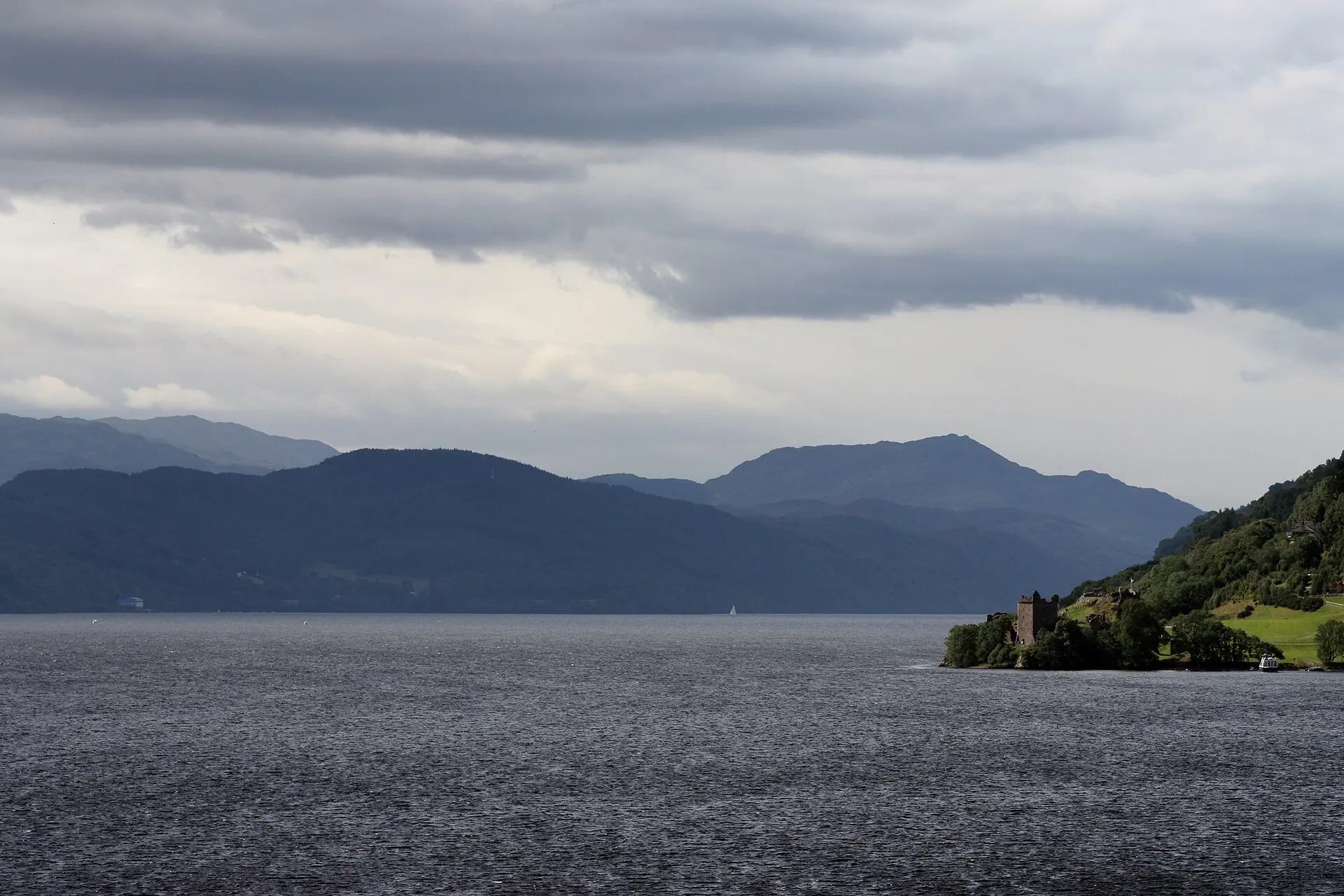
Loch Ness with Urquhart Castle on the shore
EUSEBIUS / WIKIMEDIA COMMONS / CC BY 3.0

Loch Ness

Loch Ness · Nessie's loch
UNRESOLVED

Mainstream consensus: A real, well-mapped glacial loch with no verified evidence of an unknown animal. Decades of sonar surveys and a 2019 DNA study found no trace of anything reptilian, and the single most famous photograph was confessed as a staged hoax; most sightings are explained as boat wakes, floating logs, otters, or misidentified eels.

Share this page
Short answer

Loch Ness is a 23-mile glacial lake along Scotland's Great Glen Fault, holding more fresh water than every lake in England and Wales combined. A 1933 report coined "Loch Ness Monster," and the famous 1934 photo was confessed as a staged hoax in 1994. A 2019 DNA survey found no reptile, lots of eel.

Location and access

Loch Ness stretches about 23 miles through the Scottish Highlands along the Great Glen Fault, a geological fracture that also carries Loch Lochy and Loch Oich in a nearly straight line across Scotland. The A82 road traces the western shore from Inverness to Fort Augustus, passing Urquhart Castle's ruined towers and the visitor hub at Drumnadrochit.

The loch is open year-round, and seasonal cruise boats and kayak operators run from Inverness, Drumnadrochit, and Fort Augustus. At roughly 230 meters deep, it is Scotland's second-deepest loch after nearby Loch Morar, and its sheer volume gives it more fresh water than every lake in England and Wales combined.

History and legend

The earliest story often linked to the loch comes from Adomnan's Life of Saint Columba, written around 700 CE, which describes the saint banishing a water beast from the River Ness in 565 CE. The tale is set on the river rather than the loch itself and follows a conventional hagiographic monster-taming pattern common to medieval saints' lives, which has not stopped later writers from citing it as a proto-sighting.

The modern legend began on 2 May 1933, when the Inverness Courier published water bailiff Alex Campbell's account of hotel manager Aldie Mackay's roadside sighting, coining the phrase "Loch Ness Monster" in print for the first time. Reports accelerated that July when George Spicer and his wife described a large creature crossing the road near the loch. The craze crystallized on 21 April 1934, when the Daily Mail published the "Surgeon's Photograph," credited to Robert Kenneth Wilson, which became the monster's defining image for the next sixty years.

That image collapsed in March 1994, when Christian Spurling confessed shortly before his death that the photograph showed a toy submarine fitted with a sculpted head, built with Marmaduke Wetherell as an elaborate joke after an earlier hoax attempt had embarrassed Wetherell publicly.

Organized searches of the loch have come up consistently empty-handed. Operation Deepscan, a 1987 sonar sweep across the entire loch organized by naturalist Adrian Shine, recorded a handful of unexplained contacts alongside mostly mundane results. In September 2019, a University of Otago team led by geneticist Neil Gemmell sampled water across the loch and sequenced environmental DNA, finding no trace of reptilian, catfish, or sturgeon genetic material, but an unusually high concentration of European eel DNA that the team proposed as the most plausible natural explanation for some sightings. Combined with the confirmed hoax behind the Surgeon's Photograph and decades of mundane misidentifications, boat wakes, and floating debris, the mainstream picture is a real lake generating real-looking anomalies with no evidence yet for anything unidentified living in it.

Related places and beings

Loch Ness belongs with other natural wonders whose dramatic reputation outran the explainable geology or biology underneath: Zhangjiajie's pillars, Socotra's isolated flora, Pamukkale's terraces, and Blood Falls' iron-rich seep. Cross-category, Champ, Lake Champlain's own long-necked cryptid, is Nessie's closest American cousin, right down to a similarly hoax-tainted photographic record; the Scottish water-horse spirit Kelpie offers a native folklore precedent that long predates the 1933 newspaper craze.

In popular culture

Nessie has starred in films, cartoons, tourist board campaigns, and countless documentaries since the 1930s, and Loch Ness tourism remains a significant part of the regional economy, anchored by the Loch Ness Centre in Drumnadrochit and annual amateur "monster hunt" events that still draw international press coverage every time a sonar blip or a long-exposure photograph makes headlines again.

Photos and illustrations

Mix of rights-cleared documentary stills and AI illustrations (labeled).

Loch Ness and Urquhart CastleCredit: Eusebius / Wikimedia Commons / CC BY 3.0
Open water view of Loch NessCredit: Steven1991 / Wikimedia Commons / CC BY-SA 4.0
Loch Ness landscape in ScotlandCredit: acediscovery / Wikimedia Commons / CC BY 4.0
Illustrative scene for Loch NessAI illustration for reference only

Visiting

loading map…

The A82 road runs along the loch's western shore connecting Inverness to Fort Augustus, with Urquhart Castle, Drumnadrochit's Loch Ness Centre, and several public viewpoints and boat-tour piers along the way. The loch is open to the public year-round; cruise boats and kayak rentals operate seasonally from Inverness, Drumnadrochit, and Fort Augustus.

Legend vs history: Documented history: the loch's formation along the Great Glen Fault, the 1933 newspaper reports that launched the modern monster craze, the 1934 Surgeon's Photograph and its 1994 confession as a hoax, Operation Deepscan's 1987 sonar sweep, and a 2019 environmental DNA survey. The 6th-century Columba story is a separate medieval hagiography set on the River Ness, retold since the 1930s as a proto-sighting but not originally about the loch's modern cryptid.

Reports and stories

Attributed reports, haunt claims, and discovery narratives from named sources. Links open the originals; AnomalyWiki does not verify these claims.

Claims vs mainstream

The claim

The Loch Ness Monster is a surviving plesiosaur or other prehistoric reptile.

Mainstream view

A 2019 University of Otago environmental DNA survey of the loch found no reptilian DNA at all; the loch itself only formed after the last glaciation roughly 10,000 years ago and has no natural connection to the open ocean that could explain a trapped marine reptile population.

The claim

The 1934 Surgeon's Photograph is genuine evidence of a large unknown animal.

Mainstream view

In 1994, Christian Spurling confessed before his death that the photograph showed a toy submarine fitted with a sculpted head, built with Marmaduke Wetherell and staged for the Daily Mail; the "surgeon," Robert Kenneth Wilson, lent his name to lend the hoax credibility.

The claim

Sonar contacts and dozens of witness sightings since 1933 prove something large and unidentified lives in the loch.

Mainstream view

Operation Deepscan's 1987 sonar sweep and later surveys recorded some unexplained contacts consistent with large fish, but the 2019 eDNA study's heavy yield of eel DNA points to large European eels as the leading candidate behind many reports, alongside boat wakes, floating debris, and known cases of staged photographs.

Timeline

  1. 565Adomnan's later Life of Saint Columba describes Columba banishing a water beast from the River Ness, a story retold since the 1930s as an early Nessie reference.Source: Life of Saint Columba (Vita Columbae), Book II, Chapter 27
  2. 1933-05-02The Inverness Courier publishes water bailiff Alex Campbell's account of Aldie Mackay's roadside sighting, coining the phrase "Loch Ness Monster" and starting the modern wave of reports.Source: Inverness Courier, 2 May 1933
  3. 1933-07-22George Spicer and his wife report seeing a large creature cross the road near the loch, one of the most cited early land-sighting accounts of the modern era.Source: Loch Ness Monster (Wikipedia, citing contemporary press)
  4. 1934-04-21The Daily Mail publishes the "Surgeon's Photograph," credited to Robert Kenneth Wilson, which becomes the monster's most reproduced image for six decades.Source: Daily Mail, 21 April 1934
  5. 1987-10Operation Deepscan, organized by naturalist Adrian Shine, sweeps the loch with a line of sonar boats and records a handful of unexplained contacts alongside mostly mundane results.Source: Operation Deepscan records, cited in Loch Ness Monster (Wikipedia)
  6. 1994-03Christian Spurling confesses shortly before his death that the Surgeon's Photograph showed a toy submarine with a sculpted head, staged with Marmaduke Wetherell.Source: The Sunday Telegraph, March 1994
  7. 2019-09A University of Otago team led by Neil Gemmell publishes an environmental DNA survey of the loch finding no reptilian, catfish, or sturgeon DNA, but very high levels of European eel DNA.Source: Nature Communications Biology, Gemmell et al., 2019

FAQ

Is the Loch Ness Monster real?

No verified physical evidence supports it. A 2019 DNA survey of the loch found no reptilian DNA, and the most famous photograph was confessed as a staged hoax in 1994.

What is the Surgeon's Photograph?

A 1934 image credited to Robert Kenneth Wilson that became the monster's defining picture for six decades, until Christian Spurling confessed in 1994 it showed a toy submarine with a sculpted head.

Who first used the phrase "Loch Ness Monster"?

Water bailiff Alex Campbell, writing up hotel manager Aldie Mackay's 1933 roadside sighting for the Inverness Courier, which published the phrase on 2 May 1933.

What did the 2019 DNA study find?

No reptilian, catfish, or sturgeon DNA anywhere in the loch, but very high levels of European eel DNA, which researchers proposed as a leading natural explanation for some sightings.

How deep and how old is Loch Ness?

The loch reaches about 230 meters (755 feet) deep and formed along the Great Glen Fault after the last glaciation, roughly 10,000 years ago.

Does the Saint Columba story count as the first Nessie sighting?

It is often cited that way, but Adomnan's account from around 700 CE describes Columba banishing a water beast from the River Ness in 565 CE, a separate waterway, and follows a common hagiographic monster-taming pattern rather than a modern cryptid report.