Overview
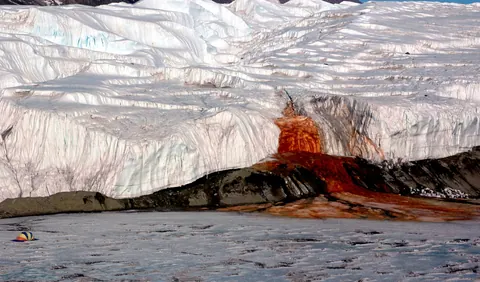
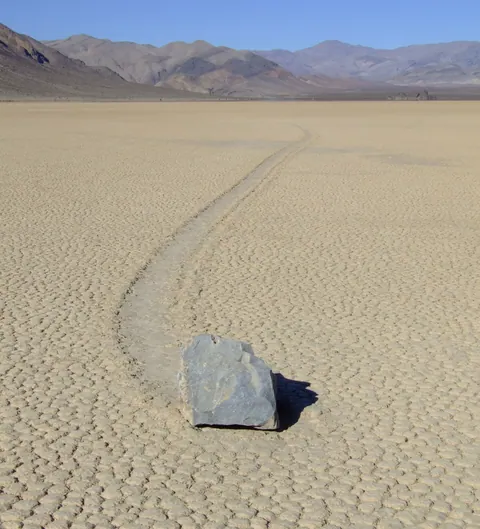
Earth already does strange theater. In Antarctica, Blood Falls seeps iron-rich brine that stains the ice crimson - first noted in 1911 and only traced to its ancient subglacial source in 2017. In Death Valley, the stones of Racetrack Playa carved trails for decades without anyone ever seeing one move.
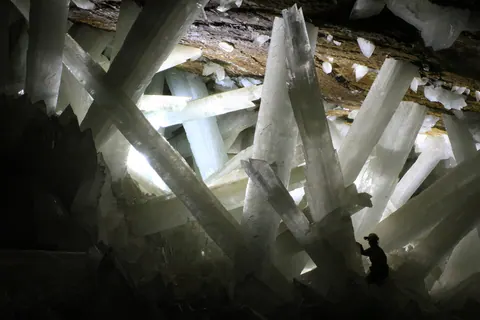
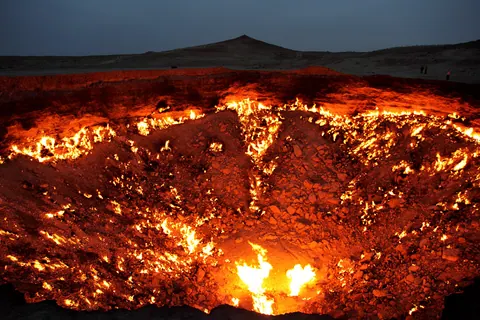
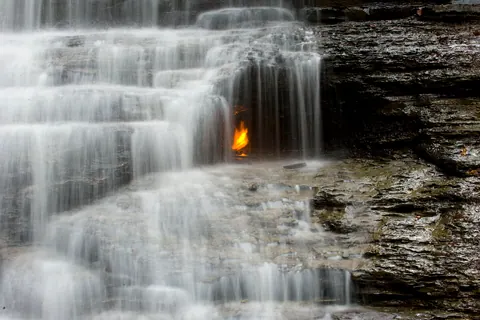
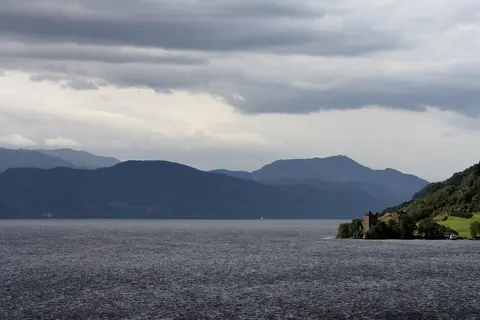
Mexico's Cave of the Crystals holds selenite beams up to 11 meters long; Turkmenistan's Darvaza Gas Crater has burned for decades; in Western New York, Eternal Flame Falls keeps a gas flame alight behind a waterfall. And at Loch Ness, a real Highland lake carries one of the world's most famous monster legends.
Mysteries that science solved
Some of these places held their secrets for a long time. Racetrack Playa's rocks were blamed on magnetism, pranksters, and stranger forces until 2013-2014, when GPS-tagged stones and a weather station caught thin, wind-driven ice sheets shoving them across a shallow winter pond. Blood Falls was once thought to be stained by red algae; the color comes from iron in salty water oxidizing as it meets the air.
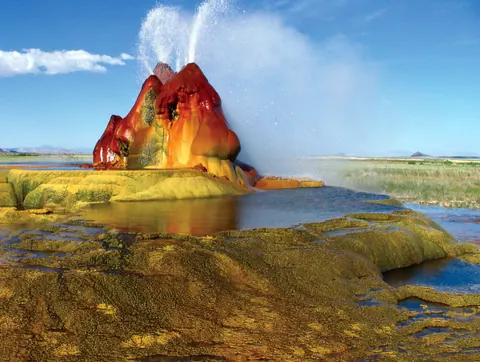
Others needed an accident to exist at all. Fly Geyser in Nevada grew from well-drilling attempts in 1916 and 1964 that went wrong and never stopped spouting mineral-rich water. The Naica crystals were found by miners in 2000 and now grow unseen again, after the mine reflooded in 2017.
Landscapes that look alien
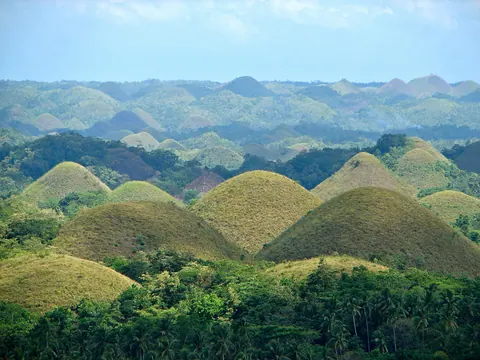
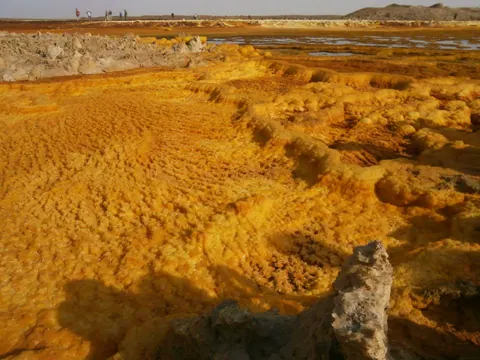
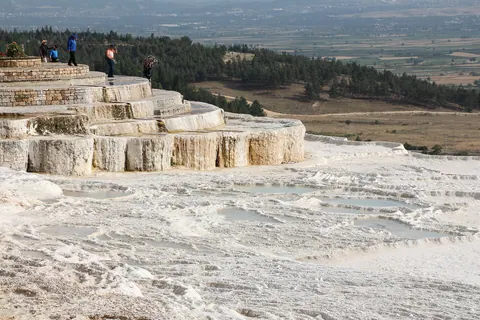
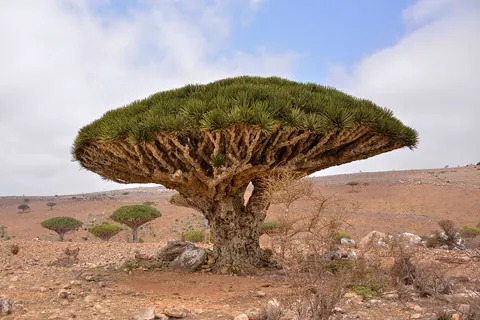
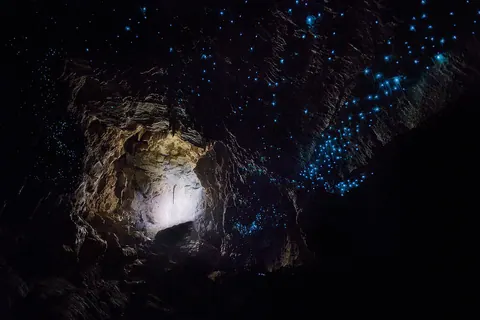
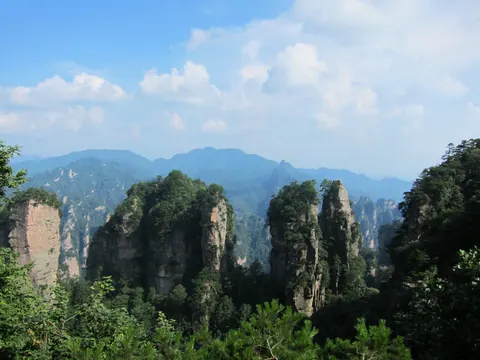
Some anomalies are simply scenery that seems to belong on another planet. The acid-yellow springs of the Danakil Depression sit over 100 meters below sea level where three tectonic plates pull apart. Socotra evolved in isolation until over a third of its plants grew nowhere else. Zhangjiajie's sandstone pillars, Pamukkale's white travertine terraces, the Chocolate Hills of Bohol, and the glowworm ceilings of Waitomo all have well-understood causes, and none of them look any less impossible for it.
At a glance
| Place | Where | What makes it strange | The explanation |
|---|---|---|---|
| Blood Falls | McMurdo Dry Valleys, Antarctica | Red stain on white ice | Iron-rich subglacial brine |
| Racetrack Playa | Death Valley, California | Rocks that travel | Wind-pushed ice sheets |
| Cave of the Crystals | Naica, Mexico | Giant selenite beams | Hot water held at a steady temperature |
| Darvaza Gas Crater | Karakum Desert, Turkmenistan | A pit that never stops burning | Natural gas from a collapsed field |
| Eternal Flame Falls | Western New York | Fire behind a waterfall | Gas seeping from Devonian shale |
| Fly Geyser | Nevada | Rainbow mineral cones | A failed geothermal well |
| Loch Ness | Scottish Highlands | Monster sightings | Deep glacial lake; 1934 photo a hoax |
| Chocolate Hills | Bohol, Philippines | Hundreds of identical cones | Cockpit karst limestone |
Related hubs
FAQ
What is a natural anomaly? A natural place or process that looks impossible at first sight - a red waterfall, a burning crater, rocks that move on their own - but turns out to have a physical explanation.
Are these supernatural places? Usually not. Most have geological or biological explanations. Folklore may still ride along, especially at lakes with cryptid overlays such as Loch Ness.
What solved the Racetrack Playa moving rocks? Field work tied the trails to thin ice sheets and wind nudging rocks across wet playa mud, not magnetism or secret technology.
Why is Blood Falls red? Iron-rich brine oxidizes as it meets air, staining the ice - a chemistry story that once invited algae myths.
Can you visit these places? Some are easy park visits, like Eternal Flame Falls and Pamukkale. Blood Falls needs polar logistics, the Danakil requires armed escorts, and the Naica crystal cave is now flooded.
Sources
- NPS, Racetrack Playa nature page - https://www.nps.gov/deva/learn/nature/racetrack.htm
- NSF news summary on Blood Falls chemistry context - https://www.nsf.gov/news/news_summ.jsp?cntn_id=131373
- Geological phenomenon (Wikipedia lead index) - https://en.wikipedia.org/wiki/Geological_phenomenon