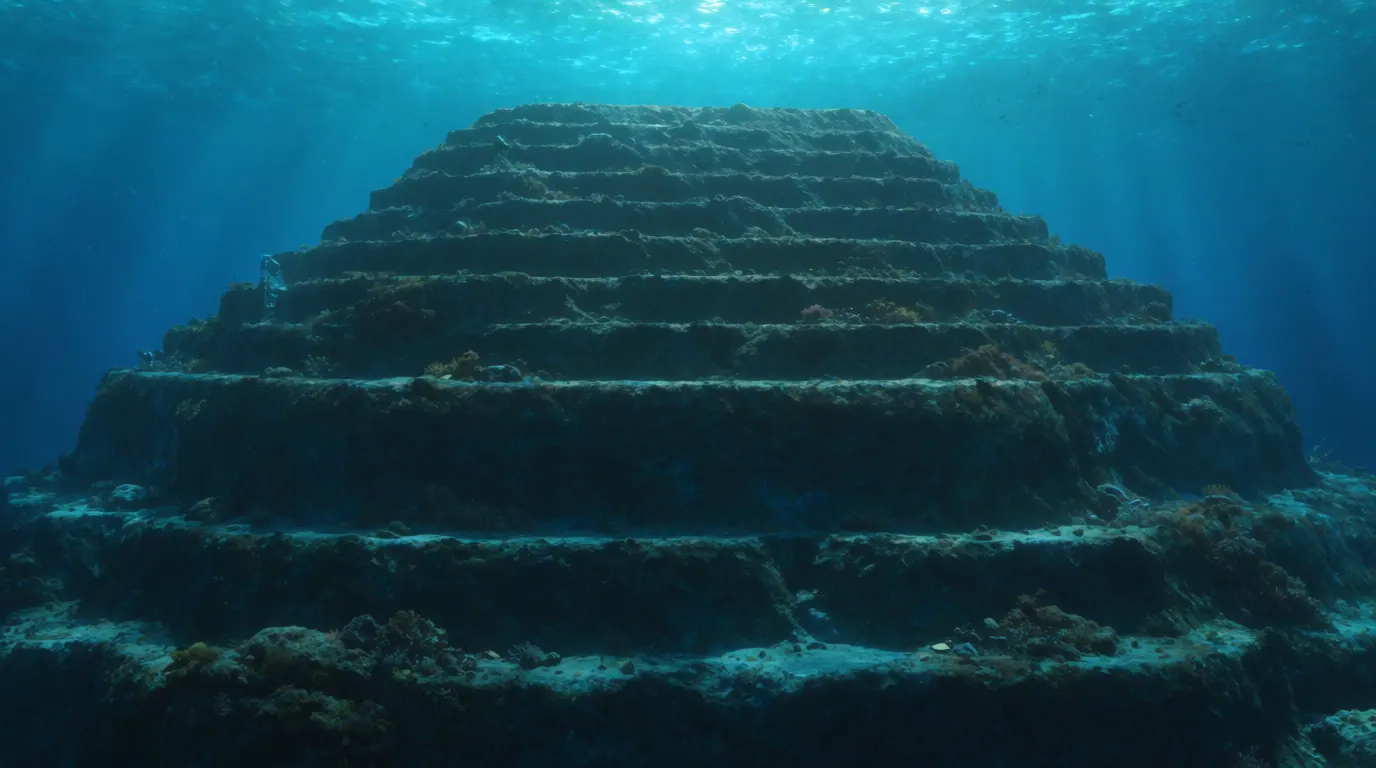
Underwater right angles are a Rorschach test with a current. Off Yonaguni Island in Japan’s far southwest, divers swim a sandstone mass of terraces, walls, and step-like faces that cameras turn into temple stairs. The formation is real. The lost-city blueprint is the claim that still has to earn its chisels.
What geology can do without masons
Layered sandstone breaks along bedding planes and joints. Those planes can look alarmingly architectural once algae and bubbles frame them like a documentary set. Robert Schoch and other geologists have argued that Yonaguni’s geometry is mostly what rock does when the sea works on it - not a quarry invoice from a vanished kingdom.
What an architecture case would need
Tool marks with clear cultural technique, debris patterns, datable cultural materials, and a settlement context would move the needle. Dramatic stills of “roads” and “stadia” do not. Sea-level arguments about past exposure can be interesting and still fail to prove intentional construction.
Identification in the surge
Lock Yonaguni Island location, sandstone texture, terrace morphology, and meter-scale faces. CGI sunken temples and unrelated underwater quarries are lookalikes. Divers should note marine growth and rope markers as modern overlays, not hieroglyph belts.
Holding the question open without surrendering it
Contested sites earn encyclopedia space when the rock is public and the disagreement is durable. Yonaguni qualifies. Visit the formation as geology first, then read the city claims as claims - a discipline that keeps wonder sharp instead of soggy.
Stairs in the mind’s eye
Human vision completes architecture under stress and silt. That bias is useful for survival on land and misleading underwater. Yonaguni rewards divers who can enjoy geometry without immediately inventing a city council.
Geometry is not a building permit
Terraces can look civic and still be bedding planes. Divers who love the site can say so without issuing a construction license to a vanished city council. That restraint keeps Yonaguni diveable and debatable.
Dive conditions shape the legend
Surge, silt, and short bottom times make still photos more persuasive than careful geologic survey. That media bias is understandable and still not a masonry certificate. Slow geology papers deserve at least as much airtime as fast dive reels.